Turtle Point
Protected Area
KK di Perairan di Wilayah Pasi Gusung
Why dive here
With 203+ marine species recorded in the area - including manta rays, mobula rays (devil rays), pygmy seahorses, sea turtles and sperm whales - Turtle Point offers some of Komodo's richest reef diving. Water ranges 28-30°C, warmest April, May, November.
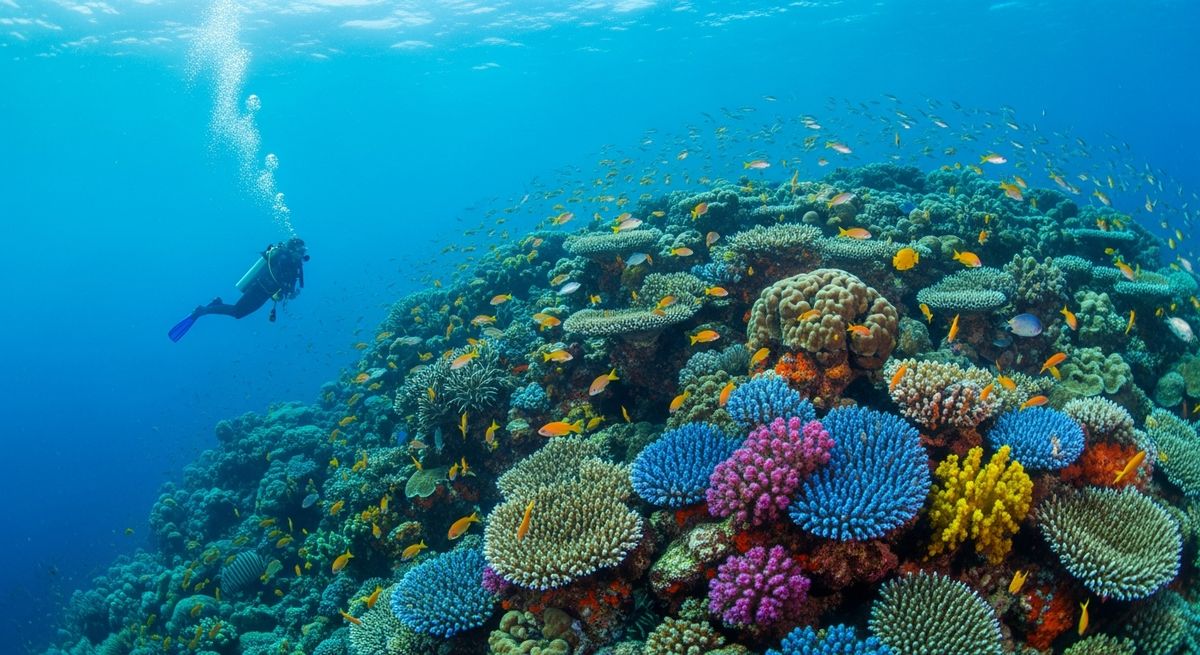
Turtle Point, just a short boat ride from Bone Taringan, is a Komodo site we’ve always enjoyed. It doesn't scream for attention like some of its famous neighbours, but it consistently delivers a relaxed, colourful dive. It's a gentle wall and slope combo, topping out at 20 metres, making it ideal for longer bottom times and less experienced divers keen to soak it all in. You'll often find a lazy one-way current here, perfect for a drift along a reef bursting with both hard and soft corals. Our favourite bits are the sprawling Leatherback corals and the delicate Feather corals that sway with the surge. We’ve seen everything from cruising dogtooth tuna to the occasional eagle ray glide by, but the real draw, unsurprisingly, are the turtles. Both green and hawksbills are regular visitors, often just chilling on the reef or making their slow ascent for air. Keep an eye out for the vibrant anthias clouds that shimmer near the surface, and the ever-present fusiliers and jacks. It’s a great spot for an easy second dive of the day.
Nearest Dive Centres to Turtle Point
Dive shops near Turtle Point
View all dive centres in KomodoReviews for Turtle Point
Conditions
Ocean conditions, forecast and tides for Turtle Point
Turtle Point Ocean Conditions
Monthly averages for Turtle Point, sourced from Open-Meteo marine data + Copernicus Marine (EU) - nearest station: Open-Meteo marine grid (-8.39, 119.8) (79km away)
October Averages
Sea Temperature
30°C
85°F · Range: 28.1–30.9°C
Current Speed
4.24 cm/s
Direction: NW (315°)
Chlorophyll-a
0.175 mg/m³
Clear water
Salinity
34.03 PSU
Based on 4 years of monitoring data · Data sources: Open-Meteo marine data + Copernicus Marine (EU)
Plan & book
Ways to dive Komodo, from day trips to liveaboards.
Day trips & courses
via GetYourGuideGuided dives, courses and snorkel trips with instant booking.
Find dive trips in KomodoPlaces to stay
via Booking.comHotels and dive resorts near Komodo.
Search stays in KomodoDive insurance
Most travel insurance excludes or limits scuba. Check what you need before you go.
Dive insurance explainedPartner links: we may earn a commission if you book, at no extra cost to you. How we make money
Where to Stay near Turtle Point
Prices from Booking.com. We may earn a commission at no extra cost to you.