Diving in Lombok & Gili Islands
Why dive here
Lombok & Gili Islands offers some of Indonesia's richest diving, with 246+ marine species recorded in the area - including blue-spotted stingrays, bull sharks, grey reef sharks, manta rays and mobula rays (devil rays). Water ranges 28-30°C, warmest April, May, November.
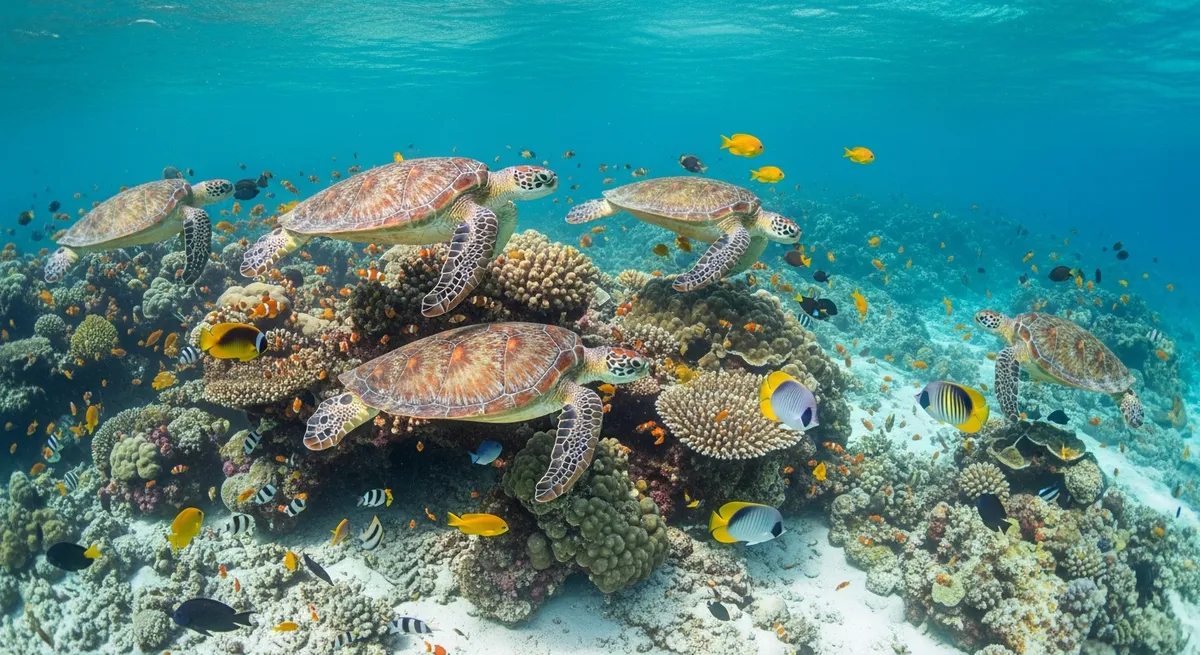
Lombok and the Gilis, for us, offer a really satisfying mix. You’ve got the easygoing Gili vibe, where Green Sea turtles practically queue up to pose for photos, then the wilder south coast of Lombok, with its proper currents and bigger fish. We really love the contrast. The Gili Islands, especially around Gili Trawangan and Meno, are a fantastic place to just switch off and glide. You’ll drift past schools of Blue-lined Surgeonfish, watch juvenile reef sharks cruise the coral heads, and spot Olive Ridleys munching away. It's relaxed, generally clear, and perfect for a few consecutive dives. Head south to Lombok, though, and it's a different game. The currents pick up, the topography gets more dramatic, and suddenly you’re looking for pelagics. We’ve had some truly exhilarating drift dives there, eyes peeled for Silvertip sharks and even a fleeting glimpse of a Silky. Keep an eye out for the more unusual stuff too - Crescent Grunters under ledges, tiny Seastar Shrimp on their namesake hosts. The variety keeps us coming back.
Lombok & Gili Islands Dive Site Map
Dive sites and dive centres in Lombok & Gili Islands
Lombok & Gili Islands Dive Sites
277 dive sites in Lombok & Gili Islands
AB29
AB29, a motor vessel wreck off Lombok, offers a surprisingly accessible dive. We usually drop onto the superstructure, which starts around 18 metres, then work our way down the hull to the sand at 30 metres. What we really love here is how the currents, usually moderate, have sculpted the wreck, giving it a ghost ship feel. Look for the schools of batfish hanging in the open holds and the resident lionfish tucked into crevices. It's a site that suits divers who appreciate wrecks as artificial reefs, not just historical artefacts.
Abwonderdive House Reef
We’ve spent a lot of time on Lombok, and the Abwonderdive House Reef is one of those spots we keep coming back to. It’s a cracker of a shore dive, really. You drop in right off the beach, and it’s straight into a coral garden that starts shallow, maybe 3 metres, with a nice mix of soft and hard corals. What we really love here is the progression. You can potter around in the shallows looking for nudibranchs – we’ve found Sargassum nudibranchs and even Cobb’s winged murphydoris in the past – or you can head a bit deeper. Around 15 to 18 metres, you hit the artificial reef structures. These things are buzzing with life; we’ve seen blotchfin scorpionfish hunkered down and plenty of glassy cardinalfish flitting about. Keep an eye out for slender snake eels poking out of the sand. The current is usually pretty gentle, which makes it a relaxed dive, perfect for photographers or anyone who just wants to take their time. Visibility averages about 15 metres, which is decent enough for spotting those smaller critters. If you’re into macro, this place is gold. We always feel like we find something new here, even after multiple dives. It’s a great option for a relaxed afternoon dive or a night dive if you’re staying nearby.
Abwonderdive House Reef
We’ve spent a lot of time on Lombok, and the Abwonderdive House Reef is one of those spots we keep coming back to. It’s a cracker of a shore dive, really. You drop in right off the beach, and it’s straight into a coral garden that starts shallow, maybe 3 metres, with a nice mix of soft and hard corals. What we really love here is the progression. You can potter around in the shallows looking for nudibranchs – we’ve found Sargassum nudibranchs and even Cobb’s winged murphydoris in the past – or you can head a bit deeper. Around 15 to 18 metres, you hit the artificial reef structures. These things are buzzing with life; we’ve seen blotchfin scorpionfish hunkered down and plenty of glassy cardinalfish flitting about. Keep an eye out for slender snake eels poking out of the sand. The current is usually pretty gentle, which makes it a relaxed dive, perfect for photographers or anyone who just wants to take their time. Visibility averages about 15 metres, which is decent enough for spotting those smaller critters. If you’re into macro, this place is gold. We always feel like we find something new here, even after multiple dives. It’s a great option for a relaxed afternoon dive or a night dive if you’re staying nearby.
Ada Reef
Ada Reef offers a solid coral dive experience in the Gili Islands. You’ll find healthy hard and soft corals here, providing shelter for reef fish and occasional turtles cruising by. It’s a good choice for divers looking for a relaxed exploration of a typical Gili reef, especially if you prefer fewer divers around.
Air Wall
Air Wall, off the Gilis, offers a comfortable wall dive. We often find ourselves drifting gently along, keeping an eye out for the small giant clams tucked into the reef. You’ll definitely see lots of staghorn coral, and if you’re lucky, a whitetip reef shark might cruise by in the blue. It’s a pretty relaxed dive, good for shaking off the rust or just enjoying a calm afternoon.
Air Wall
Air Wall, off Gili Air, offers a real sense of scale. It’s not just a drop, it’s a proper vertical face. We start shallow, drifting over a sandy slope where we’ve often spotted Blue-spotted Stingrays nestled in the sand. Keep an eye out for those big Bumphead Parrotfish near the bommies; they’re regular residents here. The wall itself drops to a reported 19 metres, though it feels deeper sometimes with the way it just keeps going. What we love about Air Wall is the sheer density of hard corals. We’re talking Staghorn and Table corals, especially in the shallower sections, providing excellent hiding spots for smaller reef fish. Visibility averages around 17 metres, which is decent enough to appreciate the full extent of the wall. We’ve had some fantastic encounters with Whitetip Reef Sharks cruising along the base, and once, a fleeting glimpse of a Dusky Shark further out. This site is great for divers who appreciate dramatic topography and a reliable chance of seeing some larger pelagics in the blue.
Air Wall
Air Wall, off Gili Air, offers a real sense of scale. It’s not just a drop, it’s a proper vertical face. We start shallow, drifting over a sandy slope where we’ve often spotted Blue-spotted Stingrays nestled in the sand. Keep an eye out for those big Bumphead Parrotfish near the bommies; they’re regular residents here. The wall itself drops to a reported 19 metres, though it feels deeper sometimes with the way it just keeps going. What we love about Air Wall is the sheer density of hard corals. We’re talking Staghorn and Table corals, especially in the shallower sections, providing excellent hiding spots for smaller reef fish. Visibility averages around 17 metres, which is decent enough to appreciate the full extent of the wall. We’ve had some fantastic encounters with Whitetip Reef Sharks cruising along the base, and once, a fleeting glimpse of a Dusky Shark further out. This site is great for divers who appreciate dramatic topography and a reliable chance of seeing some larger pelagics in the blue.
Alamanda
Alamanda on Lombok’s west coast really gets us excited. It’s one of those spots we love for its sheer simplicity and unexpected finds. You jump from a local *jukung* right onto the reef crest, and the coral starts pretty much immediately. We usually drop to about 18-20 metres, hugging the wall as it curves, looking into every nook. Our favourite part is the hunt for the little things. This wall is perfect for macro fanatics. We’ve spent entire dives here just hovering, eyes peeled for Shimada's pygmy gobies tucked into crevices, or the delicate frills of a Gardiner's headshield slug inching across a coral branch. Keep an eye out for Indian seahares too, they often blend in perfectly with the algae. The table corals are impressive, sometimes hosting a blotchfin scorpionfish waiting in ambush. Visibility averages around 17 metres, which is decent, but it’s the lack of strong current that makes it so enjoyable for photography. It's a relaxed drift, often with almost no current at all, making it a fantastic site for those who prefer to take their time and really explore. The shallower parts, around 5-10 metres, are lovely for a safety stop, bathed in sunlight, with plenty of smaller wrasse darting about.
Alamanda
Alamanda on Lombok’s west coast really gets us excited. It’s one of those spots we love for its sheer simplicity and unexpected finds. You jump from a local *jukung* right onto the reef crest, and the coral starts pretty much immediately. We usually drop to about 18-20 metres, hugging the wall as it curves, looking into every nook. Our favourite part is the hunt for the little things. This wall is perfect for macro fanatics. We’ve spent entire dives here just hovering, eyes peeled for Shimada's pygmy gobies tucked into crevices, or the delicate frills of a Gardiner's headshield slug inching across a coral branch. Keep an eye out for Indian seahares too, they often blend in perfectly with the algae. The table corals are impressive, sometimes hosting a blotchfin scorpionfish waiting in ambush. Visibility averages around 17 metres, which is decent, but it’s the lack of strong current that makes it so enjoyable for photography. It's a relaxed drift, often with almost no current at all, making it a fantastic site for those who prefer to take their time and really explore. The shallower parts, around 5-10 metres, are lovely for a safety stop, bathed in sunlight, with plenty of smaller wrasse darting about.
Alam Batu Housreef
Alam Batu Housreef offers a gentle dive experience right off the coast. The shallow coral reef provides a good spot for newer divers or those looking for a relaxed afternoon. We’ve seen plenty of reef fish flitting through the corals here, along with the occasional turtle gliding past. It's a convenient option for a quick, easy dive.
Amed
Amed, on the quieter side of the Gilis, offers a good dive without the crowds of some neighbours. Descending into the shallow bay of Cemeluk, we found dense staghorn corals, thick with cardinalfish. It’s a good spot for spotting striped convict tangs and the vivid orange-lined triggerfish darting among the corals. Further out, the reef drops into a steep wall, draped in hydroids and sea fans, a decent drift past tuna and black and white snappers. It’s a solid pick for those looking for a relaxed dive with consistent visibility, less frantic than the Gili Trawangan sites.
Angel Reef
Angel Reef, just south of Panjang, offers a good mix for a morning dive. We usually drop into the shallows first, where the hard corals are genuinely healthy, a pleasant surprise given some of the local history. Then, the real draw: a vertical wall that just drops away, easily past forty metres. Down along that edge, we often find ourselves swimming through proper schools of redtooth triggerfish, those long-fin bannerfish swaying about, and sometimes the big rounded batfish just hanging in the blue. The wall itself has some nice soft tree corals, lots of colour there, and a few resilient sheet corals holding on. It’s a solid dive for anyone who enjoys a bit of depth and the drama of a good wall.
Show all 277 dive sites in Lombok & Gili Islands
- Angels Canyon Bali
- Angels Canyon Bali
- Anker Point
- Bale Sampan Biorock
- Bali Villa Dive Resort Housereef
- Bali Villa Dive Resort Housereef
- Bangko Bangko
- Baong Penyu / Turtle Neck
- Baong Penyu / Turtle Neck
- Bat Cave
- Bat Cave
- Bat Rock
- Bat Rock
- Batu Abah
- Batu Belah
- Batu Bolong, Nusa Penida
- Batu Bolong, Nusa Penida
- Batu Karang
- Batu Karang
- Batu Kawu
- Batu Kelebit
- Batu Kelebit
- Batu Lumbung
- Batu Meling
- Batumulapan
- Batu niti
- Batu niti
- Batu Putih - Gili Rengit
- Batu Putih - Gili Rengit
- Batu Ringit
- Batu Ringit
- Baung Penyu Bay / Turtle Neck / The Wall
- Baung Penyu Bay / Turtle Neck / The Wall
- Baung Penyu Conservation Site / Goa
- Baung Penyu Conservation Site / Goa
- Ben Ben Garden
- Ben Ben Garden
- Biaha
- Bias Tegul
- Bias Tugel / White Sand Beach
- Bias Tugel / White Sand Beach
- Bicycle Slope, Kubu
- Bicycle Slope, Kubu
- Bidara Magic
- Bidara Magic
- Big Bubble Dive
- Biorocks
- Biorocks
- Black Pearl Bali
- Black Pearl Bali
- Blue Bay
- Blue Coral Diving
- Blue Corner
- Blue Corner
- Blue Lagoon
- Blue Lagoon
- Blue Marlin Dive Gili Meno
- Boga Wreck
- Boga Wreck
- Bounty
- Buddha Dive
- Bungi Lura
- Bunutan
- Bunutan
- Buyuk
- Buyuk
- Buyuk
- Candi Dasa (Amuk Bay)
- Canyons
- Ceningan Channel
- Ceningan wall, Nusa Lembongan, Bali, Indonesia
- Compass Divers
- Coral Arks
- Coral Basket
- Coral Stairs Bali
- Dan’s Reef
- Deep Blue
- Deep Turbo
- Dive Central Gili
- Diversia
- Dream Divers
- Dream Divers
- DSM Dive
- Eagle corner
- Emerald
- Ental Point
- Frog Fish Point
- Gamat Bay
- Geger Beach
- Gerombong
- Ghost Bay
- Gili Air Slope
- Gili Amben
- Gili anyaran -Sunken Island
- Gili Asahan slope
- Gili Biaha, Candidasa
- Gili Divers
- Gili Divers Biorock
- Gili Gede Slope
- Gili Gede Wall
- Gili Gede Wall
- Gili Layar Corner
- Gili Meno Divers
- Gili Meno Harbour
- Gili Meno - Meno Wall
- Gili Mimpang, Candidasa
- Gili Nanggu
- Gili Renggit East
- Gili Renggit West
- Gili Sanctum
- Gili Scuba Diving
- Gili Selang
- Gili Taketanyaran
- Gili Taketkembar
- Gili Tepekong, Candidasa
- Gili Tepekong - The Canyon
- Gili Tepekong - Toilet Bowl
- Gili Trawangan - Coral Fan
- Gili Trawangan - Manta Point
- Golden Rock
- Good Heart
- Gosong Balam
- Gosong Sadapur
- Gumi Cenik 1, Bali
- Gumi Cenik 2 (coral), Bali
- Halik
- Halik, Gili Trawangan
- Halik s reef
- Hans Reef
- IQ Divers
- IQ Divers
- Jack Point
- Jammin
- Jangka Point
- Japanese Shipwreck (Wreck)
- Japanese Wreck
- Japanese Wreck
- Jemeluk Bay
- Jemeluk Secret Wall
- Jetty, Tanah Ampo
- Kapal Wall
- Karang Sari
- Karang Satengar
- Katak Drop
- Kebo Iwa
- Kubu Reef
- Kura-Kura Bay
- Labyrinth
- Lawang Wall
- Lean
- Lembongan Island - Nusa Penida
- Lenbongan bay
- Lighthouse
- Lipah Bay, Bali
- little shark
- Lombok Dive
- Lombok Dive
- Lutwala Dive
- Magic Pier
- Magic Reef
- Malang
- Malibu Point
- Malibu Point
- Mango Dive
- Mangrove Point Lembongan
- Manta Bay
- Manta Dive Gili Trawangan
- Manta Point
- Manta Point , Gili Trawagan
- Manta Point, Sekar Kuning
- Medan
- Melasti
- Meno Corner
- Meno Slope
- Meno Slope
- Meno Wall
- Mirko's Reef
- Mirkos Reef
- Monkey Reef
- Nusa Dua Beach
- Nusu
- Out Of Eden Bali
- Padang Bai Coral Restoration Area
- Padangbai Housereef
- Padang Bay
- Palung Palung
- Pandangbai Jetty
- Panjang Reef
- Paradiso / Air Harbour
- Ped
- Pemuteran
- Penida Bay
- Project Laut Restoration Patch
- Pulau Takat Laut
- Pura Jepun
- Pura Mas Gading
- Pura Ped
- Pyramid Point
- Pyramids
- Rabbit Hole (Batupahet)
- Rolling Hills
- Rose Garden Bali
- Salut Dropoff
- Samba Vilas Biorock
- Sampalan (Nusa Penida, Bali)
- Sanur Beach
- Sanur channel
- S D
- SD Point
- Seahorse Bay
- Searya
- Segaluh
- Segara
- Selang north
- Sental
- Sental
- Seraya Tulamben
- Shallow Turbo
- Shallow Turbo
- Shark Point
- Shark Point
- Shark Point, Gili Trawangan
- Sidem
- Simons Reef
- Snorkeling
- Snorkelling reef
- Snorkelling reef
- Solwie
- Srikandi Speedboat (Wreck)
- suana
- Submarine Reef
- Sumbawa Diving: The Islands of Moyo, Sangeang and Satonda
- Sunset Reef
- Sunset Reef
- Takat Malang
- Takat Patokanan
- Takat Segele
- Taket Malang
- Tanjung Bautputih
- Tanjung Jepun, Padang Bai, Bali
- Tanjung Jipun
- Tanjung Sari
- Teluk Indah
- Teluk NBoro
- Temple Coral
- The Drift Bali
- The Drop Bali
- The River
- Toyapakeh
- Toyapakeh Wall
- Trawangan Dive Biorock
- Trawangan Wall
- TRUEBLUE
- Tuang Slope
- Tukad Naga
- Tulamben
- Tulamben Drop-Off
- Turtle Heaven
- Turtle Heaven Gili
- Turtle Point
- Turtle snorkeling spot
- Turtle Snorkeling Spot
- Two Mountain - Gili Poh (Blow Bubbles Divers)
- USAT Liberty Wreck
- Vila Almarick Biorock
Lombok & Gili Islands Dive Centres
217 dive shops and operators in Lombok & Gili Islands
3Wdive
7 Seas International
Absolute Scuba
Abyss Dive Center
Abyss Ocean World
Adventure Divers
Adventure Scuba Diving Bali
Alam Batu
Show all 217 dive centres in Lombok & Gili Islands
- All 4 Diving Indonesia
- Amanwana Dive Centre
- Amed Fun Divers Resort
- Amed White Sand Divers
- Amed Zen Divers
- Apnea Bali
- Aquaddiction Dive and Bungalows
- AquaMarine Diving - Bali
- Arenui Liveaboard
- Azul Komodo
- Bali Aqua - Nusa Penida
- Bali Breizh Divers
- Bali Celebes Dive
- Bali Conservation Diving
- Bali Crystal Divers
- Bali Dive Cove
- Bali Dive Quest
- Bali Dive Resort
- Bali Dive Resort Amed
- Bali Dive Resort and Spa
- Bali Diversity
- Bali dive shop
- Bali Diving Academy
- Bali Fab Dive center
- BALI FUN DIVING
- Bali Hai Diving Adventures
- Bali Hai Diving Adventures Menjangan
- Bali Legends Dive Center
- Bali reef divers
- Bali Reef Divers Tulamben Dive Resort
- Bali Scuba
- Bali View Dive Center
- Bharuna Dive School FKP-UNUD
- Big Bubble Dive
- Big Fish Diving
- Black Manta Scuba
- BLD Dive Center
- Blow Bubbles Divers
- Blue Corner Dive
- Blue Corner Dive Penida
- Blue Lagoon Snorkelling
- Blue Marine Dive Resort
- Blue Marlin Dive
- Blue Marlin Dive Gili Air
- Blue Marlin Dive Gili Meno
- Blue Marlin Dive Gili Trawangan
- Blue Season Bali
- BMR Dive & Water Sports
- BONDALEM ECO DIVE
- Buddha Dive
- Calypso Diving Bali
- Calypso Diving Bali
- Ceningan Divers
- Compass Divers
- Cornerstone Dive Center
- Crystal Divers
- Deep Roots Dive & Yoga Resort
- Divearts Academy
- Dive Central Gili
- Dive Concepts
- Dive Concepts
- Dive Concepts Pemuteran
- Dive Concepts Tulamben
- Dive Culture
- Dive Dude Belongas
- DiveHeaven Lombok
- DIVEONESIA
- Dive Quest
- Dive Resort - Diving La Vida Loca - Bali
- Divers Café
- Diversia
- DiveSport
- Divine Divers
- Dragon Dive Komodo
- Dreamdivers
- Dream Divers
- DSM Dive
- DSM Dive
- DSM Dive Gili Trawangan
- DSM Dive Gili Trawangan
- Dune Penida
- Dune World
- Ecodive Bali
- Extra Divers Naya Gawana-Bali
- Fish In Air
- Freedive Gili
- Freedive Nusa
- French Kiss Divers - Nusa Lembongan
- Gangga Divers
- Geko Dive Bali
- Gili Air Divers
- Gili Divers
- Gili Meno Divers
- Gili Sanctum
- Gili Scuba Diving
- Go Diving
- Grand Permai Dive
- H2O Sportz Indonesia
- Impos Paradise
- Intrinity Divers
- IQ Divers
- IQ Divers
- Jani School Of Diving
- jellyfish divers village
- Joe's Gone Diving
- Jukung Dive
- Kura Kura Divers Lodge
- La Bila Dive Resort
- Laguna Gili Dive Center
- Lebongan Dive Center
- Legend Diving Lembongan
- Lembongan Diving center
- Lembongan Dream Dive Resort
- Let’s Dive
- Liberty Dive Resort
- LOMBOK DIVE
- Lombok Eco Dive Resort
- Lumba Lumba Diving Centre & Beach Resort
- Lutwala Dive
- Madha Dive Center
- Mango Dive
- Manta Dive
- Manta Dive Gili Trawangan
- Master Selam Bali
- Master Selam Jakarta
- Matahari Dive Center
- Mavi Diving Indonesia
- MAX DIVE
- Meno Dive Club
- Mimpi Resort Menjangan
- Mocean Diving Centre
- Neptune Scuba Diving
- Nico Dives Cool Bali
- No Fear Diving
- Nusablu Diving
- Nusa Dua Dive Centre
- Nusantara Dive
- Oca Divers
- Ocean 5
- Ocean Dive League
- OCEAN DREAMS Pemuteran
- Ocean king
- Ody Dive Center
- Orca Dive Club Bali
- Paradise Diving
- Paradise Diving
- Paradise Diving Indonesia Bali
- Penida Dive Resort
- Phocea Bali
- Pilgrim Divers
- PT. Dive Lah Indonesia
- PT. Penjelajahan Laut Biru
- Purple Dive Penida
- Q-Dive
- Ray Dive
- Reeflex Divers
- Relax Bali
- Salty Finns Diving Bali
- Sanctum Exploration
- Scuba Center Asia
- Scuba Duba Doo
- Scuba froggy
- Scuba Froggy
- Scuba Go
- Scuba Junkie Penida
- Scuba Seraya Diving
- Scuba Tribe
- S.E.A. Diving Bali
- Sea Gods
- Sea Store
- Seraya Beach Dive Site
- Siddhartha Dive Center
- Signature Scuba Gili Gede
- Silolona Pinisi Explorer
- Siren Diving Lembongan
- SOUTHERN DREAMS DIVING CLUB
- Sumbawa Adventure Scuba Diving
- Sunrise Dive Bali
- Sunshine Dive
- Superich Diving Resort
- Tamarind Divers Lembongan
- Tek Deep Asia
- Temple Diving by Mar Adentro
- Terumbu Divers
- The High Dive Gili Gede
- Time Divers Penida
- Time Divers Penida
- Tour Dive Bali
- Trawangan Dive
- Tropical
- Tulamben Dive
- Tulamben Dive Adventures
- Tulamben Scuba
- Twin Island Dive
- Two Fish Divers Amed
- Two Fish Divers Lembongan
- Two Fish Divers Penida
- Two Fish Divers Sanur
- Two Fish Diving Amed
- UDIVE BALI
- URVIL DIVE SCHOOL
- Villa Alba Dive Resort
- Warnakali
- Waterworxx
- West Bali Diving and Snorkeling
- Wonder Dive Tulamben
- World Diving
- Yayasan Anak Selam Nusantara
- Zen Dive Resort Bali
Ocean Wildlife in Lombok & Gili Islands
246 species recorded in Lombok & Gili Islands
Lombok & Gili Islands Daylight & Sunrise/Sunset
Sunrise and sunset times for Lombok & Gili Islands, calculated from coordinates
Today - Sunday 11 October
Sunrise
05:57
Sunset
18:12
Daylight
12h 15m
Golden Hour
17:44
First light (dawn) at 05:36 · Last light (dusk) at 18:33
Monthly Averages
| Month | Sunrise | Sunset | Daylight |
|---|---|---|---|
| Jan | 06:10 | 18:43 | 12h 34m |
| Feb | 06:21 | 18:43 | 12h 22m |
| Mar | 06:22 | 18:31 | 12h 9m |
| Apr | 06:20 | 18:15 | 11h 55m |
| May | 06:22 | 18:06 | 11h 44m |
| JunShortest | 06:29 | 18:07 | 11h 38m |
| Jul | 06:33 | 18:13 | 11h 40m |
| Aug | 06:27 | 18:17 | 11h 50m |
| Sep | 06:12 | 18:15 | 12h 3m |
| OctNow | 05:55 | 18:12 | 12h 17m |
| Nov | 05:47 | 18:17 | 12h 30m |
| DecLongest | 05:54 | 18:31 | 12h 37m |
Times are approximate local times based on longitude. Actual times may vary slightly depending on the exact timezone observed in Lombok & Gili Islands.
Where to Stay near Lombok & Gili Islands
Prices from Booking.com. We may earn a commission at no extra cost to you.
Marine Protected Areas near Lombok & Gili Islands
21 protected areas near Lombok & Gili Islands - please respect local regulations when diving
PKK-001 Sumenep
PKK-019 TP Penyu Tatar Sepang - Lunyuk
KKP-04 Kuta Selatan Badung
KK Gita Nada
KK Nusa Penida
KK Buleleng
kk Pulau Medang
KK Gili Sulat dan Gili Lawang
Pulau Moyo
PKK-001 Teluk Bumbang Kuta
KK Gili Balu
KK Karangasem
Showing 12 largest of 21
Getting to Lombok & Gili Islands
Mataram (Pujut, Lombok Tengah)
Kuta, Badung
Surabaya
Plan & book
Ways to dive Lombok & Gili Islands, from day trips to liveaboards.
Day trips & courses
via GetYourGuideGuided dives, courses and snorkel trips with instant booking.
Find dive trips in Lombok & Gili IslandsPlaces to stay
via Booking.comHotels and dive resorts near Lombok & Gili Islands.
Search stays in Lombok & Gili IslandsDive insurance
Most travel insurance excludes or limits scuba. Check what you need before you go.
Dive insurance explainedPartner links: we may earn a commission if you book, at no extra cost to you. How we make money