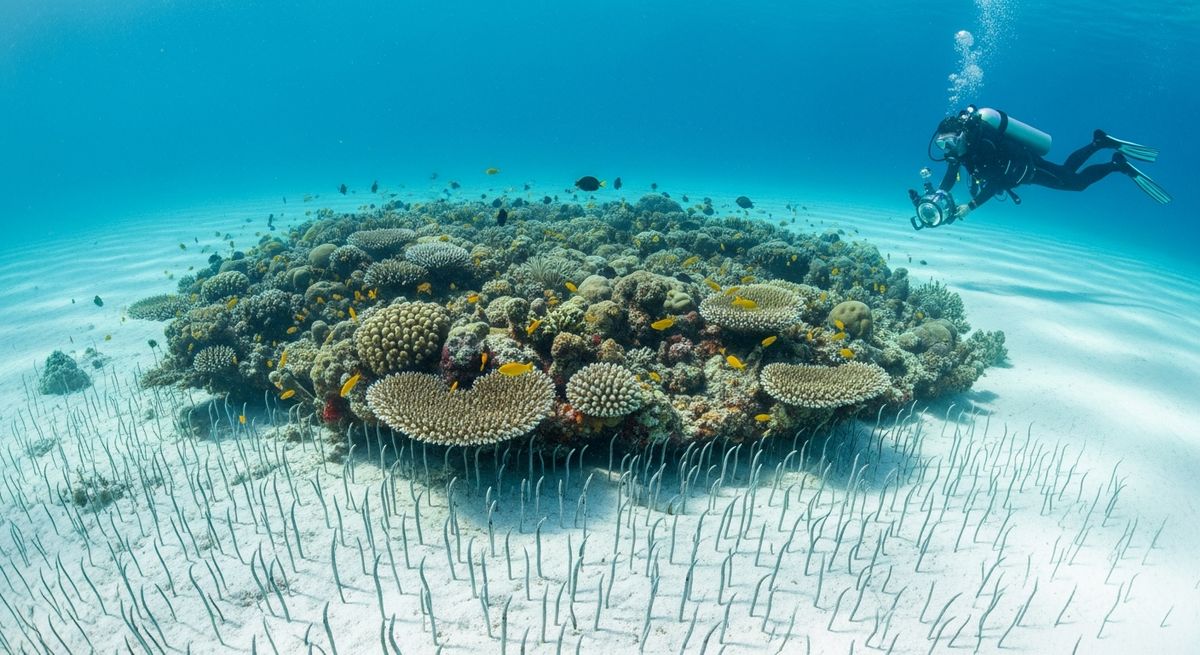
Sixtinne Wall - Sulawesi

Tortuga is about a 25-minute boat ride from Bayahibe, a decent option for a second or third dive of the day, with a maximum depth of 15m. The corals here are pretty well-developed, and because it sees fewer divers, you often get a bit more action than some of the busier spots. We’ve had a few good dives here, spotting everything from the usual grunts and snappers to a couple of eagle rays cruising by. Visibility averages around 19m, so it’s generally a pleasant, bright dive. If you're looking for a relaxed exploration without the crowds, Tortuga delivers a solid Caribbean reef experience.

Location
Sulawesi, Indonesia, Southeast Asia
Coordinates
-0.801300, 121.660000
Type
reef

Best Time to Dive in Sulawesi

The warmest water temperatures in Sulawesi occur in November, averaging 30.4°C. The coolest conditions are in September at 28.7°C.

Monthly Water Temperatures

  • January: 29.5°C
  • February: 29.4°C
  • March: 29.8°C
  • April: 30.3°C
  • May: 30.3°C
  • June: 29.7°C
  • July: 29.1°C
  • August: 28.8°C
  • September: 28.7°C
  • October: 29.5°C
  • November: 30.4°C
  • December: 30.2°C

Nearby Dive Sites in Sulawesi

Nearest Dive Centres to Sixtinne Wall

Marine Life in Sulawesi

Home to 252 recorded species including 162 reef fish, 53 hard corals, 9 seagrass & algae, 9 sea snails & nudibranchs, 6 clams & mussels, 4 sea cucumbers.

Notable Species

Recommended Packing List for Sixtinne Wall

Based on average water temperature of 29.7°C, currents 4 cm/s.

  • Shorty or Rashguard - warm 30°C water needs minimal exposure protection
  • Mask - essential for every dive
  • Fins
  • BCD - buoyancy compensator
  • Regulator - your most safety-critical piece of gear
  • Dive Computer - tracks depth, time, and NDL
  • Surface Marker Buoy (SMB) - essential for boat pickups
  • Dive Torch - useful for crevices and colour at depth
  • Underwater Camera - capture your diving memories

Frequently Asked Questions

What is the typical depth range for recreational diving at Sixtinne Wall?
Recreational diving at Sixtinne Wall can explore depths up to its maximum of 34m. As a dramatic vertical wall, divers can enjoy various depths along its face, suitable for different certification levels within recreational limits.
What kind of marine life and coral formations can divers expect to see at Sixtinne Wall?
Divers at Sixtinne Wall can expect to encounter rich coral life and diverse marine species. Notable sightings include powerful dogtooth tuna, sleek blacktip sharks, and graceful turtles, providing an exciting underwater experience. For more information on marine species, visit our wildlife database.
How challenging is diving at Sixtinne Wall, and is it suitable for beginner divers?
Diving at Sixtinne Wall is rated as intermediate difficulty. While it offers a stunning experience, it may not be ideal for absolute beginner divers due to potential conditions or depth requirements. Divers should have appropriate experience and comfort in various underwater environments.
What is the best time of year to dive Sixtinne Wall for optimal conditions and marine encounters?
Information regarding the best time of year to dive Sixtinne Wall for optimal conditions and marine encounters is not available in our current data. We recommend checking local dive operators for seasonal insights. For general information on dive seasons, you can visit our When to Dive guide.
Are there any specific diving certifications required to dive Sixtinne Wall, especially for deeper sections?
While specific certification requirements are not explicitly stated, given the maximum depth of 34m and intermediate difficulty of Sixtinne Wall, divers should ideally hold an Advanced Open Water certification or equivalent. This ensures they are trained for deeper dives and potentially more challenging conditions. Always confirm with your dive operator.
What are the typical current conditions and visibility like at Sixtinne Wall?
Details regarding the typical current conditions and visibility at Sixtinne Wall are not provided in the current data. Dive conditions can vary, so it's always best to consult with local dive centers or guides immediately before your dive for the most up-to-date information.