BUNGA LAWAS
Why dive here
With 142+ marine species recorded in the area - including barracuda, blue-spotted stingrays, eagle rays, sea turtles and sperm whales - BUNGA LAWAS offers some of Sipadan's richest wreck diving. Water ranges 29-31°C, warmest May, October, November.
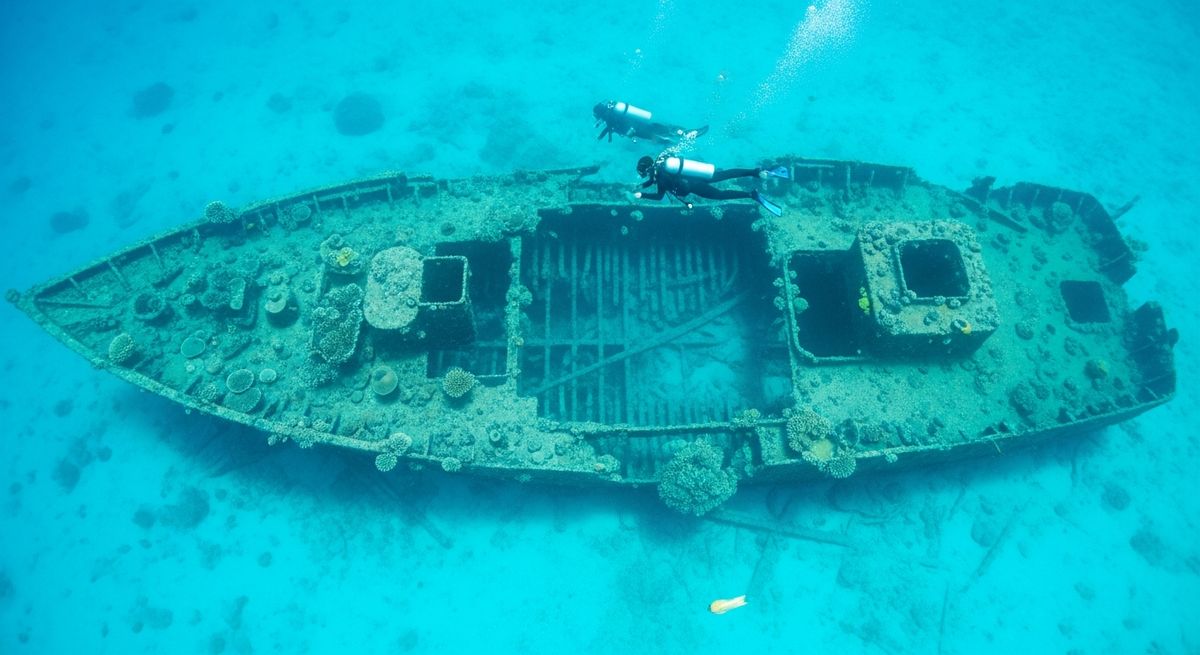
Bunga Lawas sits a little shy of the main Sipadan wall, a curious contrast to the usual reef dives here. It’s a small motor vessel, down around 30 metres, so this isn't one for your first open water dives. We love it because it offers a different kind of dive on an island famed for its pelagics. The wreck itself is relatively intact, a nice size to properly explore without feeling rushed. You can swim through the holds, watch the light filter down into the engine room. What really makes Bunga Lawas special for us, though, is the life that has embraced it. We've seen schools of snapper circling the superstructure, a resident barracuda or two peering out from the shadows, and often a turtle resting on the deck. It’s a quiet dive, often less crowded than the wall, giving you time to appreciate the rust and the growth, the way the metal has become part of the reef. Our advice? Go in the morning. The light penetration is gorgeous, turning the interior a soft blue-green. It’s a calm, contemplative dive, perfect for wreck enthusiasts who also appreciate a bit of peace and quiet.
Typical BUNGA LAWAS Dive Profile
Illustrative profile based on site depth and type. Actual dive profiles vary - always follow your dive computer and training.
Safety Notes
Maximum depth 50m exceeds recreational limits (40m). Technical diving certification and equipment required.
Wreck site - avoid penetration without wreck diving certification. Watch for sharp metal and entanglement hazards.
Always perform a 3-minute safety stop at 5m before surfacing.
BUNGA LAWAS Wreck History
Vessel Type
cargo ship
Cause
unknown
The BUNGA LAWAS rests in the deep blue off the legendary island of Sipadan, a destination more famous for its sheer coral walls and pelagic life than its wrecks. This mysterious motor vessel, likely a Malaysian cargo ship based on its "Bunga" prefix, sits at a challenging depth of 50 meters. Its history remains obscure, with no public records detailing its purpose or the cause of its demise. Its position in the deep suggests it may have foundered unexpectedly, sinking quickly to its final resting place far from the bustling shipping lanes.
A dive on the BUNGA LAWAS is a serious undertaking, reserved for experienced technical divers with the proper training and equipment for deep, decompression diving. Descending into the abyss, the wreck materializes out of the gloom, an intact and silent silhouette. Unlike the shallower, coral-encrusted wrecks of the region, the BUNGA LAWAS is a more haunting and stark sight. The limited bottom time at this depth means exploration must be focused and efficient. Divers can expect to see the ship's main structures, such as the bridge and cargo holds, and may encounter deep-water marine life that shuns the brighter reefs above. It offers a rare and challenging alternative to Sipadan's famous wall dives.
Reviews for BUNGA LAWAS
Conditions
Ocean conditions, forecast and tides for BUNGA LAWAS
BUNGA LAWAS Ocean Conditions
Monthly averages for BUNGA LAWAS, sourced from Open-Meteo marine data + Copernicus Marine (EU) - nearest station: Open-Meteo marine grid (4.12, 118.63) (0km away)
October Averages
Sea Temperature
30°C
87°F · Range: 29.4–31.5°C
Current Speed
4.12 cm/s
Direction: E (104°)
Chlorophyll-a
0.055 mg/m³
Very clear (oligotrophic)
Salinity
31.68 PSU
Based on 4 years of monitoring data · Data sources: Open-Meteo marine data + Copernicus Marine (EU)
Plan & book
Ways to dive Sipadan, from day trips to liveaboards.
Day trips & courses
via GetYourGuideGuided dives, courses and snorkel trips with instant booking.
Find dive trips in SipadanPlaces to stay
via Booking.comHotels and dive resorts near Sipadan.
Search stays in SipadanDive insurance
Most travel insurance excludes or limits scuba. Check what you need before you go.
Dive insurance explainedPartner links: we may earn a commission if you book, at no extra cost to you. How we make money
Where to Stay near BUNGA LAWAS
Prices from Booking.com. We may earn a commission at no extra cost to you.