Apo 29
Protected Area
Apo Reef Natural Park
Why dive here
With 176+ marine species recorded in the area - including giant moray eels, sea turtles, sperm whales, lionfish and pufferfish - Apo 29 offers some of Apo Reef's richest reef diving. Water ranges 28-30°C, warmest May, June, July.
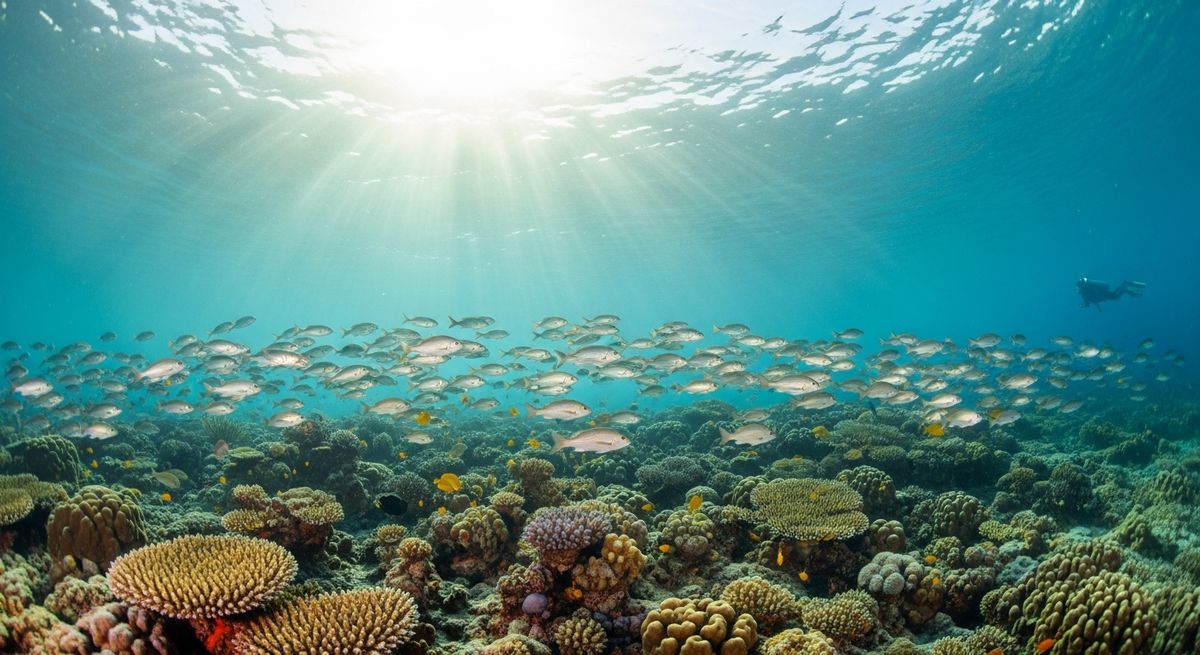
Apo 29, or Barracuda Hill as it's often called, is our pick for serious drift diving in Apo Reef. It’s a pinnacle dive, not for the faint of heart or the newly certified. You really need to be comfortable with current, because when it runs, this place is a whirlwind. We love dropping onto the shallowest point, which is already past 25m, then settling deeper into the flow. What you get for that effort is a truly wild ride. Schools of triangular butterflyfish and horned bannerfish stream past, sometimes so dense they dim the light. You’ll spot pinktail triggerfish darting in and out of the coral, while rock cod patiently wait out the surge. It’s an energetic dive, best for experienced divers on liveaboards who can time their entry just right. Keep an eye out for the larger pelagics – the current brings everything to the table here.
Typical Apo 29 Dive Profile
Illustrative profile based on site depth and type. Actual dive profiles vary - always follow your dive computer and training.
Safety Notes
Always perform a 3-minute safety stop at 5m before surfacing.
Reviews for Apo 29
Conditions
Ocean conditions, forecast and tides for Apo 29
Apo 29 Ocean Conditions
Monthly averages for Apo 29, sourced from Open-Meteo marine data + Copernicus Marine (EU) - nearest station: Open-Meteo marine grid (12.33, 121.06) (26km away)
October Averages
Sea Temperature
30°C
86°F · Range: 28.1–31.3°C
Current Speed
3.16 cm/s
Direction: E (108.4°)
Chlorophyll-a
0.049 mg/m³
Very clear (oligotrophic)
Salinity
32.63 PSU
Based on 4 years of monitoring data · Data sources: Open-Meteo marine data + Copernicus Marine (EU)
Plan & book
Ways to dive Apo Reef, from day trips to liveaboards.
Day trips & courses
via GetYourGuideGuided dives, courses and snorkel trips with instant booking.
Find dive trips in Apo ReefPlaces to stay
via Booking.comHotels and dive resorts near Apo Reef.
Search stays in Apo ReefDive insurance
Most travel insurance excludes or limits scuba. Check what you need before you go.
Dive insurance explainedPartner links: we may earn a commission if you book, at no extra cost to you. How we make money
Where to Stay near Apo 29
Prices from Booking.com. We may earn a commission at no extra cost to you.