Diving in Apo Reef
Why dive here
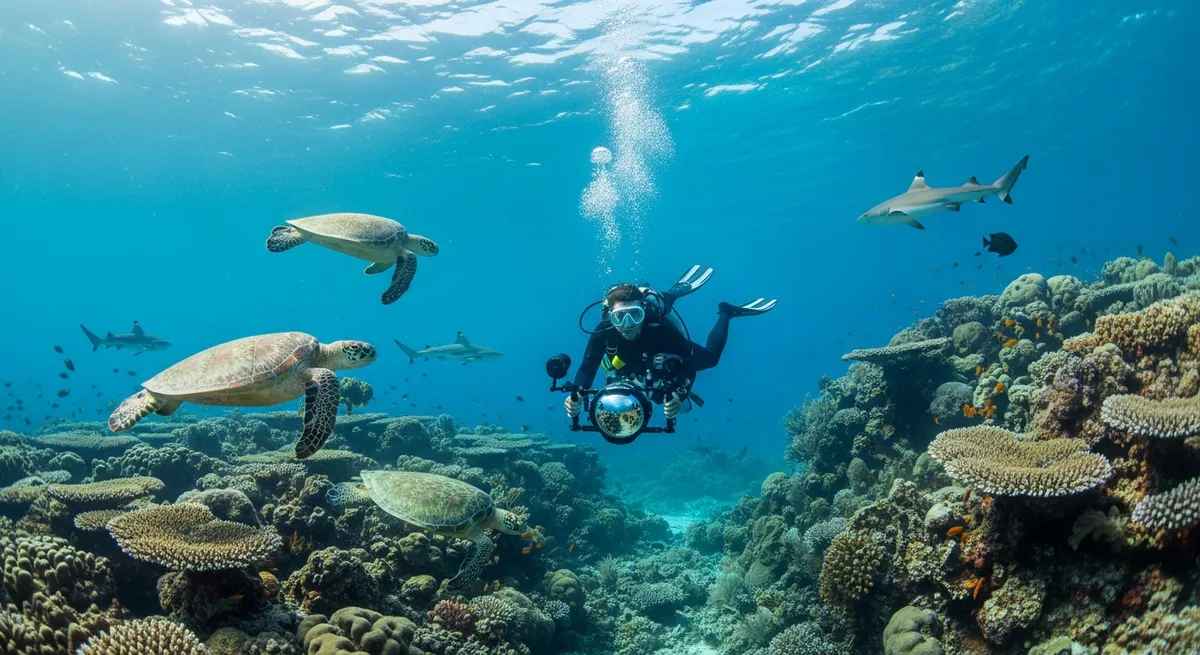
Apo Reef offers some of Philippines's richest diving, with 176+ marine species recorded in the area - including giant moray eels, sea turtles, sperm whales, lionfish and pufferfish. Water ranges 28-30°C, warmest May, June, July.
Apo Reef is undeniably a standout, and not just because it's the largest coral reef system in the Philippines. We’ve found that it consistently delivers some of the most dramatic wall dives in Southeast Asia. Drop off into serious blue, often with visibility stretching 30 metres or more. We love the sheer scale of the place; it feels truly wild out here in the Mindoro Strait. You’re looking at dramatic walls that plunge into the deep, often adorned with big gorgonian fans and barrel sponges. The highlight for us? Definitely the shark encounters. We’ve had incredible luck with whitetip and grey reef sharks patrolling the drop-offs, sometimes even a hammerhead if you hit the right season, usually around March to May. Manta rays are also a regular sight, gliding by on the current. The drift diving here is excellent, letting you cover a lot of ground with ease. Just be mindful of those currents; they can be strong, so good buoyancy is key. If you're into macro, we’d suggest spending some time in the shallower reef sections looking for blennies and gobies, they are surprisingly abundant. We’ve also had some incredible luck spotting large schools of fusiliers, so thick they almost block out the sun - a truly immersive experience.
Apo Reef Dive Site Map
Dive sites and dive centres in Apo Reef
Apo Reef Dive Sites
154 dive sites in Apo Reef
7 Islands Reef, Diving (NDC)
Seven Islands Reef at Apo is one of those sites we always try to hit, especially if we’re feeling a bit adventurous. It’s not just a gentle drift, this place has character. We’ve had dives here where the current really picked up, zipping us past schools of fusiliers so thick they momentarily blot out the sun. Keep an eye out for those big Oriental maori wrasse, they’re almost always cruising around the deeper sections, and if you’re lucky, a flash of blue from a Blue-finned Rock Cod ducking into a crevice. We love the slightly chaotic energy here. It’s not a site for absolute beginners if the current is running, but for experienced divers who enjoy a bit of movement, it’s a real treat. We’ve found some quirky stuff tucked away in the corals, like the Rosy Frogfish, perfectly camouflaged, almost invisible until you’re right on top of it. It’s a site that rewards a slow, observant pass, even with the current pushing you along.
Agnay Sanctuary
Agnay Sanctuary, within Apo Reef, offers a relaxed drift over a sloping coral reef. It’s a good spot for spotting reef sharks cruising deeper, and we often see schools of jacks circling closer to the surface. Visibility here can vary, but generally holds up well. It's an easy dive, suitable for those looking to explore a classic Philippine reef without strong currents.
Agpanabat Caves Canyons
Agpanabat Caves and Canyons offers an interesting deep dive into Apo Reef’s unique topography. You’ll navigate through swim-throughs and along canyon walls, exploring the darker recesses of the reef. It's a dive that rewards careful buoyancy control and a keen eye for finding creatures tucked away in crevices. We’d suggest this site for experienced divers comfortable in overhead environments.
Agpanabat Sanctuary
Agpanabat Sanctuary sits on the eastern side of Apo Reef, offering a sloping coral reef. You'll drift past large coral formations and schools of reef fish. It’s a nice, relaxed dive, good for photographers or those looking for an easier current. We often find turtles here, just cruising along the reef edge.
Akitsushima
The Akitsushima wreck at Apo Reef is one of our absolute favourites in the Philippines. This isn't just a sunken boat; it's a hulking piece of history, a Japanese seaplane tender from WWII, now resting on its port side, stern-up, at around 36 metres. We love dropping down and seeing that massive crane arm, still intact, reaching out into the blue, a silent testament to its past life. You'll find schools of big-eye trevally swirling around the superstructure, their silver scales flashing in the ambient light filtering down. Inside, if you're comfortable with penetration, the crew quarters offer some interesting swim-throughs, but it's the external details that really grab us – the machine guns still mounted, encrusted in corals, and the way pufferfish and angelfish have made the metal their home. For experienced wreck divers, this is a phenomenal site, offering both historical intrigue and vibrant reef life. We’d suggest diving it on an early morning tide for the best visibility before the currents pick up.
Akitsushima
The Akitsushima wreck at Apo Reef isn't just a sunken ship; it’s a time capsule, a huge metal sculpture overgrown with life. We love it because it’s big, offering plenty to explore without being overwhelming. You drop down onto the deck, usually in pretty good visibility, and the sheer scale of the anti-aircraft guns and the crane arms really hits you. It feels like swimming through a ghostly playground. What makes it a standout for us are the details: the way the light filters through the broken superstructure, illuminating schools of fusiliers so thick they momentarily block your view. You'll often find big groupers lurking in the darker crevices and plenty of lionfish perched on the corroded metal. Keep an eye out for nudibranchs, too; they love the nutrient-rich growth on the wreck. This site suits divers who appreciate history and don't mind a bit of current occasionally, which can pick up, especially around the bow. Our tip? Try to get there early in the morning for the best light and fewer other divers.
Aladin
Aladin at Apo Reef really brings the drama. It’s a site we always try to hit, partly for the sheer scale of the reef, but mostly for the fish. Drop down and you’re immediately enveloped in a busy, healthy reef scene. We’ve seen Honeycomb Filefish here, sometimes a dozen of them, just picking away at the coral. Look for the Bantayan Butterflyfish too, a subtle beauty, often paired up. The appeal of Aladin is in the consistent, high-density fish population. It’s not just a few stragglers; you’ll find schools of fusiliers so thick they block out the sun for a moment. Keep an eye out for larger Rock Cod lurking under ledges and the distinctive Black Spotted Blow Fish cruising past. Our favourite, though, might be the Ringtail Maori Wrasse, always elegant, always curious. It's a great drift dive, the current often gentle enough to simply hang back and let the reef unfold before you. For divers who appreciate an active reef with plenty of movement and a good variety of schooling fish, Aladin is a solid pick.
Alad North
Alad North sits on Apo Reef's outer edge, often presenting a wall dive with decent corals. We've regularly spotted white tip reef sharks patrolling the deeper sections and green sea turtles lazily grazing on the shallows. The currents here can pick up, making it a good spot for advanced divers looking for a drift. Expect healthy reef fish populations, particularly schools of fusiliers and snappers.
Alad Sanctuary Garden
Alad Sanctuary Garden in Apo Reef offers a gentle drift along a sloping coral reef. It’s a good spot for newer divers looking to get comfortable with currents while still enjoying plenty of reef fish. You'll likely see parrotfish, anemonefish, and a variety of small reef sharks if you keep an eye on the blue. This site is a relaxed dive, a nice counterpoint to some of Apo's more demanding locations.
Alad South
Alad South in Apo Reef offers a straightforward wall dive. We've seen a good number of reef sharks patrolling the deeper sections, and the occasional turtle makes an appearance cruising along the top of the reef. It's a solid choice for a second or third dive, especially if you're keen to spot pelagics without too much effort.
Apo 29
Apo 29, or Barracuda Hill as it's often called, is our pick for serious drift diving in Apo Reef. It’s a pinnacle dive, not for the faint of heart or the newly certified. You really need to be comfortable with current, because when it runs, this place is a whirlwind. We love dropping onto the shallowest point, which is already past 25m, then settling deeper into the flow. What you get for that effort is a truly wild ride. Schools of triangular butterflyfish and horned bannerfish stream past, sometimes so dense they dim the light. You’ll spot pinktail triggerfish darting in and out of the coral, while rock cod patiently wait out the surge. It’s an energetic dive, best for experienced divers on liveaboards who can time their entry just right. Keep an eye out for the larger pelagics – the current brings everything to the table here.
Apo Island - South (Mabuti)
Mabuti, on Apo Island’s southern side, offers a solid intermediate dive. We drop to around 25m, settling onto a gentle slope of hard corals and anemone fields. You’ll usually find a good number of reef fish here: schools of snapper often hang out, and we’ve seen quite a few anemonefish tending their homes. The current can be mild, making for a relaxed drift, perfect if you’re looking for a comfortable dive after a bit of a break. It's a reliable spot for a pleasant hour underwater.
Show all 154 dive sites in Apo Reef
- Apo Menor
- Apo Reef
- Aqualife Divers Academy
- Ariara Boothouse
- Ariara House Reef
- Ariara Old Pier
- Ariara Reef
- Ariara Spot 1
- Ariara Spot 2
- Bajora Cinco
- Balinghai Wall
- Banayan Point
- Banayan Point
- Bangug Island
- Barracuda Lake
- Barracuda Lake
- Barracuda Point
- Biet Point
- Biet Point
- Bikanayos Rock
- Bikanayos Rock
- Blue Hole
- Blue Hole Tablas
- Bonbon Beach
- Bonbon Sea Grass Valley
- Bouranga
- Bulawit Bay
- Calypso Diving
- Camia Reef
- Camia Wreck
- Cavayan Cave
- Cave
- Cave
- Channel of Alad
- Channel Steps
- Cobrador Sunken Island
- Coral Garden
- Coral Garden East
- Corde Point
- Crocodile Island
- Cyc beach
- Dilumacad
- Dimakya Island
- Diniwid
- Dive site
- Dog Drift
- Dogo Maru Wreck
- Dugong Watch
- Dumunpalit Island
- Ego Wall
- Ego Wall
- Fantastic Reef
- Freedive Angol Point Reef
- Freediving Dimension
- Free Willly Diving
- Friday Rock
- Fuzilliers Wall
- Galeon Point
- Giant Clam Sanctuary
- Guindauahan Island
- Heinz Cave
- Irako
- Irako
- Island staff
- Jack's Point
- Kanto Pating
- Kogyo
- Kogyo Maru
- Kyokuzan Maru
- Laguna Reef (Laguna de Boracay)
- Lapu Wall
- Laurel Islands
- LEYTE
- Light House
- Little Fridays
- Lobster Rock
- Logbon Coral Canyon
- Logbon Sanctuary
- Lunas
- Lusong gunboat
- Mabuti
- Malpadon
- Maniguin Lighthouse Reef
- Manta Point
- Mimaropa
- MING YEE
- Morazan
- Morazan
- Nanshin Maru
- Nanshin maru "black island wreck" - Civilian tanker - 45m - (21 to 32m)
- Nanshin Maru wreck (Black island beach)
- Nashin
- New Wave Divers
- Okikawa Maru
- Olympia
- Olympia Maru
- Origon Rocks
- Pandan South
- Popolcan
- Prado Point
- PRINCESS CAMILLE
- Punta Bunga
- Rock Island
- Salvo Beach
- San Pedro Cliff
- San Pedro Sanctuary
- Sasaigang Point
- Sea Gaia Diving Resort
- SEA QUEST
- Seven Islands
- Shark Airport
- Shark Encounter
- Shark Ridge
- Shipwreck
- Sir Daniel Point
- South Corner
- Southeast Corner
- Staghorn Corazon
- Starfire Resort
- Taiei Maru
- Talei Maru
- Tambisaan
- TANGAT (morozan maru)
- Tangat wreck
- Teru Kaze
- The Gorge
- Toby s Corner
- Tribird Plane Wreck
- TUGBOY
- Twin Peaks, Coron
- Twin Reef
- Unknown Wreck
- VICOSIA
- Virgin Drop
- VIRGINIA
- West Entalula
- White Beach
- Whitebeach Divers and Loon Sunset Bar
- Yapak
- Yapak Dive
- Zac Cave
- Zimisu
Apo Reef Dive Centres
61 dive shops and operators in Apo Reef
200Bar Diving Center
Aquahabitat Divesafari & Tours
Aquaholics Dive Center
Aquanaut Dive Center
Aquaventure Whitetip Dive Suply
Bem's
BORACAY KESAM DIVE
Bubble Diver Center
Show all 61 dive centres in Apo Reef
- Calypso Diving School International
- Chindonan Dive & Beach Resort
- Cooper's Honda Bay Diving
- Coron Divers
- Coron Diver's Shop
- Corto Divers
- D’Divers
- Deep Blue
- Diamond Water Sports
- Divecenter Coron
- Dive Center Coron
- Dive Center Coron
- Dive Gurus
- Divelink Office
- Dive Link Resort
- Dive Sibaltan
- Down Under Dives
- El Dive
- El Dive
- Freediving Coron
- French Kiss Divers Coron
- Go-Diving Scuba Studio
- Island Divers
- Island staff
- Kiss Diving
- Let's Dive Palawan
- Mikly's Dive Center
- Neptune Dive Center
- Pa-Lao-Yu
- Palawan Divers
- Palawan Divers
- Palawan Divers
- Pirate Divers
- Pirates Diving Center and Resort diveshop
- Plankton Divers
- Reggae Dive Center
- Reggae Dive Center
- Safety Stop Dive Shop
- Sangat Island Dive Resort
- Sanho Dive Center
- Scuba & Snorkling Center
- Sea dive Extension
- Sea Sphere Dive Center
- Submariner Diving Center
- Sunset Divers PADI Dive Centre
- Tabanka Divers
- Turtle Divers
- Umali Dive Center
- Viking Scuba Diving
- WaterColors Boracay Diving Adventures - North
- WaterColors Boracay Diving Adventures - South
- W Divers Coron
- Yahnzeey Aqua Gears
Ocean Wildlife in Apo Reef
176 species recorded in Apo Reef
Apo Reef Daylight & Sunrise/Sunset
Sunrise and sunset times for Apo Reef, calculated from coordinates
Today - Sunday 11 October
Sunrise
05:46
Sunset
17:41
Daylight
11h 55m
Golden Hour
17:13
First light (dawn) at 05:25 · Last light (dusk) at 18:03
Monthly Averages
| Month | Sunrise | Sunset | Daylight |
|---|---|---|---|
| Jan | 06:22 | 17:51 | 11h 29m |
| Feb | 06:19 | 18:04 | 11h 45m |
| Mar | 06:05 | 18:08 | 12h 3m |
| Apr | 05:45 | 18:09 | 12h 24m |
| May | 05:33 | 18:14 | 12h 41m |
| JunLongest | 05:33 | 18:22 | 12h 50m |
| Jul | 05:40 | 18:26 | 12h 46m |
| Aug | 05:46 | 18:18 | 12h 32m |
| Sep | 05:46 | 17:59 | 12h 12m |
| OctNow | 05:47 | 17:39 | 11h 52m |
| Nov | 05:54 | 17:29 | 11h 35m |
| DecShortest | 06:09 | 17:35 | 11h 25m |
Times are approximate local times based on longitude. Actual times may vary slightly depending on the exact timezone observed in Apo Reef.
Where to Stay near Apo Reef
Prices from Booking.com. We may earn a commission at no extra cost to you.
Marine Protected Areas near Apo Reef
12 protected areas near Apo Reef - please respect local regulations when diving
DENR Antique, BFAR Antique, Office of the Provincial Agriculture (OPA) Antique and Rare Inc.
Sablayan and Calintaan (SaCa)
El Nido Managed Resource Protected Area
Apo Reef Natural Park
Lutao Reef Fish Sanctuary
Banyaga Marine Park
Cabatiag-White Island Marine Park
Ilin-Ambulong Marine Park
Lumangbayan Turtle Nesting Reserve
Marsumbol Marine Reserve
Tabao and Luli Island / Brgy. Concepcion Fishery Reserve
Talabasi Reef Municipal Fish Sanctuary and Refuge
Getting to Apo Reef
San Jose
Kalibo
Cabatuan
Plan & book
Ways to dive Apo Reef, from day trips to liveaboards.
Day trips & courses
via GetYourGuideGuided dives, courses and snorkel trips with instant booking.
Find dive trips in Apo ReefPlaces to stay
via Booking.comHotels and dive resorts near Apo Reef.
Search stays in Apo ReefDive insurance
Most travel insurance excludes or limits scuba. Check what you need before you go.
Dive insurance explainedPartner links: we may earn a commission if you book, at no extra cost to you. How we make money