Diving in Siargao
Why dive here
Siargao offers some of Philippines's richest diving, with 82+ marine species recorded in the area - including manta rays, mobula rays (devil rays), whale sharks and pufferfish. Water ranges 28-30°C, warmest August, September, November.
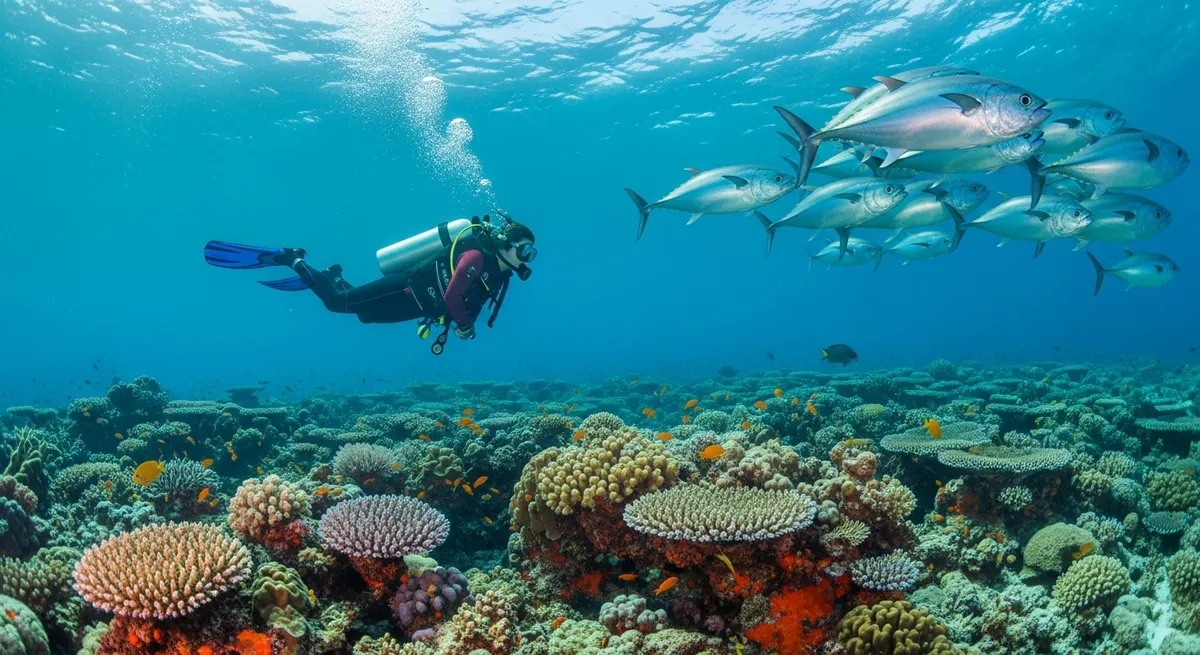
Siargao, famous for its surf breaks, has quietly become a standout dive spot, and honestly, we’re thrilled the secret is getting out. We’ve always appreciated the chilled-out vibe topside, and that extends to the diving here too. You’re not fighting crowds; it feels more exploratory. The reefs around Siargao are something special. We love the vibrant soft corals that sway in the gentle surge, particularly at sites like Seeco Reef. Visibility often stretches out to 20 meters, sometimes more, giving you ample space to take in the schools of fusiliers and damselfish that shimmer in the sunlight. Keep an eye out for Ambon Gudgeons peeking from their sandy burrows or the delicate Opossum Pipefish clinging to a gorgonian. We’ve had some fantastic encounters with green sea turtles cruising along the reef walls, calm and unbothered by our presence. For a bit of excitement, look for reef sharks patrolling the deeper sections. Our favourite dive often involves drifting along a wall, watching the light play on the sponges and corals, a truly peaceful experience. Beginners will find plenty of sheltered spots, while intermediate divers can explore the deeper pinnacles. Come in the dry season, roughly March to October, for the calmest surface conditions.
Siargao Dive Site Map
Dive sites and dive centres in Siargao
Siargao Dive Sites
72 dive sites in Siargao
Adrian's Cove
Adrian's Cove in Siargao offers a mellow reef dive, a nice contrast to some of the area's more spirited drift dives. We typically find red-banded lobsters tucked into crevices, and it's a good spot to try and find the quirky Shortspine Goosefish, which always makes us smile. The resident Stripy fish are pretty abundant here too, easy to spot against the coral. It’s a comfortable dive, especially for those looking for a relaxed pace to explore the reef’s nooks and crannies.
ALKENE
Alkene isn't your typical Siargao dive; it's something special, especially for wreck fanatics. This isn't a deep blue wall, but a shallow, accessible wreck with a real sense of history. The *Alkene*, a tanker built during WWII, ran aground off Anajauan Island in 1974. We love that it’s so close to the surface, just 2m deep, which makes it perfect for longer bottom times and really soaking it all in. You'll spend your time exploring the rusted remains, tracing the deck and superstructure. We've seen schools of juvenile snapper darting through the metalwork, and the sunlight piercing the hull creates some genuinely atmospheric scenes. It's a great spot for photographers keen on capturing the interplay of natural light and decaying steel. Visibility can shift depending on the tide, but typically it’s clear enough to make out the full 99-meter length. Our tip: go during high tide for the best conditions, and keep an eye out for resident batfish that seem to have made the wreck their permanent home. While it’s shallow, there’s still plenty to see and appreciate about this old girl.
Angel's Cove
Angel's Cove in Siargao is a pleasant enough dive, a nice drift along a sloping reef that’s often quieter than some of the more boisterous sites around the island. We’ve seen small schools of big-eye trevally here, swirling past the gorgonians, and it’s a good spot for macro enthusiasts if you take your time. Look out for banded cleaner shrimp tending to their stations and the occasional bristletail leatherjacket camouflaged amongst the thinner birdsnest coral. We'd say it’s a solid choice for an afternoon dive, particularly if you’re after a relaxed pace after a morning of surfing.
Aquarium
Aquarium in Siargao is a decent drift dive, often with a gentle current pushing you along a sloping coral reef. You'll likely spot sweetlips, snapper, and the occasional turtle gliding past. It's a relaxed dive, good for newer divers getting comfortable with currents or anyone looking for an easy second tank.
ATLANTIC
Atlantic isn't your average Siargao dive. Forget the shallow reefs; this is a wreck site, and a proper one at that. We're talking about a motor vessel, the M/V Ailigh, that went down in Typhoon Ike back in '84. She lies upright, deep, with the deck around 30 metres, plunging to 55 metres at the deepest point. That depth means it’s for experienced divers, no question. What we love about Atlantic is the sheer sense of history. You descend onto this enormous shape, dark against the blue, and the details start to emerge: the bridge structure, the cargo holds, the prop. It’s a somber place when you remember the story, the lives lost. But life has reclaimed it. Schools of jacks spiral above the mast, their silver flashing as they turn. Giant groupers eye you from shadowy doorways, and lionfish drift lazily along the hull. The coral growth isn’t extensive, not like a reef, but there are some impressive gorgonians waving in the current and a surprising number of nudibranchs if you slow down and look closely. We always try to hit it on an incoming tide, when the visibility tends to be best, and the currents aren't too gnarly.
Balbagon Port
Balbagon Port offers a straightforward dive to 28m, ideal for beginners or those getting back in the water. Expect to see a variety of smaller reef fish around the port's structures and sandy bottom. It's a relaxed site, good for refining skills without strong currents, and a convenient local option in Siargao when you're not chasing big pelagics.
BASCO
Basco, off Siargao, offers a proper wreck dive, a motor vessel that went down back in '64. We found the stern sitting at around 30 meters, while the bow slopes deeper, hitting 55m at its furthest point. It's a proper dark silhouette against the blue, and you'll spot plenty of resident reef fish darting in and out of the corroded superstructure – schools of fusiliers are common here. Given the depth and the potential for currents, this one is definitely for experienced divers comfortable with deeper profiles. It’s not about penetration, but rather appreciating the scale of the wreck and the life it now supports.
Blue Cathedral
Blue Cathedral is exactly what it sounds like: a large underwater cave off Siargao, dropping to 34m. We found the main chamber impressive, with light shafts cutting through the gloom on clear days. It's an intermediate dive, best for those comfortable with overhead environments and deep entries. Keep an eye out for resident groupers and barracuda patrolling the mouth.
Blue Lagoon
Blue Lagoon in Siargao is a gentle introduction to diving. It’s a shallow lagoon site, topping out at 20 metres, making it ideal for beginners or those getting back in the water. You’ll find coral patches scattered across the sandy bottom, home to various small reef fish. We’d suggest it as a good spot for a relaxed, easy dive.
Bonnie's place
Bonnie's Place in Siargao offers a gentle introduction to the island's underwater scene. It’s a shallower site, good for newer divers or those looking for a relaxed swim-through. We've often spotted schooling fusiliers and the occasional reef shark cruising by. If you’re after a mellow dive to get your fins wet, this spot is a solid choice.
Bujong Shoal
Bujong Shoal gives you that classic Siargao pinnacle dive, a real sense of being out in the open ocean. We've seen some interesting stuff here, like the Stripy and the Shortspine Goosefish – not exactly your everyday reef fish. Keep an eye out for red-banded lobsters tucked into the crevices. It’s a site for divers who appreciate the subtler, more unique finds, rather than just big schools or dramatic drop-offs. We often find ourselves just hanging out, watching the currents swirl around the pinnacle.
Bulias Shoal
Bulias Shoal off Siargao offers a gentle slope dive. You'll often find a good mix of smaller reef fish here, along with the occasional turtle cruising past. It's a relaxed spot, making it a good choice for newer divers or anyone looking for an easy, pleasant afternoon in the water.
Show all 72 dive sites in Siargao
- Burias Shoal
- Cabuan
- Canyons
- Capistrano
- Cebu Great Ocean
- Coral Garden
- Coral Gardens
- Coral Gardens Reef
- Coraya Divers Camiguin Housereef
- Daku Arch
- DONA LILIAN
- DONA VICENTA
- DON BONIFACIO
- Duka Bay Pier
- Günter's wall
- Hard Rock
- House on the Rocks
- Iring Point
- Isla Reta
- Jacking Horse
- Japanese Garden
- Jicdup Black Forrest
- Jigdup Wall
- Kabila
- Kilambing North
- Kilambing South
- KIOWA
- Ligid Caves
- Mabuarock
- Magting
- MANDAUE TRANSPORT
- Mansoud Wall
- Mansud Wall
- Mantigue Island
- Mantigue Sanctuary
- Mantigue Turtle Point
- Marissa
- No Name Rock
- Nonoc Jetty 5
- Northern Mindanao
- Old Volcano
- Old Volcano Bay
- Pangpangon
- Pinnacle Point
- PORO POINT
- Rock Island
- San Ricardo Whale Sharks
- Sarangani Bay - Tinoto Wall
- South Shore Divers
- Stimpy’s
- Sunken Cemetery
- Sunken Yatch
- SURIGAO DEL SUR
- Tangub Bay
- Tangub Hot Springs
- Tongatok
- White Island Black Forrest
- White Island Old Sanctuary
- Wreck of Japanese cruiser Mogami
- Wreck of Japanese destroyer Kazagumo
Siargao Dive Centres
17 dive shops and operators in Siargao
Ocean Wildlife in Siargao
82 species recorded in Siargao
Siargao Daylight & Sunrise/Sunset
Sunrise and sunset times for Siargao, calculated from coordinates
Today - Sunday 11 October
Sunrise
05:28
Sunset
17:26
Daylight
11h 58m
Golden Hour
16:58
First light (dawn) at 05:07 · Last light (dusk) at 17:47
Monthly Averages
| Month | Sunrise | Sunset | Daylight |
|---|---|---|---|
| Jan | 05:59 | 17:39 | 11h 39m |
| Feb | 05:59 | 17:50 | 11h 51m |
| Mar | 05:47 | 17:51 | 12h 4m |
| Apr | 05:30 | 17:49 | 12h 19m |
| May | 05:21 | 17:52 | 12h 32m |
| JunLongest | 05:21 | 18:00 | 12h 38m |
| Jul | 05:28 | 18:03 | 12h 36m |
| Aug | 05:32 | 17:57 | 12h 25m |
| Sep | 05:30 | 17:41 | 12h 11m |
| OctNow | 05:28 | 17:24 | 11h 56m |
| Nov | 05:33 | 17:16 | 11h 43m |
| DecShortest | 05:47 | 17:23 | 11h 37m |
Times are approximate local times based on longitude. Actual times may vary slightly depending on the exact timezone observed in Siargao.
Where to Stay near Siargao
Prices from Booking.com. We may earn a commission at no extra cost to you.
Marine Protected Areas near Siargao
46 protected areas near Siargao - please respect local regulations when diving
Coastal Community Alliance Unified for Sustainable Ecosystem (CCAUSE)
Island of Siargao, Bucas Grande, Middle Bucas and East Bucas in Dinagat MSFR & Island of Siargao, Poneas, Dahican, Tona, Laonan Abanay and Bancuyo Wilderness Area
Hinatuan Passage Development Alliance (HIPADA)
Dauis, Tagbilaran Bohol
Baclayon, Tagbilaran Bohol
San Juan Siquijor
Siargao Islands Protected Landscapes and Seascapes (SIPLAS)
Cuatro Islas Protected Landscape & Seascape
Island of Pandasan Wilderness Area
Island of Banaon, Basaan, Saac, Tambu, Bambanon Wilderness Area
Carmen Critical Habitat
Island of Awasan, Cabilan, Capaquian, Sugbuhan and Tagboaba Wilderness Area
Showing 12 largest of 46
Getting to Siargao
Butuan
Laguindingan
Davao
Plan & book
Ways to dive Siargao, from day trips to liveaboards.
Day trips & courses
via GetYourGuideGuided dives, courses and snorkel trips with instant booking.
Find dive trips in SiargaoPlaces to stay
via Booking.comHotels and dive resorts near Siargao.
Search stays in SiargaoDive insurance
Most travel insurance excludes or limits scuba. Check what you need before you go.
Dive insurance explainedPartner links: we may earn a commission if you book, at no extra cost to you. How we make money