ALKENE
Protected Area
Island of Siargao, Bucas Grande, Middle Bucas and East Bucas in Dinagat MSFR & Island of Siargao, Poneas, Dahican, Tona, Laonan Abanay and Bancuyo Wilderness Area
Why dive here
With 82+ marine species recorded in the area - including manta rays, mobula rays (devil rays), whale sharks and pufferfish - ALKENE offers some of Siargao's richest wreck diving. Water ranges 27-30°C, warmest June, August, September.
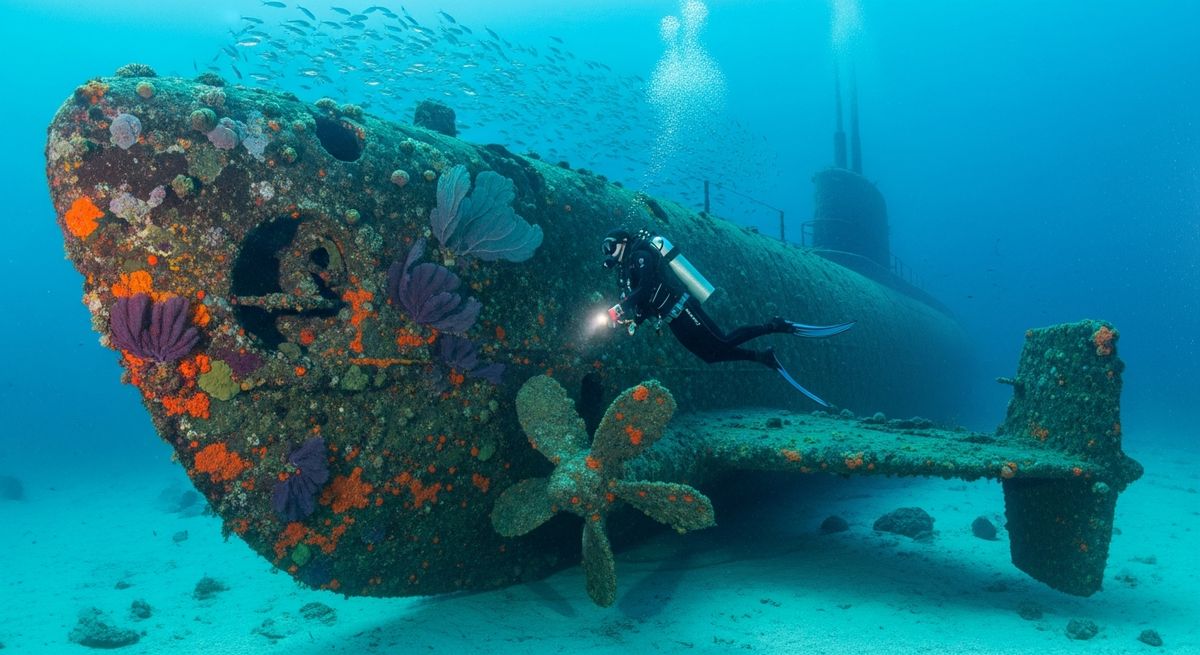
Alkene isn't your typical Siargao dive; it's something special, especially for wreck fanatics. This isn't a deep blue wall, but a shallow, accessible wreck with a real sense of history. The *Alkene*, a tanker built during WWII, ran aground off Anajauan Island in 1974. We love that it’s so close to the surface, just 2m deep, which makes it perfect for longer bottom times and really soaking it all in. You'll spend your time exploring the rusted remains, tracing the deck and superstructure. We've seen schools of juvenile snapper darting through the metalwork, and the sunlight piercing the hull creates some genuinely atmospheric scenes. It's a great spot for photographers keen on capturing the interplay of natural light and decaying steel. Visibility can shift depending on the tide, but typically it’s clear enough to make out the full 99-meter length. Our tip: go during high tide for the best conditions, and keep an eye out for resident batfish that seem to have made the wreck their permanent home. While it’s shallow, there’s still plenty to see and appreciate about this old girl.
Typical ALKENE Dive Profile
Illustrative profile based on site depth and type. Actual dive profiles vary - always follow your dive computer and training.
Safety Notes
Wreck site - avoid penetration without wreck diving certification. Watch for sharp metal and entanglement hazards.
ALKENE Wreck History
Year Sunk
1974
Vessel Type
tanker
Cause
grounding
The Alkene was a tanker built in 1945 by the St. John's River Shipbuilding Co. in Jacksonville, Florida. Its construction during the final year of World War II suggests it was likely a T1-class tanker, a small and versatile workhorse designed to transport fuel to remote ports and islands across the Pacific. After the war, it transitioned to civilian service, eventually being acquired by the Luzon Stevedoring Corporation in the Philippines. Its career came to an abrupt end on January 9, 1974, when, on a passage from Bislig to Bataan, it ran aground off Siargao Island.
Today, the Alkene rests in just 2 meters of water, making it a spectacular and easily accessible dive and snorkel site. Its massive tanker structure, lying in the clear, shallow waters of the Philippines, is an awesome sight. Divers can explore the large deck, superstructure, and swim-throughs, all bathed in bright sunlight. The wreck has become a haven for marine life, with its steel plates now encrusted in coral and swarmed by schools of fish. Its shallow depth makes it a perfect location for a long, leisurely second dive or a memorable experience for less experienced divers.
Nearest Dive Centres to ALKENE
Dive shops near ALKENE
View all dive centres in SiargaoReviews for ALKENE
Conditions
Ocean conditions, forecast and tides for ALKENE
ALKENE Ocean Conditions
Monthly averages for ALKENE, sourced from Open-Meteo marine data + Copernicus Marine (EU) - nearest station: Open-Meteo marine grid (8.91, 125.03) (20km away)
October Averages
Sea Temperature
30°C
86°F · Range: 29.2–31.2°C
Current Speed
1 cm/s
Direction: S (180°)
Chlorophyll-a
0.333 mg/m³
Moderate productivity
Salinity
32.39 PSU
Based on 4 years of monitoring data · Data sources: Open-Meteo marine data + Copernicus Marine (EU)
Plan & book
Ways to dive Siargao, from day trips to liveaboards.
Day trips & courses
via GetYourGuideGuided dives, courses and snorkel trips with instant booking.
Find dive trips in SiargaoPlaces to stay
via Booking.comHotels and dive resorts near Siargao.
Search stays in SiargaoDive insurance
Most travel insurance excludes or limits scuba. Check what you need before you go.
Dive insurance explainedPartner links: we may earn a commission if you book, at no extra cost to you. How we make money
Where to Stay near ALKENE
Prices from Booking.com. We may earn a commission at no extra cost to you.