BUTUAN
Protected Area
Olango Island Wildlife Sanctuary
Why dive here
With 554+ marine species recorded in the area - including barracuda, blacktip reef sharks, blue-spotted stingrays, manta rays and mobula rays (devil rays) - BUTUAN offers some of Visayas's richest wreck diving. Water ranges 28-31°C, warmest May, June, October.
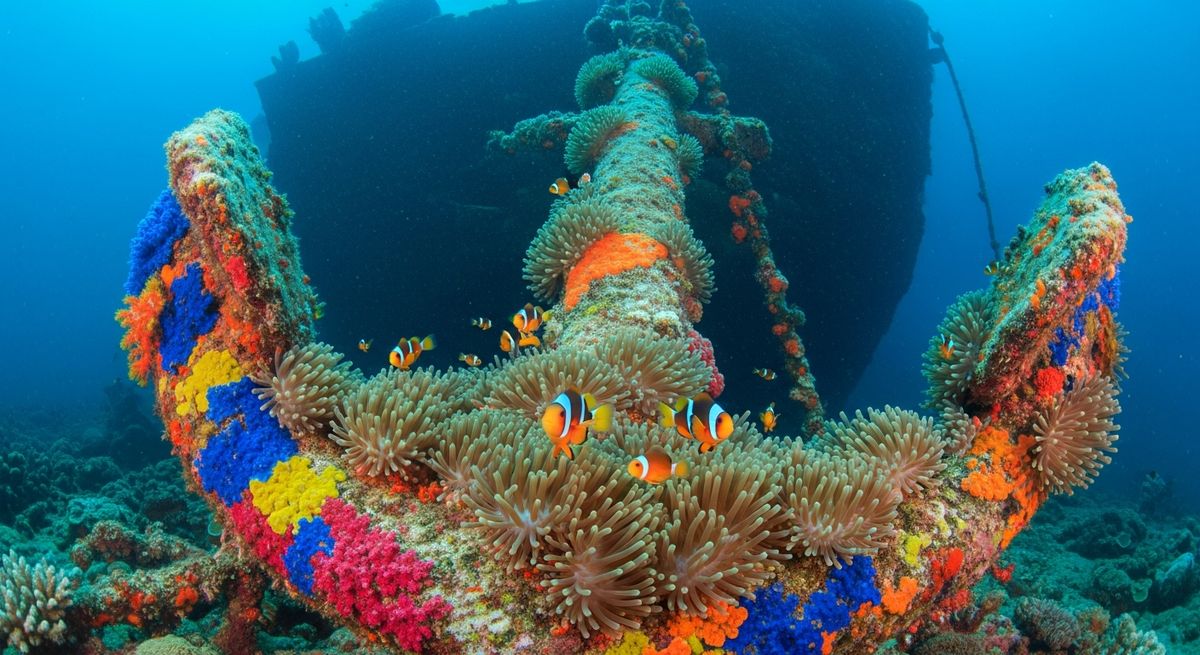
The Butuan wreck sits upright in a rare 10 metres of water. It’s an old motor vessel, sunk back in '73 after a steering failure sent it into a reef. We love how accessible it is; a true shallow wreck dive, perfect for extended bottom times and for those who like to take things slow. The ship's structure is still largely intact, barnacled and soft coral-encrusted, but you can clearly make out the bow and stern. Schools of fusiliers often swirl around the mast, and we’ve spotted plenty of lionfish tucked into shadowy crevices along the deck. The light penetration is fantastic at this depth, painting the corals in greens and oranges, especially on sunny mornings. We’d suggest going early; the visibility tends to be best before the afternoon boat traffic kicks up the sediment. This isn't a dive for big pelagics, but if you enjoy history and finding macro life on a coral-covered frame, it's a solid choice.
Typical BUTUAN Dive Profile
Illustrative profile based on site depth and type. Actual dive profiles vary - always follow your dive computer and training.
Safety Notes
Wreck site - avoid penetration without wreck diving certification. Watch for sharp metal and entanglement hazards.
BUTUAN Wreck History
Year Sunk
1973
Vessel Type
cargo ship
Cause
grounding
The M/V Butuan was a motor vessel built during the final years of World War II in 1944. For nearly three decades, it served the Philippine archipelago, transporting goods and likely passengers between its islands. Its final voyage began in Butuan City, from which it took its name, with a destination set for various other ports throughout the Philippines.
On June 27, 1973, while navigating the Canigao Channel in the Visayas, disaster struck. The vessel veered off course and struck a reef off Bagacay Point, sustaining critical damage. The grounding was severe, and the M/V Butuan ultimately succumbed to the sea, sinking to the channel floor. Its loss was a stark reminder of the navigational dangers present in the reef-strewn waters of the region.
Resting in just 10 meters of water, the Butuan is now a highly accessible and fascinating wreck dive. Its shallow depth allows for long, relaxed bottom times and bathes the site in natural light, making it ideal for underwater photographers and novice wreck divers. Over the decades, the wreck has transformed into a lively artificial reef, its structure providing a home for countless species of fish and invertebrates native to the rich waters of the Visayas.
Nearest Dive Centres to BUTUAN
Dive shops near BUTUAN
ATLANTIS INFINITI INC
Blue Dream
CLUB CEBU HOPPING
Scotty's Action Sports Network
50BAR DIVING CENTER
ALL BLUE DIVING CEBU CORPORATION
Reviews for BUTUAN
Conditions
Ocean conditions, forecast and tides for BUTUAN
BUTUAN Ocean Conditions
Monthly averages for BUTUAN, sourced from Open-Meteo marine data - nearest station: Open-Meteo marine grid (10.3, 124.07) (19km away)
October Averages
Sea Temperature
31°C
87°F · Range: 29.5–32.2°C
Air Temperature
24°C
76°F
Wind Speed
3.27 m/s
6.4 knots
Atmospheric Pressure
1010 hPa
Based on 4 years of monitoring data · Data sources: Open-Meteo marine data
Plan & book
Ways to dive Visayas, from day trips to liveaboards.
Day trips & courses
via GetYourGuideGuided dives, courses and snorkel trips with instant booking.
Find dive trips in VisayasPlaces to stay
via Booking.comHotels and dive resorts near Visayas.
Search stays in VisayasDive insurance
Most travel insurance excludes or limits scuba. Check what you need before you go.
Dive insurance explainedPartner links: we may earn a commission if you book, at no extra cost to you. How we make money
Where to Stay near BUTUAN
Prices from Booking.com. We may earn a commission at no extra cost to you.