STO NINO DE CEBU
Protected Area
Marine Protected Area Network with Guiuan Marine Resource Protected Landscape and Seascape
Why dive here
With 554+ marine species recorded in the area - including barracuda, blacktip reef sharks, blue-spotted stingrays, manta rays and mobula rays (devil rays) - STO NINO DE CEBU offers some of Visayas's richest wreck diving. Water ranges 28-31°C, warmest May, June, October.
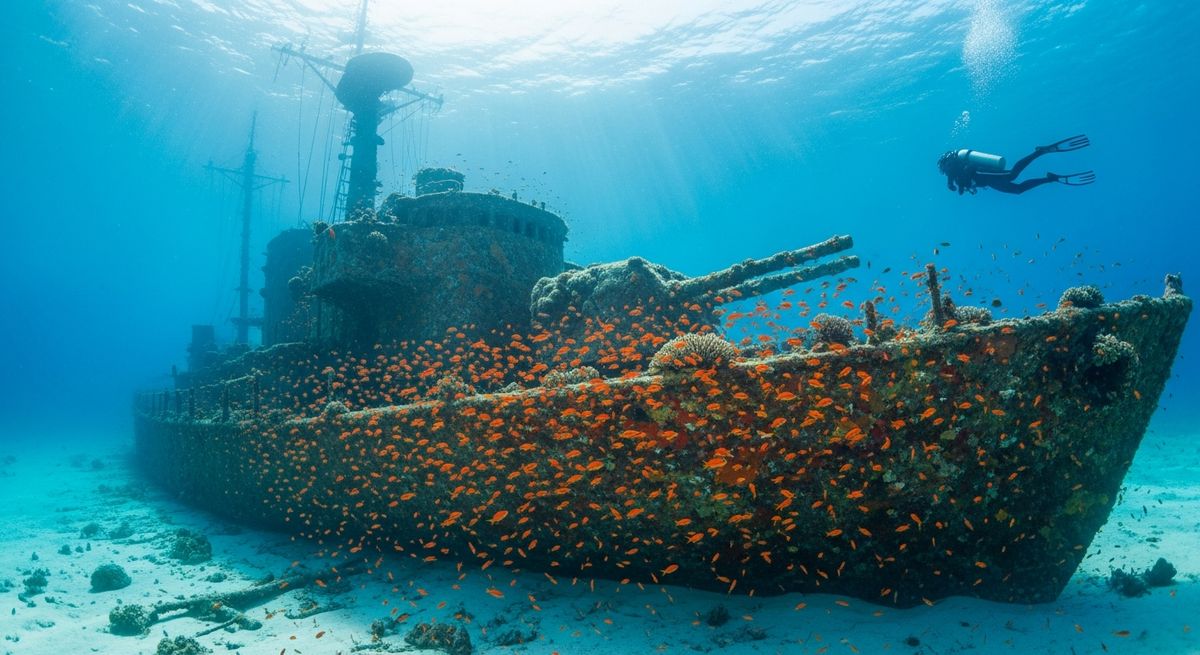
The Sto Niño de Cebu sits upright at 35 metres, a proper deep wreck dive. She went down back in '84, thanks to some rough weather, and has had plenty of time for marine life to move in. You'll find schools of jacks circling the superstructure, and lionfish often perch on the railings, ready to pose. It’s a good spot for advanced divers who appreciate a wreck with a bit of history and a decent resident population of fish, rather than just a quick swim-through. We’d suggest going in the morning before any afternoon currents pick up.
Typical STO NINO DE CEBU Dive Profile
Illustrative profile based on site depth and type. Actual dive profiles vary - always follow your dive computer and training.
Safety Notes
Deep dive (35m) - monitor air consumption closely. Advanced certification recommended.
Wreck site - avoid penetration without wreck diving certification. Watch for sharp metal and entanglement hazards.
Always perform a 3-minute safety stop at 5m before surfacing.
Reviews for STO NINO DE CEBU
Conditions
Ocean conditions, forecast and tides for STO NINO DE CEBU
STO NINO DE CEBU Ocean Conditions
Monthly averages for STO NINO DE CEBU, sourced from Open-Meteo marine data - nearest station: Open-Meteo marine grid (10.3, 124.07) (19km away)
October Averages
Sea Temperature
31°C
87°F · Range: 29.5–32.2°C
Air Temperature
24°C
76°F
Wind Speed
3.27 m/s
6.4 knots
Atmospheric Pressure
1010 hPa
Based on 4 years of monitoring data · Data sources: Open-Meteo marine data
Plan & book
Ways to dive Visayas, from day trips to liveaboards.
Day trips & courses
via GetYourGuideGuided dives, courses and snorkel trips with instant booking.
Find dive trips in VisayasPlaces to stay
via Booking.comHotels and dive resorts near Visayas.
Search stays in VisayasDive insurance
Most travel insurance excludes or limits scuba. Check what you need before you go.
Dive insurance explainedPartner links: we may earn a commission if you book, at no extra cost to you. How we make money
Where to Stay near STO NINO DE CEBU
Prices from Booking.com. We may earn a commission at no extra cost to you.