Boonsung Wreck
Protected Area
Khao Lak - Lam Ru
Why dive here
With 173+ marine species recorded in the area - including blacktip reef sharks, eagle rays, giant moray eels, whale sharks and clownfish - Boonsung Wreck offers some of Similan Islands's richest wreck diving. Water ranges 29-31°C, warmest April, May, June.
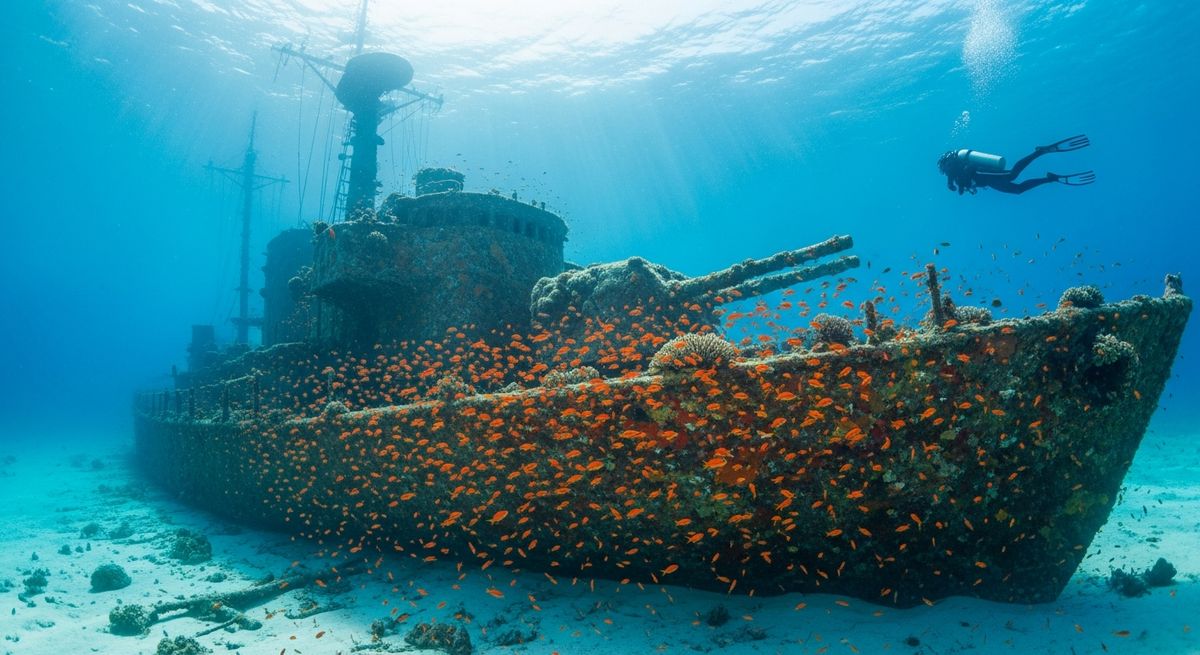
The Boonsung Wreck isn’t some grand shipwreck, more a pile of rubble from a tin dredger that sank back in the 80s. But don’t let that put you off; what it lacks in intact structure, it more than makes up for in sheer fish density. We love this site as a second dive, a shallow grand finale where the light penetrates right down to the twisted metal. Dropping down, you’ll immediately be engulfed by schools of fusiliers, so thick they often block out the sun for a few seconds. Look closer and you'll spot resident lionfish perched menacingly, along with robust schools of Indian scad swirling around the fragmented sections. It’s an easy dive, sitting in about 18 metres, making it perfect for newer wreck divers or photographers wanting time to compose shots. The wreck itself is pretty broken up, but that creates countless nooks and crannies for morays and pipefish to hide. We always recommend getting there early, before the crowds, to truly appreciate the scale of the fish biomass. It’s a site that proves even a broken wreck can be incredibly productive.
Safety Notes
Wreck site - avoid penetration without wreck diving certification. Watch for sharp metal and entanglement hazards.
Boonsung Wreck Wreck History
Year Sunk
1984
Vessel Type
barge
Cause
unknown
The Boonsung Wreck is less a story of a single maritime incident and more a tale of transformation. Originally a tin dredger, the vessel sank in 1984 off the coast of Khao Lak. For years, it sat on the sandy bottom, slowly gathering marine life. Then, in 2004, the immense power of the Indian Ocean tsunami tore through the area, breaking the wreck into several distinct pieces and scattering them across the seabed.
This violent act of nature paradoxically improved the dive site, creating more nooks and crannies for marine life to inhabit. Today, the Boonsung is renowned among divers as a 'fish magnet' and one of the best wreck dives in Thailand. At a relatively shallow depth, it's an underwater metropolis teeming with life. Divers are guaranteed to see massive schools of snapper and fusiliers, well-camouflaged stonefish and scorpionfish, and countless moray eels peeking out from every hole. It's a perfect example of how a man-made structure can be reclaimed by the ocean to create a spectacular artificial reef.
Nearest Dive Centres to Boonsung Wreck
Dive shops near Boonsung Wreck
Similan Dive Center
Funky Monkey
Andaman Scub
Sea Turtle Divers
Dive In
Loma Diving Adventure
Reviews for Boonsung Wreck
Conditions
Ocean conditions, forecast and tides for Boonsung Wreck
Boonsung Wreck Ocean Conditions
Monthly averages for Boonsung Wreck, sourced from Open-Meteo marine data + Copernicus Marine (EU) - nearest station: Open-Meteo marine grid (8.1, 98.3) (6km away)
October Averages
Sea Temperature
30°C
85°F · Range: 28.7–30.4°C
Current Speed
5.1 cm/s
Direction: S (191.3°)
Salinity
29.75 PSU
Based on 4 years of monitoring data · Data sources: Open-Meteo marine data + Copernicus Marine (EU)
Plan & book
Ways to dive Similan Islands, from day trips to liveaboards.
Day trips & courses
via GetYourGuideGuided dives, courses and snorkel trips with instant booking.
Find dive trips in Similan IslandsPlaces to stay
via Booking.comHotels and dive resorts near Similan Islands.
Search stays in Similan IslandsDive insurance
Most travel insurance excludes or limits scuba. Check what you need before you go.
Dive insurance explainedPartner links: we may earn a commission if you book, at no extra cost to you. How we make money
Where to Stay near Boonsung Wreck
Prices from Booking.com. We may earn a commission at no extra cost to you.