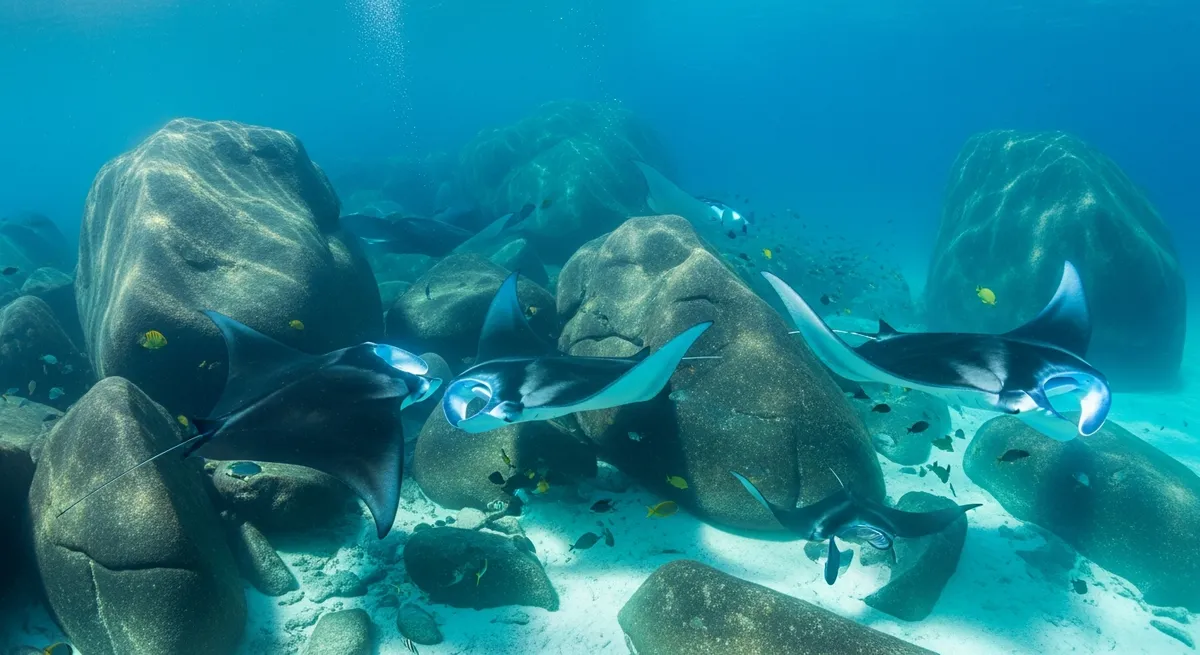
Diving in Similan Islands
Why dive here
Similan Islands offers some of Thailand's richest diving, with 173+ marine species recorded in the area - including blacktip reef sharks, eagle rays, giant moray eels, whale sharks and clownfish. Water ranges 29-31°C, warmest April, May, June.
The Similans, for us, are all about the sheer scale of the place. Those huge granite boulders, smoothed over millennia, create incredible swim-throughs and gulleys. You’ll feel tiny next to them, especially at sites like Elephant Head Rock, where the light plays off the formations in a truly dramatic way. We love watching the blue-fin trevally hunt through schools of fusiliers so thick they almost block the sun, particularly in the channels between islands. Visibility here is often phenomenal, 20 to 30 meters on a good day, letting you really appreciate the hard corals - lots of staghorn and honeycomb. Keep an eye out for blennies popping their heads from the coral, particularly the Lubbock's combtooth. While the Similans are often touted for manta rays, especially between December and April, we’ve had more consistent luck spotting them at Koh Bon or Koh Tachai, just a little further north. Richelieu Rock, while technically outside the Similans, is often combined in liveaboard trips and that’s where you’ll have your best chance for a whale shark encounter, typically late in the season. Current can pick up, so be ready for some exhilarating drifts, particularly around the pinnacles.
Similan Islands Dive Site Map
Dive sites and dive centres in Similan Islands
Similan Islands Dive Sites
250 dive sites in Similan Islands
8 mile rock
8 mile rock offers diving in Similan Islands, Thailand.
Andaman Scuba
Andaman Scuba, found in the Similan Islands, offers a decent enough dive, particularly if you’re looking for a relaxed exploration. We’ve found the currents here are generally mild, making it a good spot for easing back into things or for newer divers getting their fins wet. You’ll drift past large formations of table and staghorn corals, with patches of seagrass where you might spot a few Indian Scad. It’s not the most dramatic reef in the Similans, but it’s a pleasant way to spend an hour underwater. We’d suggest it for a calm morning dive.
Anemone Reef
Anemone Reef in the Similans isn't just about the anemones, though there are plenty and they’re gorgeous. We love dropping in on the north side, letting the current carry us gently along the shallow reef top. That’s where the light plays beautifully, picking out all the tiny critters. Keep your eyes peeled for those blennies peeking out of every crevice, especially the Spotty Blennies – they have so much character. The real show, though, is the sheer density of fish. Schools of cardinalfish shimmer, and if you look closely into the anemones, you’ll often find cleaner mimics darting amongst the tentacles. Down deeper, around the base of the pinnacle, watch for the larger rock cods lurking. It's a busy site, yes, but for good reason. We’d suggest going early if you can manage it; the morning light really makes the colours pop and you beat the rush. It’s an easy, colourful dive, perfect for photographers or anyone who just loves to drift and absorb the sheer vibrancy of a healthy reef.
Anita s reef
Anita’s Reef, near Koh Similan, offers a gentle drift over a sloping coral reef. It’s a comfortable dive, usually with mild currents, making it a good choice for newer divers or those looking for a relaxed exploration. We often spot leopard sharks resting in the sand channels here, alongside schools of snapper and fusiliers weaving through the bommies. Keep an eye out for octopus tucked into the coral at shallower depths.
Anita's Reef
Anita's Reef, tucked away on the eastern side of Similan Island No. 5, is a site we often suggest for a relaxed dive. The gentle sandy slope makes for easy navigation, and it's punctuated by some seriously impressive coral bommies. You'll find a nice mix of table and staghorn corals, and we’ve often spotted lionfish lurking, plus those striking Oriental sweetlips. Keep an eye out for the clown triggerfish; they’re a bit shyer but truly gorgeous when they make an appearance. The soft tree corals and sea fans on the bommies are great for finding longnose hawkfish. This spot is generally pretty mellow, good for an easy-going morning dive when you just want to cruise and watch the reef wake up.
Anti gravity Divers
Anti gravity Divers is a gentle site on the eastern side of the Similans. It’s mostly sand and small coral patches, a good spot for spotting Hardwick's Sea Stars and Horseshoe Crabs. If you're lucky, a Whale Shark might cruise by, but that’s a rare treat. This is a nice, relaxed dive, ideal for less experienced divers or those looking for a quiet second dive.
Ao Kon Ka Re
Ao Kon Ka Re is a fantastic place to spend an afternoon in the Similans, especially if you’re looking to take it easy. The bay on the east side of Koh Similan, also known as Donald Duck Bay, is a great spot to anchor up for lunch, and the diving here is just as relaxed. We love the hard coral garden closer to the shore. It’s shallower, around 5-10 meters, and on a sunny day, the light plays beautifully through the staghorn coral formations. You’ll find plenty of imposter fangblennies darting in and out, and we’ve spotted freckled anglerfish camouflaged perfectly among the branches more than once. Keep an eye out for spinysnout pipefish too, they’re tricky to spot but often hovering near the coral. Further out, the reef slopes gently, reaching about 20 meters. Here, you get more of those iconic Similan granite boulders, providing shelter for yellowfin emperors and blotchfin scorpionfish. The visibility here is usually pretty dependable, making it a good choice for newer divers or for a chilled-out second dive of the day. It’s not a drift, it’s a leisurely exploration.
Ao Nui
Ao Nui sits in a sheltered bay on Similan Island number nine, a perfect spot for newer divers to ease into the water. We usually find it calm here, with a sandy bottom sloping gently to 17 meters. Look closely among the small boulders and you'll often spot juvenile reef sharks or stingrays tucked away, and the occasional turtle glides past the reef edge. It’s an easy, relaxed dive, ideal for check-out dives or just stretching your fins.
Ao Sane
Ao Sane, on the eastern side of Similan Island number nine, offers a straightforward dive. We usually find large granite boulders scattered across a sandy bottom here, creating interesting swim-throughs and overhangs. It's a relaxed spot, great for new divers looking to get comfortable or for photographers who want to take their time exploring the crevices for macro life. Look for resident ribbon eels and a variety of shrimp.
Ayara Bay
Ayara Bay, on the eastern side of the Similans, is a gentle spot. The reef here, topping out at 17 metres, offers a relaxed dive, perfect for newer divers or those looking for a long, slow exploration. You’ll find plenty of small reef fish darting amongst the hard corals, and it’s a good place to spot moray eels tucked into crevices. It's a peaceful alternative to some of the busier Similan sites.
Banana Bay
Banana Bay, tucked into the Similans, often gets overlooked for some of its flashier neighbours, but we think that’s a mistake. This is our quiet favourite, especially for those days when you just want a relaxed, easy dive after a bit of a current-filled morning elsewhere. The bay itself is a gentle slope, mostly sand, but don't let that fool you. Spend some time really looking, and you’ll be rewarded. We love it for the macro and the sheer chill factor. Think blackspotted sea cucumbers inching along, little striped triplefins perched on coral rubble, and those tiny bicolor blennies popping their heads out of holes. It’s a fantastic spot for photographers who want to slow down and really compose a shot. We’ve often seen big garrupa cruising through the sandy patches, and giant morays peeking from under the scattered coral heads. Our tip: go early or late in the day. The light is softer, and the five-lined snapper schools seem to move more deliberately, making for some lovely silhouettes against the sun. It’s perfect for newer divers building confidence, or anyone who just wants an hour of pure, unhurried underwater observation.
Barracuda Rock
Barracuda Rock, at a maximum depth of 20 metres, offers a good intermediate dive in the Similans. It’s a rocky site, as the name suggests, where we often spot schools of chevron barracuda circling the main pinnacle. Look out for reef sharks patrolling the deeper sections. This site is best for divers comfortable with moderate currents.
Show all 250 dive sites in Similan Islands
- Batfish Bend
- Bay 1 / Ao Ter
- Beacon Beach
- Beacon Point
- Beacon Reef
- Bida Nai
- Bida Nok Deep Site
- Big Blue
- Bird Rock
- Bon Soong Wreck
- Boonsung Wreck
- Boulder City
- Breakfast Bend
- Bungalow bay
- Bungalow Bay
- Bunsoong Wreck
- Chinese Wall
- Christmas Point
- ChristmasPoint
- Coral Gardens
- Coral Island
- Coral Island/ 데블스 마이톤NO2
- Crap Island
- Deep Six
- Donald Duck Bay
- Eagle Rock, Similan
- Eastern Shallows
- East of Eden
- East of Eden
- Elephant Head
- Elephant Head Rock
- Fantasea Reef
- Freedom beach
- Garang Heang/Hin Klai
- Garang Heng
- good snorkeling
- Hideaway Bay
- Hide Away Bay
- Hin Bida
- Hin Daeng
- Hin Dot
- Hin Gong
- Hin Klai
- Hin Kop
- Hin Phae
- Hin Pratumba
- Hin Sam Sam
- HMS Shalimar
- HMS SQUIRREL
- HMS Stoic
- HMS Strongbow
- HMS Stygian
- Home Run Reef
- HTMS Phratong Wreck
- HUG OCEAN pool
- Jaak (Chak) Bay
- Kamala Rock
- Kanpela Point
- Karon Beach
- Karon cubes
- Kata Beach North Reef
- Kata Beach South Reef
- Khao Lak Fun Divers
- Khao Na Yak
- KHORUM, RAWL, TALIBONG
- KING CRUISER
- Kingcruiser Wreck
- King Cruiser Wreck
- Ko Bida Nok
- Ko Bon
- Ko Bon North Point
- Ko Bon Pinnacle
- Ko Dok Mai
- Ko Haa Nua 1 - The Chimney
- Koh Bida Nai
- Koh Bon
- Koh Bon, North Reef
- Koh Bon Pinnacle
- Koh Bon, The Bay
- Koh Chi
- Koh Daeng/Red Island
- Koh Doc Mai
- Koh Dor
- Koh Haa, near Ao Nang
- Koh Hah
- Koh Ha / Koh Rok Diving Adventures in Thailand
- Koh He East Cape
- Koh Hey/Coral Bay
- Koh Hong
- Koh Kai /Chicken Island
- Koh Keaw Nok
- Koh Khai Nok
- Koh Kra
- Koh Kwang
- Koh Mae Urai/ เกาะแม่อุไร
- Koh Ma Tang Ming
- Koh Phi Phi
- Koh Poda
- Koh Racha Yai
- Koh Samet Island, Krabi
- Koh Si
- Koh Tachai
- Koh Tachai, Ao Lek
- Koh Tachai, Ao Yai
- Koh Tachai, North Reef
- Koh Tachai Pinnacle
- Koh Tachai Reef
- Koh Tachai The Dome
- Koh Tachai, West Reef
- Koh Talak North
- Koh Talak Steps
- Koh Waeo North
- Koh Yang North
- Koh Yang South
- Koh Yawabon
- Koh Yawa Bon
- Ko Khom
- Ko See
- Ko Tachai
- Ko Torinla East
- Ko Torinla West
- Ko Usen
- Ko Yawabon
- Ko Yung
- Ko Yung Pinnacle
- Krabi Diving at Ao Nang Beach
- Lipe Corner
- Lohsamah Bay
- Loh Samah Bay
- Lucy s Reef
- Mai Thon
- Malone Wall
- Malong
- Manta Bay Racha Noi
- Marista Rock
- Maritus Rock
- Marlas Mystery Wreck
- Maya Cave - Ta Ma Ya
- Maya Corner, Maya Bay
- Meridian Beach
- Merlin House Reef
- Mosquito Island Reef
- MS King Cruiser
- Nai Tai Beach Dredger เรือขุดแร่หาดนาใต้
- NaiYang Beach
- Nai Yang, Reef 2
- Nakaley
- Natai Pier/ท่าเรือหาดนาใต้
- Northern Tip
- North Point
- Num Chai Bay
- Palong Bay
- Palong wall
- Paradise Deep Rock
- Pattaya Corner
- Pileh Wall 1
- Pileh Wall 2
- Prebens Platon
- Premchai Wreck
- Princess Bay
- Purple Rock
- Racha Noi
- Racha Noi, Banana Bay South
- Racha Noi, Banana Rock
- Racha Noi Bay
- Racha Noi Island
- Racha Noi, Manta Reef
- Racha Noi, North Point
- Racha Yai, Homerun Reef
- Racha Yai, Lucy’s Reef
- Racha Yai, Purple Garden
- Racha Yai, Siam Bay
- Racha Yai, Waterfall Wall
- Racha Yai Wreck
- Raya
- Ray Bahn
- Richelieu Rock
- Richelieu Rock
- Rocky Point
- RTN Kled Gaeow (Wreck)
- Sa Kaeo Cave
- Scuba Club langkawi
- Scubafish At Pimalai
- Scubafish (Baan Laanta)
- SEA CHART 1
- Sea Chart Wreck
- SEA CRAB
- SEA DREDGE
- seafan forest
- Shark Fin Reef
- Shark Fin Reef
- Shark Point
- Shark Point
- Shark Point Dive Site
- Siam Bay
- Similan island #9
- Similan Islands
- Similan Islands - Elephant Head Rock
- Similan Islands - Elephant Head Rock
- Snapper Alley
- Snorkeling
- Song Hong
- South Tip
- Staghorn reef
- Stone Coral Garden
- Stonehenge
- Stone Henge
- Sub Aqua
- Suthep Bay
- Tachai Reef
- Tai Pau
- Tao Bay
- Tha Tang Lake ขุมน้ำบ้านท่าแตง
- The Dome
- The Rock
- Three Trees
- Tin Lizzy (Wreck)
- Ton Sai Beach
- Tonsai Wall
- Tor 13
- Trang Scuba Diving
- Tu Khao Lak Travel & Service
- Tuna wreck
- Turtle Ridge (Turtle Ledge)
- Turtle Rock
- Turtle Rock
- Twin Peaks
- Viking Cave
- Waterfall Bay
- Waterfall wall
- Western Rocky
- Western Rocky Pinnacle
- West of Eden
- West of Six
- Whaleback Rock
- Whale Shark Wall, Ko Phi Phi
- White Rock, Pansea
- Yanui Beach
Similan Islands Dive Centres
119 dive shops and operators in Similan Islands
ABC Phuket Diving
Activity and diving centre
Adang Sea Divers
All 4 Dive
All4Diving® Phuket
Amazing Phuket adventures
American Divers of Phuket
Amity Diving Club
Show all 119 dive centres in Similan Islands
- Andaman Scub
- Anti gravity Divers
- Apex Diving
- Apo Dhatu Divers
- Aqua Divers
- Aquadive Thailand
- Aqualung service centre
- Aquaman
- AquaOne Watersport Phuket
- Aquasub
- Aqua Vision Diving Center
- Aum Scuba
- Barakuda Dive Centre
- Beachfront Divers
- Beautiful Day Diving
- Blue Cat Scuba Diving Center
- Blue Dive Center
- Blue Planet Divers
- blue sea pro
- Bubble bubble dive
- Burma Diving Safaris
- Captain Flint DC
- Castaway Divers
- Champagne Diving
- Chumphon Diving Center
- Credo diving
- Davy Jones Locker Diving
- Devils Divers
- Dive Asia
- Dive In
- Dive Shack
- Divespace
- Dive supply
- Dive Time
- Diving center
- Diving Shop
- Flip Flop Divers
- Freedom Dolphin Diving
- Funky Monkey
- Go2Similan
- Go Dive
- Go Fun Diving Center
- Hidden depths
- HKT Kids Dive Club
- IQ-Dive
- ISDA Simple and Safe Diving
- Island Divers
- JK Dive Center
- Ko Lanta Diving & Snorkeling Center
- Ko Lipe Diving (SSI)
- Kontiki Lanta
- Lanta diver
- Lanta Diver
- Local Dive Thailand
- Loma Diving Adventure
- Lotus Dive
- Love Diving Phuket
- Luna Diving
- ME Diving
- Merlin Divers
- Nama Freediving Phuket
- Nautilus Divers
- Nice Dive
- Oceanic
- OK Club Diving Center
- Palm Beach Divers Co., Ltd
- Phi Phi Diving
- Phi Phi Scuba Diving Center
- Phoenix Divers
- Phuket dash Scuba dot Com
- Phuket Dive Tours
- Phuket Dive Tours
- Phuket Dive Tours - Chalong
- Phuket Dive Tours - Patong
- Pirate Divers
- Poseidon Dive Center
- Pray Dive
- Princess Divers
- Profun Divers Academy
- Railay Dive Center
- Raya divers
- Raya Divers Lanta
- Rumblefish Adventure
- Santana Diving & Canoeing
- Sawasdee Divers
- Scuba Market Thailand
- Scuba Mew Phuket
- Scuba Nicks
- Scuba Quest
- Sea Bees
- Sea Bees Diving Mai Khao
- Sea Bees Diving Merlin Beach
- Sea Dragon Dive Center
- Sea Frog
- Sea Fun Divers
- Sea Fun Divers
- Sea Gypsy Divers
- Season dive
- Sea Turtle Divers
- Similan Dive Center
- Similan Scuba Koh Yao Noi
- South Siam divers
- Super Divers Phuket
- Tarutao
- Tech Dive Asia - Santadive and Healthcare Co.,Ltd
- Thailand Aggressor
- The Phuket Best Friend - Phi Phi excursion and scuba diving
- The Sea Krabi Diving
- Tommy’s Dive Center Phuket
- Trang Scuba Diving
- Underwater Way
Ocean Wildlife in Similan Islands
173 species recorded in Similan Islands
Similan Islands Daylight & Sunrise/Sunset
Sunrise and sunset times for Similan Islands, calculated from coordinates
Today - Sunday 11 October
Sunrise
06:15
Sunset
18:14
Daylight
11h 59m
Golden Hour
17:46
First light (dawn) at 05:54 · Last light (dusk) at 18:35
Monthly Averages
| Month | Sunrise | Sunset | Daylight |
|---|---|---|---|
| Jan | 06:45 | 18:28 | 11h 42m |
| Feb | 06:46 | 18:38 | 11h 52m |
| Mar | 06:35 | 18:39 | 12h 4m |
| Apr | 06:19 | 18:36 | 12h 18m |
| May | 06:09 | 18:38 | 12h 29m |
| JunLongest | 06:10 | 18:46 | 12h 35m |
| Jul | 06:17 | 18:50 | 12h 33m |
| Aug | 06:21 | 18:44 | 12h 23m |
| Sep | 06:18 | 18:28 | 12h 10m |
| OctNow | 06:15 | 18:12 | 11h 57m |
| Nov | 06:19 | 18:05 | 11h 46m |
| DecShortest | 06:33 | 18:12 | 11h 39m |
Times are approximate local times based on longitude. Actual times may vary slightly depending on the exact timezone observed in Similan Islands.
Where to Stay near Similan Islands
Prices from Booking.com. We may earn a commission at no extra cost to you.
Marine Protected Areas near Similan Islands
27 protected areas near Similan Islands - please respect local regulations when diving
Phuket Environmental Protected Area
Krabi Environmental Protected Area
Marine and Coastal of Trang Province
Phang-nga Environmental Protected Area
Mu ko Phetra
Ko Racha Marine and Coastal Resources Protected Area
กำหนดพื้นที่เกาะราชาใหญ่ เกาะราชาน้อย ตำบลราไวย์ อำเภอเมืองภูเก็ต จังหวัดภูเก็ต
Hat Chao Mai Marine National Park - Ta Libong Island Non-Hunting Area - Trang River Estuaries
Hat Noppharat Thara-Mu ko Phi Phi
Pang Nga Bay Marine National Park
Ao Phang-nga
Laem Son
Showing 12 largest of 27
Getting to Similan Islands
Phuket
Krabi
Na Thon (Ko Samui Island)
Plan & book
Ways to dive Similan Islands, from day trips to liveaboards.
Day trips & courses
via GetYourGuideGuided dives, courses and snorkel trips with instant booking.
Find dive trips in Similan IslandsPlaces to stay
via Booking.comHotels and dive resorts near Similan Islands.
Search stays in Similan IslandsDive insurance
Most travel insurance excludes or limits scuba. Check what you need before you go.
Dive insurance explainedPartner links: we may earn a commission if you book, at no extra cost to you. How we make money