Bunsoong Wreck
Protected Area
Khao Lak - Lam Ru
Why dive here
With 173+ marine species recorded in the area - including blacktip reef sharks, eagle rays, giant moray eels, whale sharks and clownfish - Bunsoong Wreck offers some of Similan Islands's richest wreck diving. Water ranges 29-31°C, warmest April, May, June.
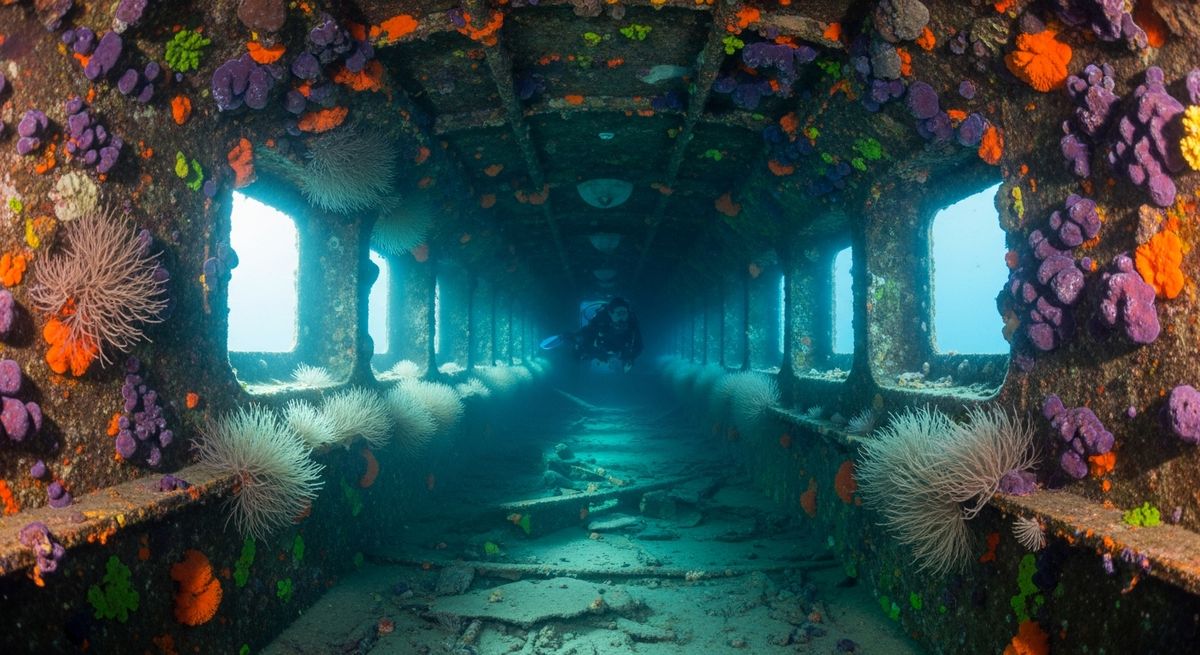
The Bunsoong Wreck, just off Khao Lak Beach, feels less like a traditional wreck and more like a collection of industrial-sized reef modules these days. Sunk in 1984 as an old tin ore processor, the 2004 tsunami broke its 60-meter length into five distinct sections. We’ve found that exploring these chunks reveals a surprising amount of soft coral growth, especially on the more sheltered parts. You’ll weave through the various openings, often finding schools of snapper and barracuda hanging around the larger sections. It’s a good spot for newer wreck divers to get a feel for overhead environments without much penetration, or for anyone who enjoys an artificial reef teeming with fish.
Typical Bunsoong Wreck Dive Profile
Illustrative profile based on site depth and type. Actual dive profiles vary - always follow your dive computer and training.
Safety Notes
Wreck site - avoid penetration without wreck diving certification. Watch for sharp metal and entanglement hazards.
Always perform a 3-minute safety stop at 5m before surfacing.
Nearest Dive Centres to Bunsoong Wreck
Dive shops near Bunsoong Wreck
Andaman Scub
Funky Monkey
Sea Turtle Divers
Similan Dive Center
Dive In
Loma Diving Adventure
Reviews for Bunsoong Wreck
Conditions
Ocean conditions, forecast and tides for Bunsoong Wreck
Bunsoong Wreck Ocean Conditions
Monthly averages for Bunsoong Wreck, sourced from Open-Meteo marine data + Copernicus Marine (EU) - nearest station: Open-Meteo marine grid (8.1, 98.3) (6km away)
October Averages
Sea Temperature
30°C
85°F · Range: 28.7–30.4°C
Current Speed
5.1 cm/s
Direction: S (191.3°)
Salinity
29.75 PSU
Based on 4 years of monitoring data · Data sources: Open-Meteo marine data + Copernicus Marine (EU)
Plan & book
Ways to dive Similan Islands, from day trips to liveaboards.
Day trips & courses
via GetYourGuideGuided dives, courses and snorkel trips with instant booking.
Find dive trips in Similan IslandsPlaces to stay
via Booking.comHotels and dive resorts near Similan Islands.
Search stays in Similan IslandsDive insurance
Most travel insurance excludes or limits scuba. Check what you need before you go.
Dive insurance explainedPartner links: we may earn a commission if you book, at no extra cost to you. How we make money
Where to Stay near Bunsoong Wreck
Prices from Booking.com. We may earn a commission at no extra cost to you.