Manta Ray Bay
Why dive here
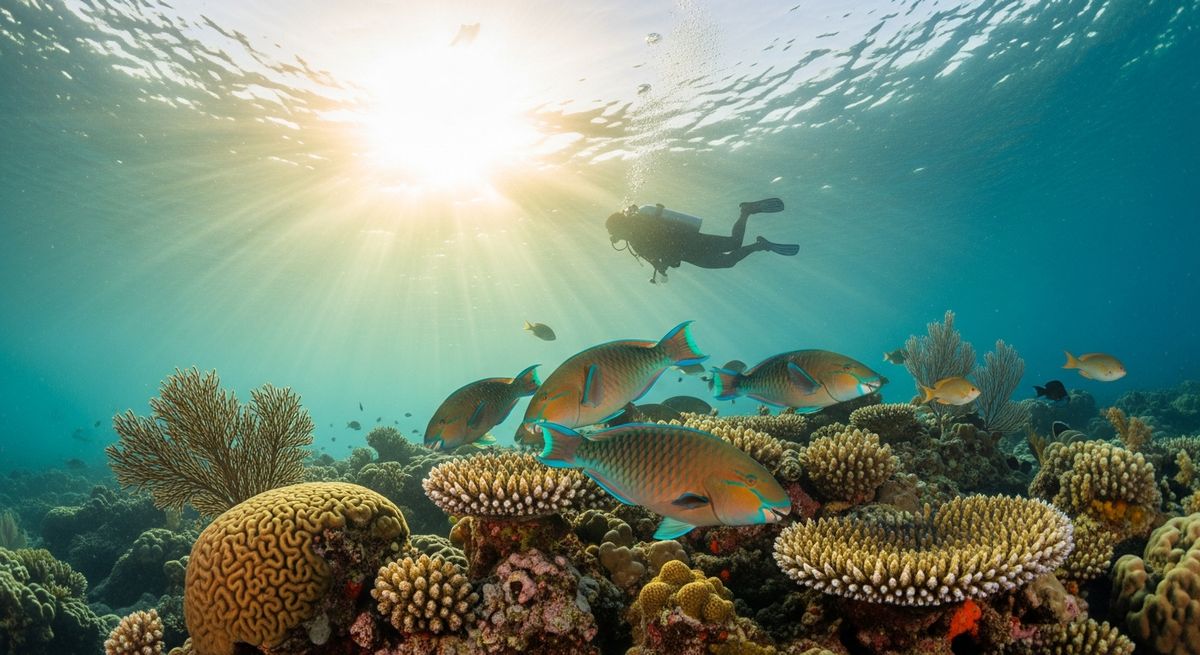
With 113+ marine species recorded in the area - including dugongs, grey reef sharks, humpback whales, sea turtles and tiger sharks - Manta Ray Bay offers some of Coral Sea's richest reef diving. Water ranges 25-30°C, warmest January, February, March.
Manta Ray Bay, it’s fair to say, delivers on its name – though not quite how you might expect. Forget actual mantas; here, we're talking about a couple of surprisingly charming metal ray statues that make for an odd but memorable backdrop. The real stars are the perpetually curious Maori Wrasse, especially George, who’s practically a dive guide himself. We love finning through the maze of coral bommies, watching the fusiliers thick as soup, and the way the giant trevallies and batfish just cruise by, unbothered. It’s a fantastic spot for a relaxed shallow dive, topping out around 15 metres. Visibility can be a bit variable – we’ve seen it drop to 10-12 metres, especially after a bit of weather, but that just adds to the atmosphere among the coral structures. Beyond George and his friends, keep an eye out for nudibranchs tucked away, and the usual suspects of reef fish: butterflyfish, parrotfish, and giant morays peeking from their holes. This bay really suits divers who appreciate consistent, friendly marine interactions over deep, dramatic walls.
Nearest Dive Centres to Manta Ray Bay
Dive shops near Manta Ray Bay
WHITSUNDAY EXPEDITIONS
Airlie Beach Dive Centre
Aquadive
REEF SAFARI DIVING
OCEANSENSE North QLD
OCEAN VOYAGER PTY LTD
Reviews for Manta Ray Bay
Conditions
Ocean conditions, forecast and tides for Manta Ray Bay
Manta Ray Bay Ocean Conditions
Monthly averages for Manta Ray Bay, sourced from Open-Meteo marine data + Copernicus Marine (EU) - nearest station: Open-Meteo marine grid (-16.5, 148) (0km away)
October Averages
Sea Temperature
26°C
79°F · Range: 25.4–29°C
Current Speed
10.3 cm/s
Direction: SE (119.1°)
Salinity
35.38 PSU
Based on 4 years of monitoring data · Data sources: Open-Meteo marine data + Copernicus Marine (EU)
Plan & book
Ways to dive Coral Sea, from day trips to liveaboards.
Day trips & courses
via GetYourGuideGuided dives, courses and snorkel trips with instant booking.
Find dive trips in Coral SeaPlaces to stay
via Booking.comHotels and dive resorts near Coral Sea.
Search stays in Coral SeaDive insurance
Most travel insurance excludes or limits scuba. Check what you need before you go.
Dive insurance explainedPartner links: we may earn a commission if you book, at no extra cost to you. How we make money
Where to Stay near Manta Ray Bay
Prices from Booking.com. We may earn a commission at no extra cost to you.