The Caves
Why dive here
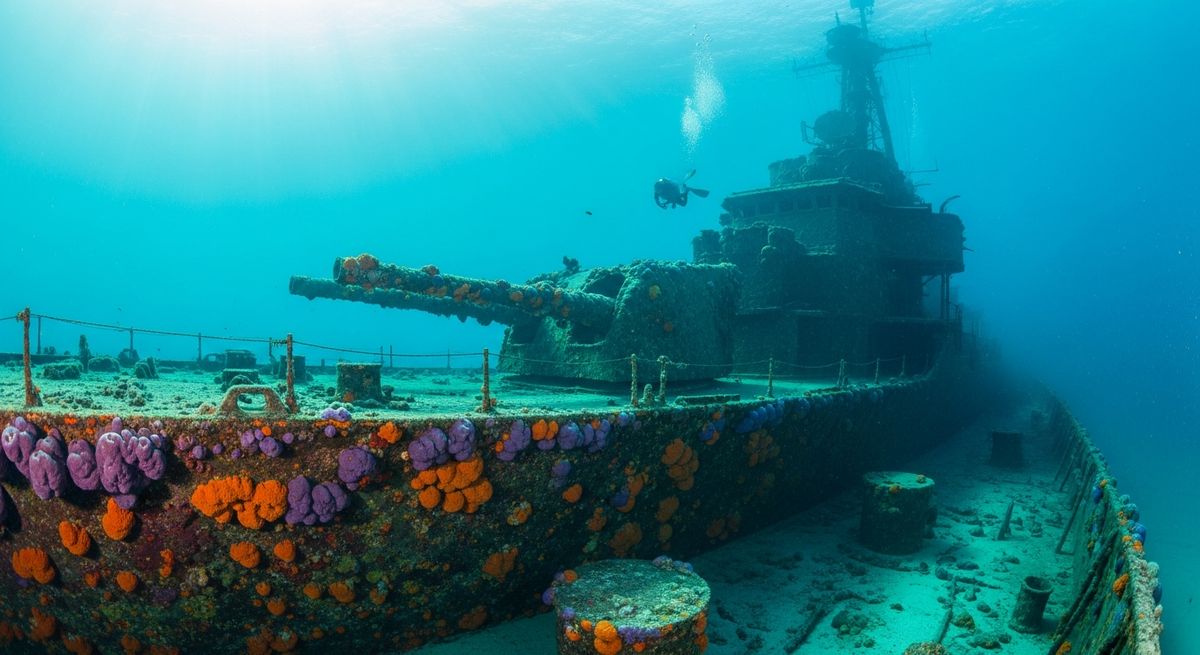
With 113+ marine species recorded in the area - including dugongs, grey reef sharks, humpback whales, sea turtles and tiger sharks - The Caves offers some of Coral Sea's richest wreck diving. Water ranges 25-30°C, warmest January, February, March.
Look, we get it. The data isn't exactly singing praises for the Yankee Juillet. And honestly, for your average "wow factor" dive, it’s not going to blow your fins off. But if you’ve got a soft spot for history, for the quiet grace of a wreck slowly being reclaimed, this site has a certain understated charm. The Yankee Juillet is what’s left of a small plane, resting in about 19 meters of water. We love it for the story it tells. It’s not some grand warship, but a private aircraft, giving it a more personal, almost melancholic feel. The fuselage is broken, stretched across the sandy seabed, with the wings angled upwards. We often spend time just hovering over the cockpit, imagining the final moments. It's not about big schools of fish here, more about the small, intricate details. You'll find a surprising number of blennies peering out from crevices, and we’ve spotted peacock mantis shrimp scuttling in the sand nearby. The corals aren't vibrant, true, but the wreck itself has become a canvas for various sponges and a delicate growth of soft corals, lending it a muted beauty. It’s a dive for photographers who appreciate composition over colour, or for anyone who enjoys a peaceful exploration without the usual hustle. Keep an eye out in the sand around the wreck; we’ve had a few lucky encounters with stingrays here. It's a short, easy dive, perfect for a relaxed afternoon.
Safety Notes
Wreck site - avoid penetration without wreck diving certification. Watch for sharp metal and entanglement hazards.
Nearest Dive Centres to The Caves
Dive shops near The Caves
View all dive centres in Coral SeaReviews for The Caves
Conditions
Ocean conditions, forecast and tides for The Caves
The Caves Ocean Conditions
Monthly averages for The Caves, sourced from Open-Meteo marine data + Copernicus Marine (EU) - nearest station: Open-Meteo marine grid (-16.5, 148) (0km away)
October Averages
Sea Temperature
26°C
79°F · Range: 25.4–29°C
Current Speed
10.3 cm/s
Direction: SE (119.1°)
Salinity
35.38 PSU
Based on 4 years of monitoring data · Data sources: Open-Meteo marine data + Copernicus Marine (EU)
Plan & book
Ways to dive Coral Sea, from day trips to liveaboards.
Day trips & courses
via GetYourGuideGuided dives, courses and snorkel trips with instant booking.
Find dive trips in Coral SeaPlaces to stay
via Booking.comHotels and dive resorts near Coral Sea.
Search stays in Coral SeaDive insurance
Most travel insurance excludes or limits scuba. Check what you need before you go.
Dive insurance explainedPartner links: we may earn a commission if you book, at no extra cost to you. How we make money
Where to Stay near The Caves
Prices from Booking.com. We may earn a commission at no extra cost to you.