Central, Breaking Patches
Protected Area
Michaelmas and Upolu Cays
Why dive here
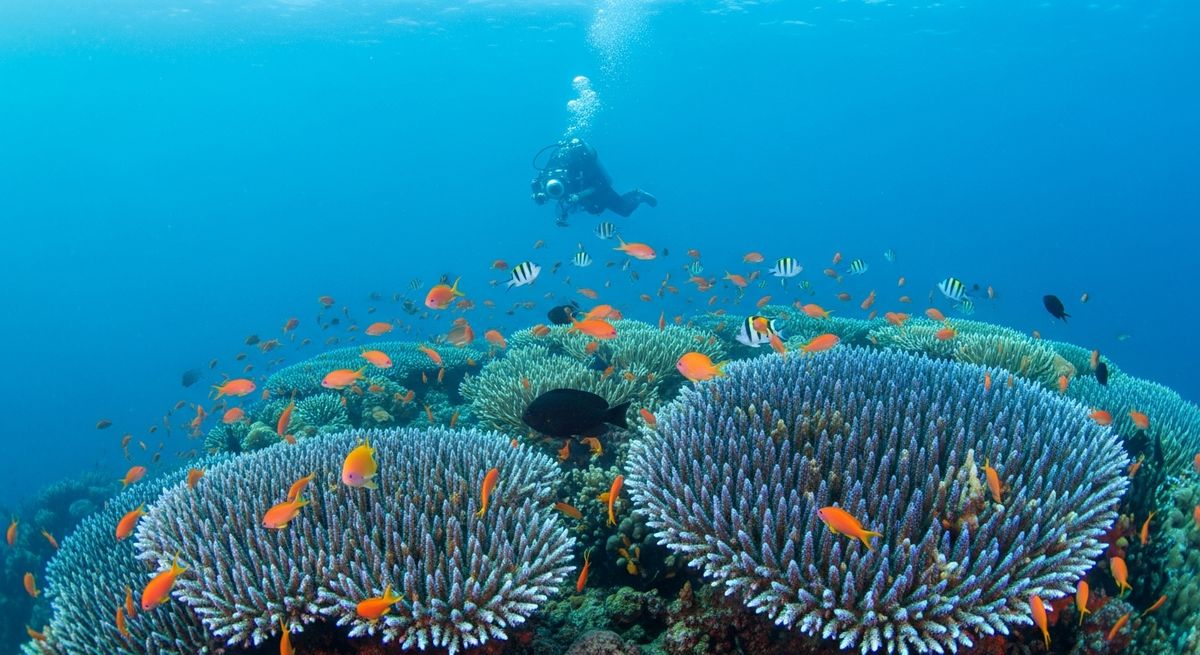
With 154+ marine species recorded in the area - including hammerhead sharks, sea turtles, tiger sharks and napoleon wrasse - Central, Breaking Patches offers some of Great Barrier Reef's richest reef diving. Water ranges 24-30°C, warmest January, February, March.
Central, Breaking Patches is exactly what it says on the tin: a patch reef, though a generous one. We love the western wall, even with the occasional punchy current. It’s here you’ll find some seriously impressive gorgonian fans, stretching out like delicate lace doilies in the flow. We often spot huge green sea turtles just cruising past, unbothered by our presence. The shallow side, nudging a gentle 13m maximum, is our pick for a more relaxed dive. Visibility averages around 14m here, which gives the light a beautiful, soft quality. Look closely among the hard and soft corals for clownfish tucked into their anemones, and the occasional unicornfish gliding by. The sand patches are perfect for photography or just finning slowly, scanning for the smaller stuff – we’ve found some interesting nudibranchs here on previous trips. This spot suits divers who appreciate a mix of gentle drift and detailed exploration, with plenty of colour even at shallower depths.
Safety Notes
Strong currents typical this month (avg 30 cm/s). Good buoyancy control essential.
Nearest Dive Centres to Central, Breaking Patches
Dive shops near Central, Breaking Patches
Dive Centre
Horseshoe
Blue-Cruise Pty.Ltd
Octopus Dive
Reef Daytripper
Ocean Free & Ocean Freedom
Reviews for Central, Breaking Patches
Conditions
Ocean conditions, forecast and tides for Central, Breaking Patches
Central, Breaking Patches Ocean Conditions
Monthly averages for Central, Breaking Patches, sourced from Open-Meteo marine data + Copernicus Marine (EU) - nearest station: Open-Meteo marine grid (-15.65, 145.72) (5km away)
October Averages
Sea Temperature
26°C
80°F · Range: 24.5–29°C
Current Speed
30.07 cm/s
Direction: S (183.8°)
Chlorophyll-a
0.057 mg/m³
Very clear (oligotrophic)
Salinity
35.08 PSU
Based on 4 years of monitoring data · Data sources: Open-Meteo marine data + Copernicus Marine (EU)
Plan & book
Ways to dive Great Barrier Reef, from day trips to liveaboards.
Day trips & courses
via GetYourGuideGuided dives, courses and snorkel trips with instant booking.
Find dive trips in Great Barrier ReefPlaces to stay
via Booking.comHotels and dive resorts near Great Barrier Reef.
Search stays in Great Barrier ReefDive insurance
Most travel insurance excludes or limits scuba. Check what you need before you go.
Dive insurance explainedPartner links: we may earn a commission if you book, at no extra cost to you. How we make money
Where to Stay near Central, Breaking Patches
Prices from Booking.com. We may earn a commission at no extra cost to you.