Covered Reef
Protected Area
Starcke River (Ngulun)
Why dive here
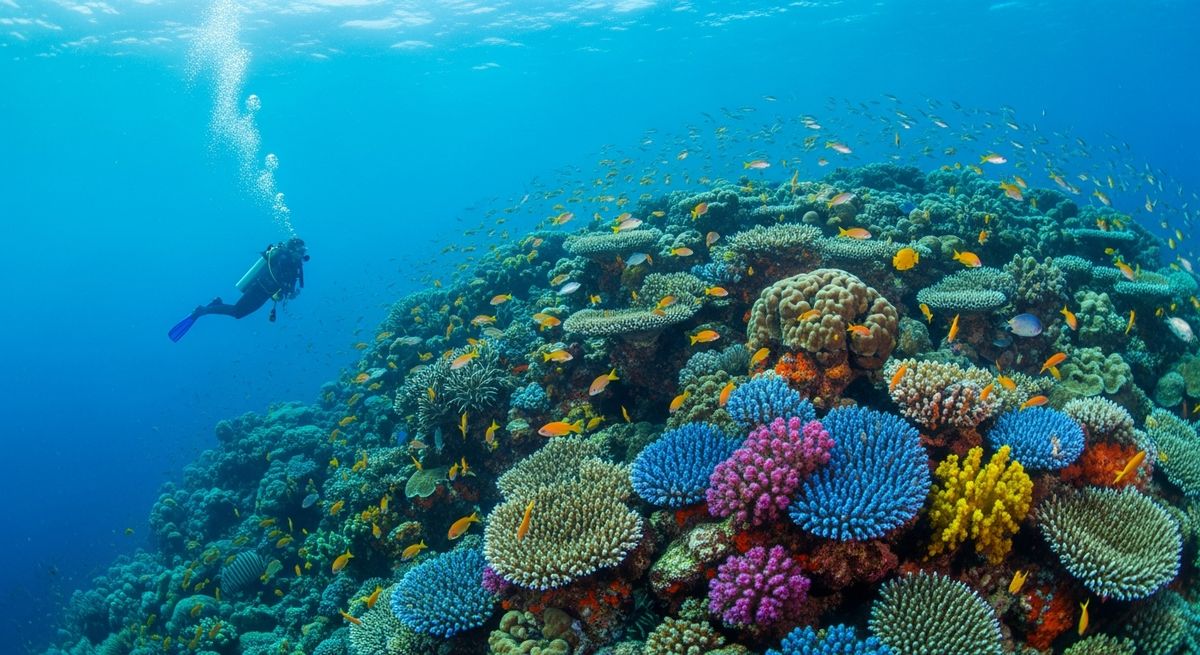
With 154+ marine species recorded in the area - including hammerhead sharks, sea turtles, tiger sharks and napoleon wrasse - Covered Reef offers some of Great Barrier Reef's richest reef diving. Water ranges 24-30°C, warmest January, February, March.
Covered Reef is a site we’ve always enjoyed for its consistent activity, a real reliable hit when you’re out on the northern GBR. It’s not about finding that one big thing here, but rather soaking in the sheer volume of busy reef life. Drop in and you’re immediately surrounded by swarms of fusiliers, their silver scales catching the light, pushing through schools of snapper. We often spot Humpback Groupers patrolling the coral bommies, their massive forms drifting with a lazy elegance, while Green Wrasse flash vibrant colours as they dart between the Montipora and Staghorn corals. Keep an eye out for Thorny Flatheads, masters of disguise, lying perfectly still on the sand, waiting for an unsuspecting meal. Our favourite time to dive Covered Reef is early morning, just as the sun begins to properly hit the water, before the day boats get too busy. The light penetration then is just beautiful, really making the corals pop, and the reef feels like it’s just waking up, full of energy. It’s a site that suits divers who appreciate a healthy, bustling ecosystem, the kind of place where you can just hover and watch the intricate dramas of the reef unfold around you. The currents are generally mild, making it an easy drift for newer divers, but there's enough complexity in the reef structure to keep experienced eyes entertained.
Safety Notes
Strong currents typical this month (avg 30 cm/s). Good buoyancy control essential.
Nearest Dive Centres to Covered Reef
Dive shops near Covered Reef
View all dive centres in Great Barrier ReefReviews for Covered Reef
Conditions
Ocean conditions, forecast and tides for Covered Reef
Covered Reef Ocean Conditions
Monthly averages for Covered Reef, sourced from Open-Meteo marine data + Copernicus Marine (EU) - nearest station: Open-Meteo marine grid (-15.65, 145.72) (5km away)
October Averages
Sea Temperature
26°C
80°F · Range: 24.5–29°C
Current Speed
30.07 cm/s
Direction: S (183.8°)
Chlorophyll-a
0.057 mg/m³
Very clear (oligotrophic)
Salinity
35.08 PSU
Based on 4 years of monitoring data · Data sources: Open-Meteo marine data + Copernicus Marine (EU)
Plan & book
Ways to dive Great Barrier Reef, from day trips to liveaboards.
Day trips & courses
via GetYourGuideGuided dives, courses and snorkel trips with instant booking.
Find dive trips in Great Barrier ReefPlaces to stay
via Booking.comHotels and dive resorts near Great Barrier Reef.
Search stays in Great Barrier ReefDive insurance
Most travel insurance excludes or limits scuba. Check what you need before you go.
Dive insurance explainedPartner links: we may earn a commission if you book, at no extra cost to you. How we make money
Where to Stay near Covered Reef
Prices from Booking.com. We may earn a commission at no extra cost to you.