Pixie Wall
Why dive here
With 154+ marine species recorded in the area - including hammerhead sharks, sea turtles, tiger sharks and napoleon wrasse - Pixie Wall offers some of Great Barrier Reef's richest reef diving. Water ranges 24-30°C, warmest January, February, March.
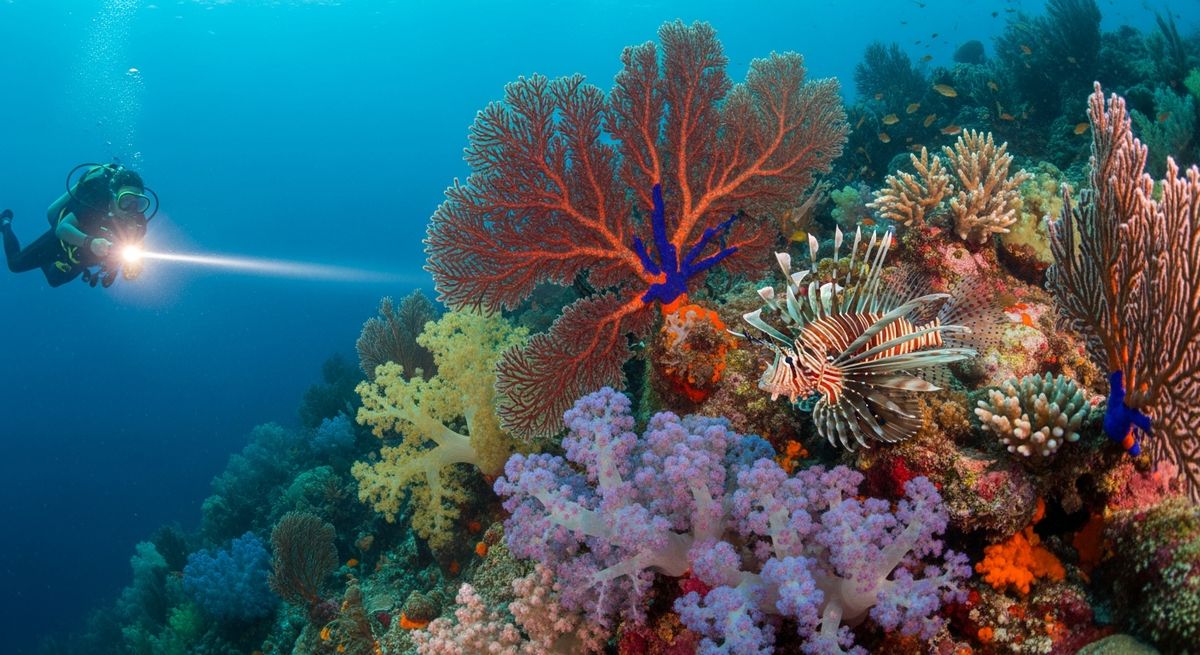
Pixie Wall doesn't scream for attention like some of its flashier neighbours, but we've always found it delivers a quiet charm. Maxing out at 21m, it's a gentle wall, perfect for a long, relaxed dive where you can truly slow down and look closely. The main event here is definitely the honeycomb coral formations, sprawling out like intricate sculptures, providing homes for all sorts of smaller characters like the tiny Pale Dwarfgoby or the quick Six-line wrasse darting between branches. We’ve seen Beaked Leatherjackets here, often just hanging out, unbothered. Keep an eye out for the Tail-spot Squirrelfish tucked away in crevices; their big eyes really pop in your torch beam. While the current description mentions manta ray encounters, we’d suggest tempering expectations; they’re more of a bonus than a guarantee. Instead, focus on the wall itself. The light plays beautifully on the Staghorn coral patches, casting shifting shadows as you drift. It’s a site for photographers and those who appreciate the details, a nice contrast to the more "big animal" focused dives around the Ribbons. We love it for an afternoon unwind, a truly calm experience.
Safety Notes
Strong currents typical this month (avg 30 cm/s). Good buoyancy control essential.
Nearest Dive Centres to Pixie Wall
Dive shops near Pixie Wall
View all dive centres in Great Barrier ReefReviews for Pixie Wall
Conditions
Ocean conditions, forecast and tides for Pixie Wall
Pixie Wall Ocean Conditions
Monthly averages for Pixie Wall, sourced from Open-Meteo marine data + Copernicus Marine (EU) - nearest station: Open-Meteo marine grid (-15.65, 145.72) (5km away)
October Averages
Sea Temperature
26°C
80°F · Range: 24.5–29°C
Current Speed
30.07 cm/s
Direction: S (183.8°)
Chlorophyll-a
0.057 mg/m³
Very clear (oligotrophic)
Salinity
35.08 PSU
Based on 4 years of monitoring data · Data sources: Open-Meteo marine data + Copernicus Marine (EU)
Plan & book
Ways to dive Great Barrier Reef, from day trips to liveaboards.
Day trips & courses
via GetYourGuideGuided dives, courses and snorkel trips with instant booking.
Find dive trips in Great Barrier ReefPlaces to stay
via Booking.comHotels and dive resorts near Great Barrier Reef.
Search stays in Great Barrier ReefDive insurance
Most travel insurance excludes or limits scuba. Check what you need before you go.
Dive insurance explainedPartner links: we may earn a commission if you book, at no extra cost to you. How we make money
Where to Stay near Pixie Wall
Prices from Booking.com. We may earn a commission at no extra cost to you.