SS Yongala
Protected Area
Bowling Green Bay
Why dive here
With 154+ marine species recorded in the area - including hammerhead sharks, sea turtles, tiger sharks and napoleon wrasse - SS Yongala offers some of Great Barrier Reef's richest reef diving. Water ranges 24-30°C, warmest January, February, March.
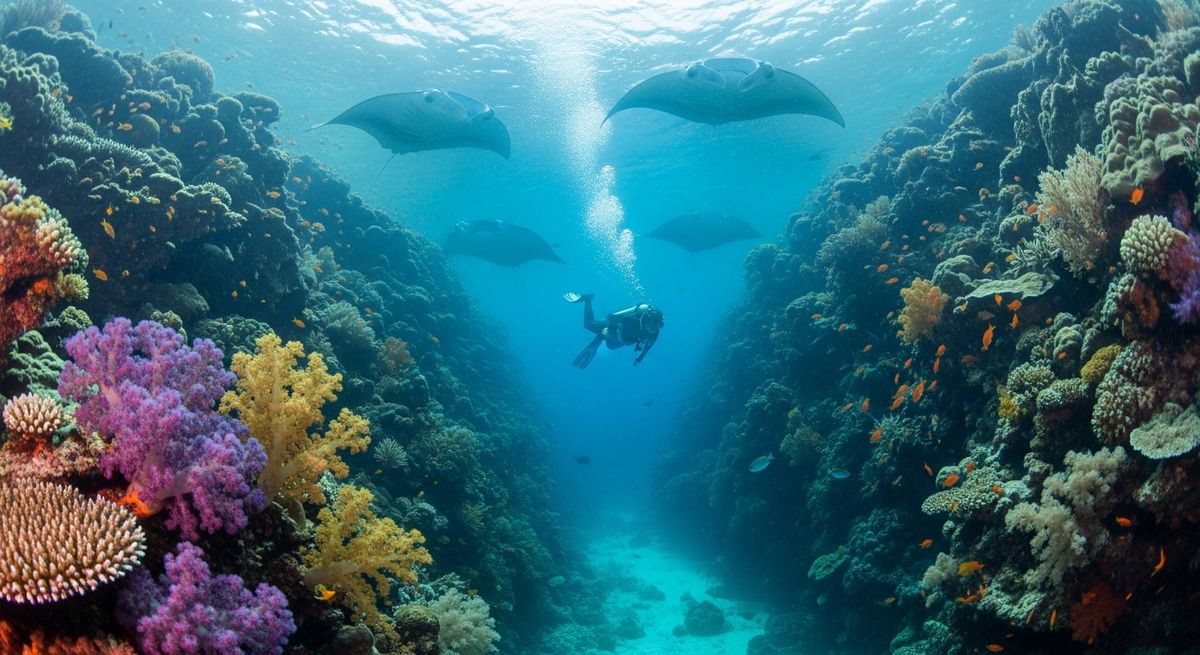
Diving the SS Yongala feels less like exploring a wreck and more like entering an oceanic aquarium. This isn’t a pick-your-way-through-corridors kind of dive; penetration is banned, and honestly, you won’t miss it. The real show is external. We love hanging off the bow, letting the current carry us slowly past the huge Queensland groupers that guard the engine room, their sheer size always surprising. The stern, at around 30 metres, is often where we spot bull sharks circling, sleek and powerful. What truly makes the Yongala special is the sheer volume of life that pulses around it. Schools of trevally and barracuda are so thick they often obscure parts of the wreck, parting only to reveal a curious sea snake or an eagle ray gliding past. We’ve had manta rays cruise by here too, just cruising along, unbothered by our presence. The currents can be serious, so it’s not for the nervous, but for experienced divers who appreciate raw, untamed marine abundance, it’s absolutely captivating. The wreck itself, upright and proud on the sandy bottom, is a monument to both history and nature’s relentless reclamation.
Safety Notes
Strong currents typical this month (avg 30 cm/s). Good buoyancy control essential.
Reviews for SS Yongala
Conditions
Ocean conditions, forecast and tides for SS Yongala
SS Yongala Ocean Conditions
Monthly averages for SS Yongala, sourced from Open-Meteo marine data + Copernicus Marine (EU) - nearest station: Open-Meteo marine grid (-15.65, 145.72) (5km away)
October Averages
Sea Temperature
26°C
80°F · Range: 24.5–29°C
Current Speed
30.07 cm/s
Direction: S (183.8°)
Chlorophyll-a
0.057 mg/m³
Very clear (oligotrophic)
Salinity
35.08 PSU
Based on 4 years of monitoring data · Data sources: Open-Meteo marine data + Copernicus Marine (EU)
Plan & book
Ways to dive Great Barrier Reef, from day trips to liveaboards.
Day trips & courses
via GetYourGuideGuided dives, courses and snorkel trips with instant booking.
Find dive trips in Great Barrier ReefPlaces to stay
via Booking.comHotels and dive resorts near Great Barrier Reef.
Search stays in Great Barrier ReefDive insurance
Most travel insurance excludes or limits scuba. Check what you need before you go.
Dive insurance explainedPartner links: we may earn a commission if you book, at no extra cost to you. How we make money
Where to Stay near SS Yongala
Prices from Booking.com. We may earn a commission at no extra cost to you.