Tongue Reef
Protected Area
Michaelmas and Upolu Cays
Why dive here
With 154+ marine species recorded in the area - including hammerhead sharks, sea turtles, tiger sharks and napoleon wrasse - Tongue Reef offers some of Great Barrier Reef's richest reef diving. Water ranges 24-30°C, warmest January, February, March.
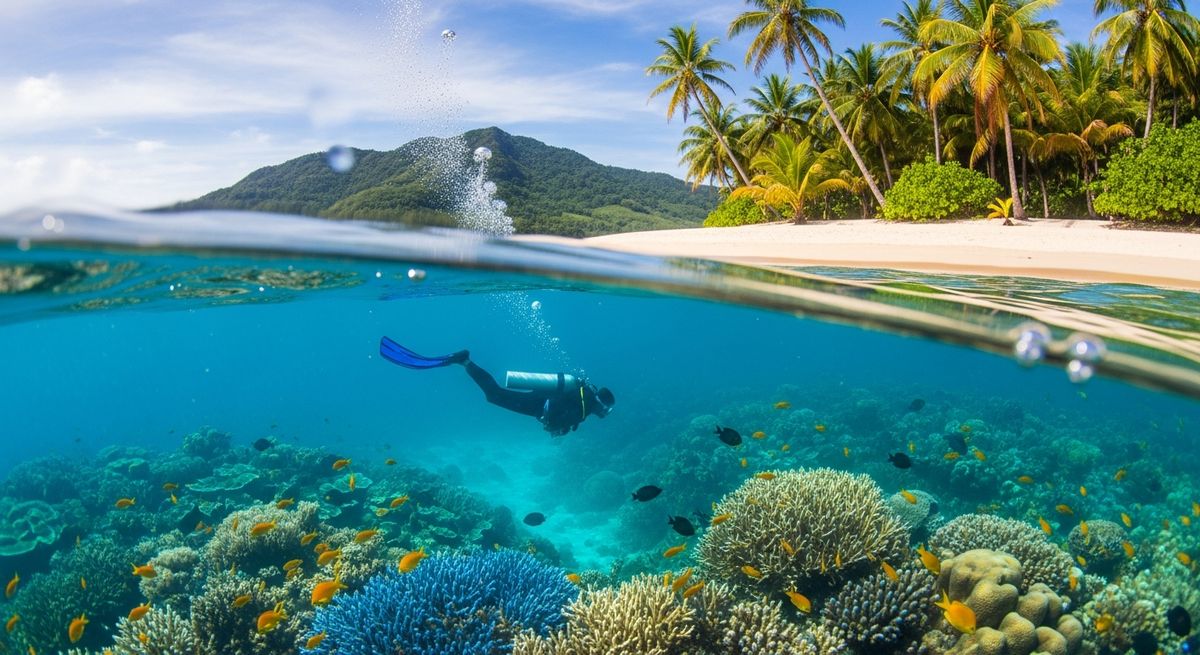
Tongue Reef often gets overlooked for its flashy neighbours, but we think that’s a mistake. This particular patch of the Outer Reef really shows off what a healthy GBR can be. Drop in and you’re immediately enveloped by the sheer density of coral, a true riot of colour and texture. We love drifting along with the gentle current, keeping an eye out for the big schools of fusiliers that hang around the bommies, often so thick they dim the sunlight for a moment. The coral formations here are exceptional; great tables of Pachyseris and the delicate fronds of Feather Coral stretch out, punctuated by the knobbly heads of Cauliflower coral. Keep your eyes peeled for Polkadot Cod hiding in the nooks, and we’ve often spotted Blue Spotted Hinds out in the open. For something a bit different, look closely at the sand patches near the reef edge; we’ve found Leopard Cones and Sand-dusted Cones here, slowly making their way across the substrate. It’s a gentle dive, generally, suiting anyone who wants to just soak in the beauty of a vibrant reef. A quiet morning dive here, before the bigger boats arrive, is our favourite way to experience it.
Safety Notes
Strong currents typical this month (avg 30 cm/s). Good buoyancy control essential.
Nearest Dive Centres to Tongue Reef
Dive shops near Tongue Reef
ABC Dive & Snorkel
Quicksilver Connections
Ocean Safari
Reviews for Tongue Reef
Conditions
Ocean conditions, forecast and tides for Tongue Reef
Tongue Reef Ocean Conditions
Monthly averages for Tongue Reef, sourced from Open-Meteo marine data + Copernicus Marine (EU) - nearest station: Open-Meteo marine grid (-15.65, 145.72) (5km away)
October Averages
Sea Temperature
26°C
80°F · Range: 24.5–29°C
Current Speed
30.07 cm/s
Direction: S (183.8°)
Chlorophyll-a
0.057 mg/m³
Very clear (oligotrophic)
Salinity
35.08 PSU
Based on 4 years of monitoring data · Data sources: Open-Meteo marine data + Copernicus Marine (EU)
Plan & book
Ways to dive Great Barrier Reef, from day trips to liveaboards.
Day trips & courses
via GetYourGuideGuided dives, courses and snorkel trips with instant booking.
Find dive trips in Great Barrier ReefPlaces to stay
via Booking.comHotels and dive resorts near Great Barrier Reef.
Search stays in Great Barrier ReefDive insurance
Most travel insurance excludes or limits scuba. Check what you need before you go.
Dive insurance explainedPartner links: we may earn a commission if you book, at no extra cost to you. How we make money
Where to Stay near Tongue Reef
Prices from Booking.com. We may earn a commission at no extra cost to you.