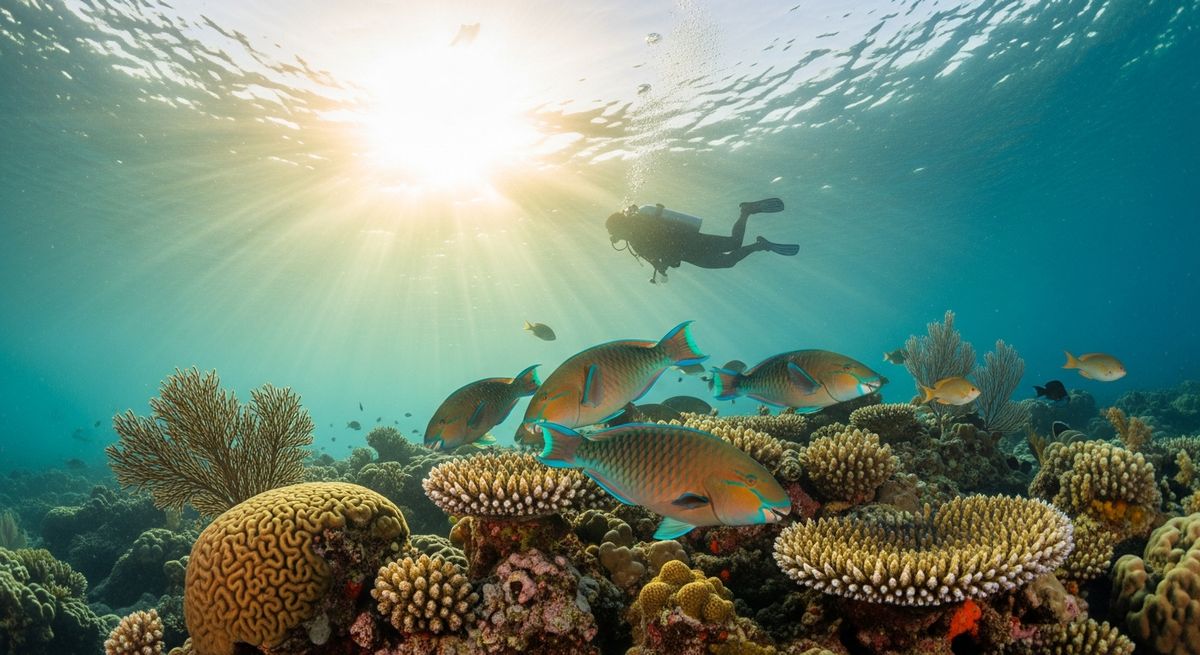
Wardle Reef
Why dive here
With 154+ marine species recorded in the area - including hammerhead sharks, sea turtles, tiger sharks and napoleon wrasse - Wardle Reef offers some of Great Barrier Reef's richest reef diving. Water ranges 24-30°C, warmest January, February, March.
Wardle Reef, for us, is one of those places that just keeps giving. We’ve drifted this site more times than we can count, and there's always something new to catch our eye, especially if you’re into the bigger reef fish. The sheer density of species like the Blacksaddled coral grouper or those impressive Longnose Trevally is what really stands out here. We’ve spent whole dives just watching the Golden Trevally cruise past, often in decent-sized schools, which is always a treat. What we love most about Wardle is its predictability for interesting encounters. The reef itself feels mature, with some impressive coral formations that create plenty of nooks and crannies for things like the Thorny Flathead to hide in. Keep an eye out for Pharaoh Cuttlefish too; they often put on a fantastic display of colour changes if you approach slowly. Our favourite time to dive Wardle is typically mid-morning, after the initial rush, when the light really starts to penetrate the water, bringing out the subtle hues of the corals and making those flashes of silver from the trevally even more dramatic. It’s a classic Great Barrier Reef experience, and one we always recommend for divers who appreciate a healthy, active ecosystem.
Safety Notes
Strong currents typical this month (avg 30 cm/s). Good buoyancy control essential.
Reviews for Wardle Reef
Conditions
Ocean conditions, forecast and tides for Wardle Reef
Wardle Reef Ocean Conditions
Monthly averages for Wardle Reef, sourced from Open-Meteo marine data + Copernicus Marine (EU) - nearest station: Open-Meteo marine grid (-15.65, 145.72) (5km away)
October Averages
Sea Temperature
26°C
80°F · Range: 24.5–29°C
Current Speed
30.07 cm/s
Direction: S (183.8°)
Chlorophyll-a
0.057 mg/m³
Very clear (oligotrophic)
Salinity
35.08 PSU
Based on 4 years of monitoring data · Data sources: Open-Meteo marine data + Copernicus Marine (EU)
Plan & book
Ways to dive Great Barrier Reef, from day trips to liveaboards.
Day trips & courses
via GetYourGuideGuided dives, courses and snorkel trips with instant booking.
Find dive trips in Great Barrier ReefPlaces to stay
via Booking.comHotels and dive resorts near Great Barrier Reef.
Search stays in Great Barrier ReefDive insurance
Most travel insurance excludes or limits scuba. Check what you need before you go.
Dive insurance explainedPartner links: we may earn a commission if you book, at no extra cost to you. How we make money
Where to Stay near Wardle Reef
Prices from Booking.com. We may earn a commission at no extra cost to you.