Navy Pier
Protected Area
Muiron Islands
Why dive here
Navy Pier is a reef dive where divers can encounter humpback whales and tiger sharks. Water ranges 21-29°C, warmest January, February, March.
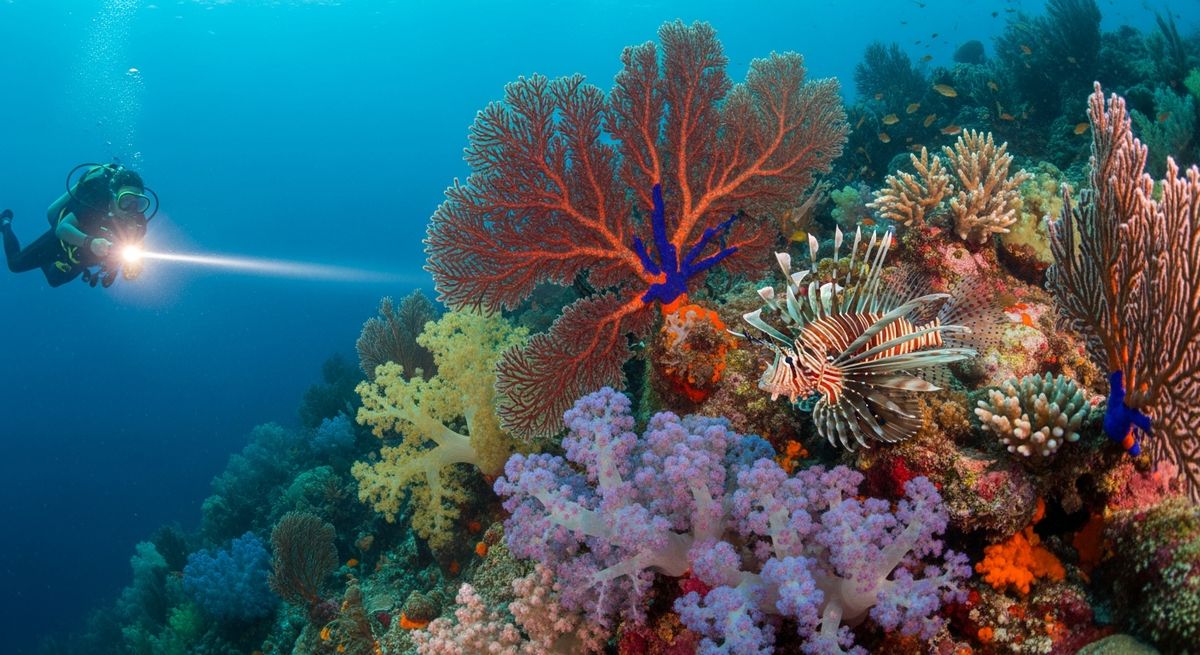
Navy Pier isn't just a dive site, it's a spectacle, and frankly, one of our favourite dives in Australia, full stop. Dropping down beneath the pier, the sheer density of fish life is almost overwhelming. We’re talking schools of blacktip soldierfish so thick they dim the light, clouds of bream swirling around the pylons, and those magnificent giant groupers, often just hanging out under the shadows. It’s a sensory overload, in the best possible way. You’ll want to take your time here, peering into every crevice for a bluespotted shrimpgoby or a camouflaged frogfish. Our pick for an insider tip? Go at high tide for the best visibility, and keep an eye out for wobbegongs tucked into the sand flats beneath the structure. Night dives here are something else entirely, with lionfish on the prowl and cuttlefish flashing their colours. This dive is perfect for macro fanatics and wide-angle enthusiasts alike, truly a standout for any diver visiting Ningaloo.
Nearest Dive Centres to Navy Pier
Dive shops near Navy Pier
View all dive centres in Ningaloo ReefReviews for Navy Pier
Conditions
Ocean conditions, forecast and tides for Navy Pier
Navy Pier Ocean Conditions
Monthly averages for Navy Pier, sourced from Open-Meteo marine data + Copernicus Marine (EU) - nearest station: Open-Meteo marine grid (-22.04, 114.17) (43km away)
October Averages
Sea Temperature
24°C
76°F · Range: 22.9–26.7°C
Current Speed
14 cm/s
Direction: N (0°)
Chlorophyll-a
0.135 mg/m³
Clear water
Salinity
35.64 PSU
Based on 4 years of monitoring data · Data sources: Open-Meteo marine data + Copernicus Marine (EU)
Plan & book
Ways to dive Ningaloo Reef, from day trips to liveaboards.
Day trips & courses
via GetYourGuideGuided dives, courses and snorkel trips with instant booking.
Find dive trips in Ningaloo ReefPlaces to stay
via Booking.comHotels and dive resorts near Ningaloo Reef.
Search stays in Ningaloo ReefDive insurance
Most travel insurance excludes or limits scuba. Check what you need before you go.
Dive insurance explainedPartner links: we may earn a commission if you book, at no extra cost to you. How we make money
Where to Stay near Navy Pier
Prices from Booking.com. We may earn a commission at no extra cost to you.