Diving in Ningaloo Reef
Why dive here
Ningaloo Reef is a diving destination where divers can encounter humpback whales and tiger sharks. Water ranges 21-29°C, warmest January, February, March.
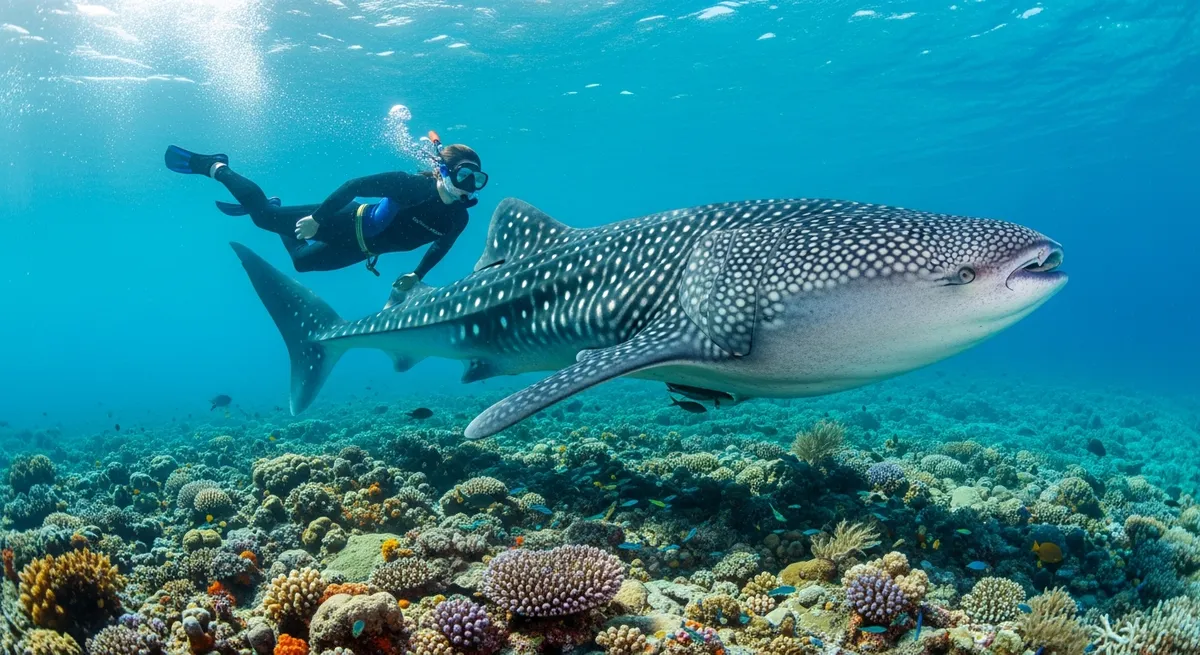
Ningaloo Reef really delivers on the promise of an accessible fringing reef. We’ve had some fantastic encounters here, particularly between March and July when the whale sharks are in town, gliding past with surprising grace. Beyond the big fellas, expect to drift over reefs thick with fusiliers, spot the occasional tiger shark cruising through, and keep an eye out for banded toadfish tucked into crevices. Visibility often hits 20 metres or more, making it easy to watch the little pied cormorants dart past. The conditions generally stay pretty calm, making it a good spot for a relaxed few dives.
Ningaloo Reef Dive Site Map
Dive sites and dive centres in Ningaloo Reef
Ningaloo Reef Dive Sites
27 dive sites in Ningaloo Reef
5 Mile Reef
5 Mile Reef offers a straightforward dive, typically a drift along a healthy coral wall. Expect to see plenty of smaller reef fish – parrotfish, fusiliers, the occasional whitetip reef shark patrolling by. It’s a solid choice for a relaxing dive, particularly good for those newer to Ningaloo who want to get a feel for the reef without strong currents.
Baylis Patches
Baylis Patches gives you a good cross-section of Ningaloo's coral. We’ve seen wobbegongs tucked into ledges here and plenty of reef sharks cruising the perimeter. It’s a pretty easy drift, great for photographers who want to take their time, or newer divers getting comfortable with reef environments. The patches themselves are healthy and colourful, typical of the inner reef.
Beryl Reef
Beryl Reef presents a solid Ningaloo dive, typically featuring a good selection of hard corals and the usual reef fish. We’ve often spotted white-tip reef sharks here, cruising the reef edge. It’s a reliable spot if you’re looking for a relaxed dive, without strong currents, and it suits most certification levels.
Black Ledge
Black Ledge on Ningaloo offers a gentle drift along a healthy reef wall, often with excellent visibility. You'll likely spot white-tip reef sharks cruising the deeper sections and plenty of smaller reef fish darting between the plate corals. It’s a good choice for those looking for a relaxed dive with consistent reef structure, suitable for most experience levels. We often see green turtles here too.
Bowers Ledge
Bowers Ledge offers a solid Ningaloo reef dive, typically around the 15-20 metre mark, where we often spot grey reef sharks patrolling the deeper edges. Keep an eye out for whitetips tucked into the bommies. It's a reliable spot for a good mix of pelagics and colourful reef fish, making it a good pick for divers looking for a classic Outer Reef experience without too much drama. We find it’s generally a pretty relaxed drift.
Brewis Reef
Brewis Reef offers a solid Ningaloo dive for those looking to explore classic coral formations. We've often found it's home to a good variety of reef fish and, if you're lucky, some passing pelagics in the blue. It’s a reliable choice for divers who appreciate healthy coral ecosystems and aren't chasing specific big animal encounters. A steady drift over the reef structure often reveals something interesting.
Bundegi Reef
Bundegi Reef is an easy shore dive, a good spot if you're keen to stretch your fins without a boat trip. The reef here is home to a mix of smaller corals and we often spot juvenile reef fish darting amongst them. It's a reliable option for a relaxed dive, especially for those newer to diving or anyone looking for a casual snorkel. You'll find it calm and accessible, a nice way to get wet on Ningaloo.
Combe Reef
Combe Reef, part of the expansive Ningaloo system, offers a solid dive for those exploring Australia's west coast. Here, you’ll find a mix of hard and soft corals, providing shelter for a range of smaller reef fish. It’s a good spot for divers looking for a relaxed exploration rather than dramatic pelagic encounters. Visibility is generally good, making it suitable for newer divers and underwater photographers alike.
Coral Bay
Coral Bay on Ningaloo Reef offers sheltered, shallow dives, perfect for those getting comfortable in the water or looking for relaxed exploring. The coral bommies here are home to small reef sharks, turtles, and plenty of reef fish. Visibility is generally good, making it an easy place to spot the smaller creatures hiding amongst the corals. It's a solid choice for a calm day out.
Darwin Reefs
Darwin Reefs at Ningaloo offers a classic outer reef experience. You'll find a healthy coral structure with good chances to encounter larger pelagics moving through. It’s a good spot for divers looking for a solid reef dive without too much fuss, suitable for most skill levels when conditions are calm.
Darwin Reefs
Darwin Reefs at Ningaloo offers a classic outer reef experience. You'll find a healthy coral structure here, with plenty of reef fish going about their business. It’s a reliable spot for seeing the common Ningaloo residents, good for a solid dive when you’re looking for a consistent reef profile without too many surprises.
Exmouth Gulf
Exmouth Gulf diving focuses on the smaller critters and a different kind of beauty than the outer reef. We've often found ourselves drifting over sandy patches, spotting bobtail squid hunting or finding pipefish tucked into seagrass. It’s a calmer experience, generally shallower, and a good change of pace for macro lovers, especially when conditions on the exposed reef get choppy.
Ningaloo Reef Dive Centres
8 dive shops and operators in Ningaloo Reef
Ocean Wildlife in Ningaloo Reef
7 species recorded in Ningaloo Reef
Ningaloo Reef Daylight & Sunrise/Sunset
Sunrise and sunset times for Ningaloo Reef, calculated from coordinates
Today - Sunday 11 October
Sunrise
05:55
Sunset
18:25
Daylight
12h 29m
Golden Hour
17:55
First light (dawn) at 05:33 · Last light (dusk) at 18:47
Monthly Averages
| Month | Sunrise | Sunset | Daylight |
|---|---|---|---|
| Jan | 05:52 | 19:12 | 13h 20m |
| Feb | 06:13 | 19:02 | 12h 50m |
| Mar | 06:25 | 18:40 | 12h 15m |
| Apr | 06:35 | 18:11 | 11h 36m |
| May | 06:47 | 17:52 | 11h 5m |
| JunShortest | 07:00 | 17:48 | 10h 48m |
| Jul | 07:02 | 17:56 | 10h 54m |
| Aug | 06:48 | 18:08 | 11h 21m |
| Sep | 06:20 | 18:17 | 11h 57m |
| OctNow | 05:52 | 18:26 | 12h 34m |
| Nov | 05:33 | 18:43 | 13h 9m |
| DecLongest | 05:34 | 19:02 | 13h 28m |
Times are approximate local times based on longitude. Actual times may vary slightly depending on the exact timezone observed in Ningaloo Reef.
Where to Stay near Ningaloo Reef
Prices from Booking.com. We may earn a commission at no extra cost to you.
Marine Protected Areas near Ningaloo Reef
13 protected areas near Ningaloo Reef - please respect local regulations when diving
Côte de Ningaloo
Barrow Island
Ningaloo
Ningaloo
Barrow Island
Great Sandy Island
Muiron Islands
Thevenard Island
North Sandy Island
Y Island
Victor Island
Rocky Island
Showing 12 largest of 13
Getting to Ningaloo Reef
Exmouth
Port Hedland
Eliwana
Plan & book
Ways to dive Ningaloo Reef, from day trips to liveaboards.
Day trips & courses
via GetYourGuideGuided dives, courses and snorkel trips with instant booking.
Find dive trips in Ningaloo ReefPlaces to stay
via Booking.comHotels and dive resorts near Ningaloo Reef.
Search stays in Ningaloo ReefDive insurance
Most travel insurance excludes or limits scuba. Check what you need before you go.
Dive insurance explainedPartner links: we may earn a commission if you book, at no extra cost to you. How we make money