Aldermens- Mooring Bay
Protected Area
Wharekawa Harbour Wildlife Refuge
Why dive here
With 72+ marine species recorded in the area - including blue sharks, dolphins, hammerhead sharks, humpback whales and seahorses - Aldermens- Mooring Bay offers some of Goat Island & Hauraki Gulf's richest reef diving. Water ranges 15-21°C, warmest January, February, March.
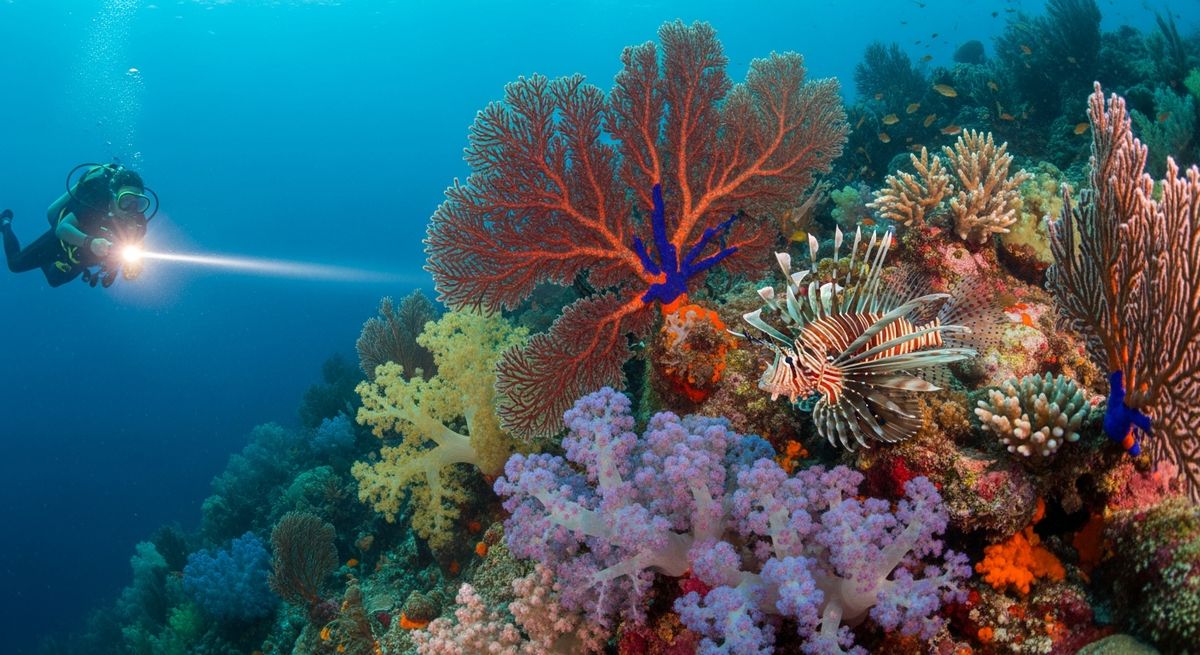
Mooring Bay at the Aldermen is a really interesting contrast to the deeper outer sites. We love it for its sheer accessibility, especially when the weather kicks up elsewhere. It’s a calmer spot, mostly sandy, but don't let that fool you into thinking there's nothing here. We often find the sand flats hold some real treats – spotted stargazers buried with just their eyes peeking out, or a smooth skate gliding past like a shadow. The max depth of 17m makes it very relaxed, ideal for longer bottom times. We've seen fat red rock lobsters tucked into little ledges and schools of demoiselles flickering over the slight rises. Keep an eye out for the triplefins, especially the blue-eyed ones, darting between the smaller rocks. It's a fantastic place to just bimble around, practicing buoyancy, and really observing the smaller, often overlooked critters. Visibility averages a comfortable 15m, and being sheltered, it's a solid choice when you want a relaxed dive without battling much current.
Nearest Dive Centres to Aldermens- Mooring Bay
Dive shops near Aldermens- Mooring Bay
Cathedral Cove Dive Ltd
Dive Zone Whitianga
Salt Aotearoa
Reviews for Aldermens- Mooring Bay
Conditions
Ocean conditions, forecast and tides for Aldermens- Mooring Bay
Aldermens- Mooring Bay Ocean Conditions
Monthly averages for Aldermens- Mooring Bay, sourced from Open-Meteo marine data + Copernicus Marine (EU) - nearest station: Open-Meteo marine grid (-36.93, 175.86) (22km away)
October Averages
Sea Temperature
16°C
60°F · Range: 14.5–16.9°C
Current Speed
1.41 cm/s
Direction: SE (135°)
Chlorophyll-a
0.497 mg/m³
Moderate productivity
Salinity
34.91 PSU
Based on 4 years of monitoring data · Data sources: Open-Meteo marine data + Copernicus Marine (EU)
Plan & book
Ways to dive Goat Island & Hauraki Gulf, from day trips to liveaboards.
Day trips & courses
via GetYourGuideGuided dives, courses and snorkel trips with instant booking.
Find dive trips in Goat Island & Hauraki GulfPlaces to stay
via Booking.comHotels and dive resorts near Goat Island & Hauraki Gulf.
Search stays in Goat Island & Hauraki GulfDive insurance
Most travel insurance excludes or limits scuba. Check what you need before you go.
Dive insurance explainedPartner links: we may earn a commission if you book, at no extra cost to you. How we make money
Where to Stay near Aldermens- Mooring Bay
Prices from Booking.com. We may earn a commission at no extra cost to you.