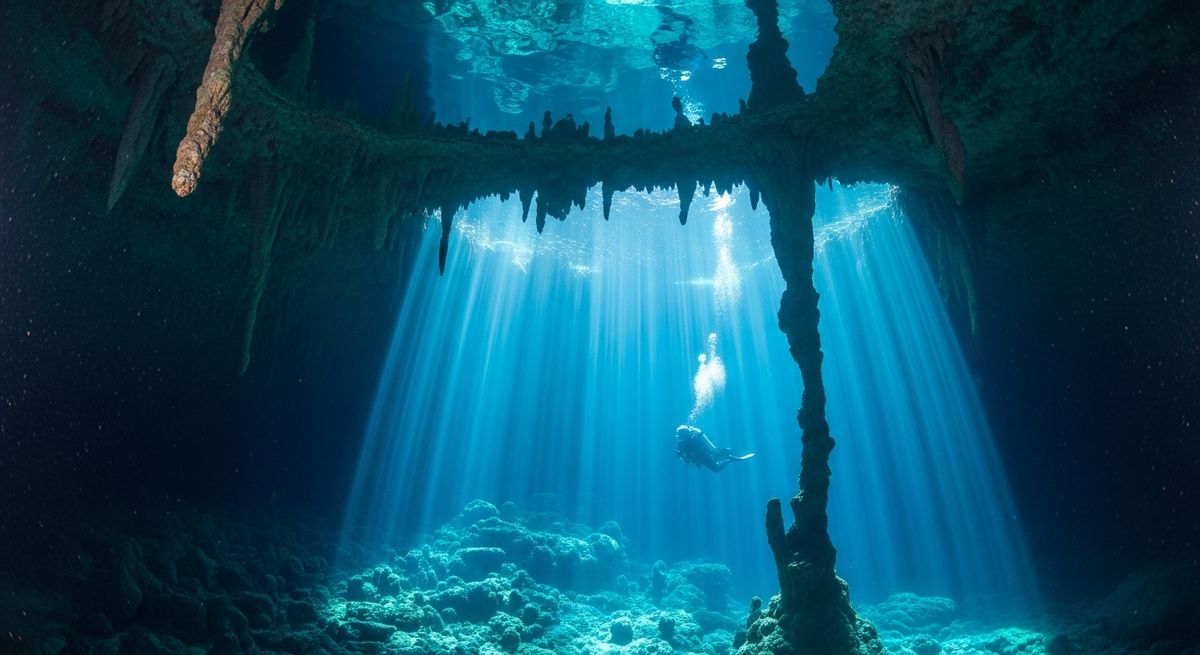
Black Rocks Lagoon
Protected Area
Rabbit Island
Why dive here
With 72+ marine species recorded in the area - including blue sharks, dolphins, hammerhead sharks, humpback whales and seahorses - Black Rocks Lagoon offers some of Goat Island & Hauraki Gulf's richest cave diving. Water ranges 15-21°C, warmest January, February, March.
Black Rocks Lagoon, despite its name, is more of a sheltered bay punctuated by dramatic volcanic rock formations. We love its versatility; the shallow inner lagoon, fringed with kelp, is a mellow spot to just drift and watch snapper cruise through, sometimes even finding a green wrasse peeking from the weeds. Then you've got the outer reef, a series of rocky pinnacles and gullies that really open up a different experience. We've had some memorable encounters here, particularly with shortfin makos on the deeper edges – not an everyday sight, but it happens. Visibility can vary, often around 10-12m, but the light filtering through the kelp forests even on an overcast day is something special. Our pick for an afternoon dive is to start shallow, exploring the crags where oblique-swimming triplefins dart, then venture out if conditions allow. Just be mindful of the swell on those outer pins; it can get pretty lively out there.
Typical Black Rocks Lagoon Dive Profile
Illustrative profile based on site depth and type. Actual dive profiles vary - always follow your dive computer and training.
Safety Notes
Overhead environment - never enter without proper cave/cavern training, redundant equipment, and a guideline.
Nearest Dive Centres to Black Rocks Lagoon
Dive shops near Black Rocks Lagoon
Salt Aotearoa
Cathedral Cove Dive Ltd
Dive Zone Whitianga
Reviews for Black Rocks Lagoon
Conditions
Ocean conditions, forecast and tides for Black Rocks Lagoon
Black Rocks Lagoon Ocean Conditions
Monthly averages for Black Rocks Lagoon, sourced from Open-Meteo marine data + Copernicus Marine (EU) - nearest station: Open-Meteo marine grid (-36.93, 175.86) (22km away)
October Averages
Sea Temperature
16°C
60°F · Range: 14.5–16.9°C
Current Speed
1.41 cm/s
Direction: SE (135°)
Chlorophyll-a
0.497 mg/m³
Moderate productivity
Salinity
34.91 PSU
Based on 4 years of monitoring data · Data sources: Open-Meteo marine data + Copernicus Marine (EU)
Plan & book
Ways to dive Goat Island & Hauraki Gulf, from day trips to liveaboards.
Day trips & courses
via GetYourGuideGuided dives, courses and snorkel trips with instant booking.
Find dive trips in Goat Island & Hauraki GulfPlaces to stay
via Booking.comHotels and dive resorts near Goat Island & Hauraki Gulf.
Search stays in Goat Island & Hauraki GulfDive insurance
Most travel insurance excludes or limits scuba. Check what you need before you go.
Dive insurance explainedPartner links: we may earn a commission if you book, at no extra cost to you. How we make money
Where to Stay near Black Rocks Lagoon
Prices from Booking.com. We may earn a commission at no extra cost to you.