Rarotonga Bay
Protected Area
Whanganui A Hei
Why dive here
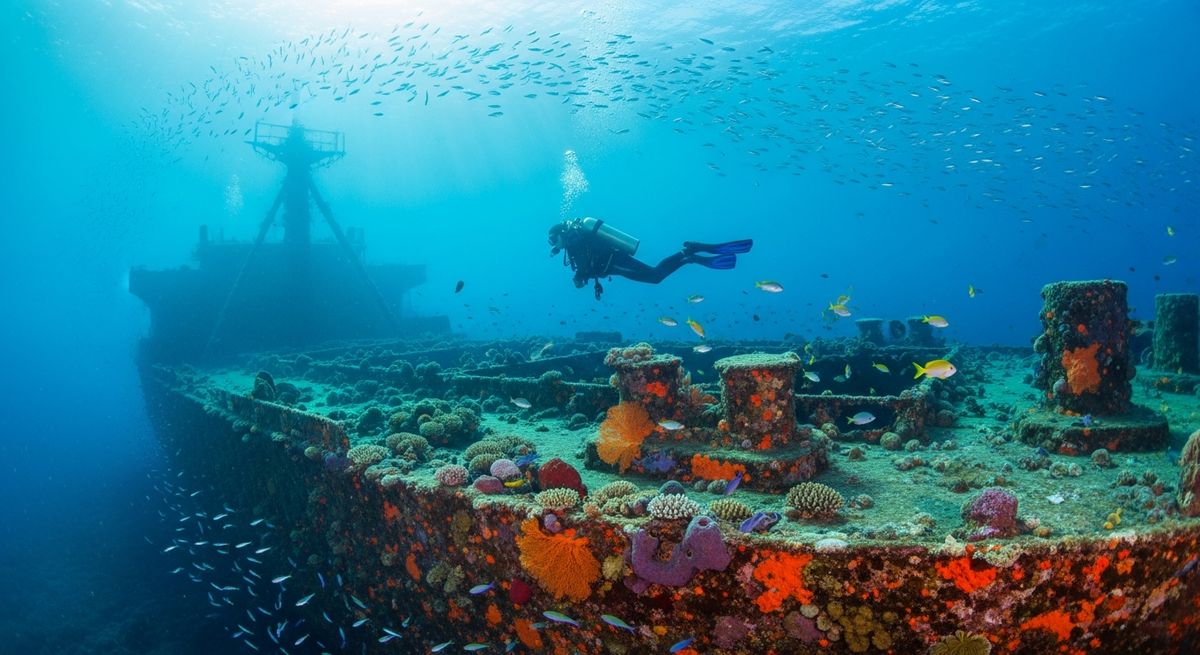
With 72+ marine species recorded in the area - including blue sharks, dolphins, hammerhead sharks, humpback whales and seahorses - Rarotonga Bay offers some of Goat Island & Hauraki Gulf's richest wreck diving. Water ranges 15-21°C, warmest January, February, March.
Rarotonga Bay is a familiar friend for us, a spot we’ve returned to time and again. It’s got a lovely sandy patch at about eight metres, perfect for sorting out buoyancy before you head to the main reef. We love poking around the kelp here, especially in the shallows where the light catches it just right. Keep an eye out for Short-tail Stingrays gliding over the sand, and we’ve often spotted Green Rock Lobsters tucked into crevices. The Common Triplefins are always busy flitting about, and on a good day, the visibility can genuinely surprise you, giving it that almost-tropical feel. It’s a great spot for newer divers, but even experienced eyes will find plenty to keep them occupied, especially if you’re into macro life in the kelp.
Safety Notes
Wreck site - avoid penetration without wreck diving certification. Watch for sharp metal and entanglement hazards.
Nearest Dive Centres to Rarotonga Bay
Dive shops near Rarotonga Bay
Cathedral Cove Dive Ltd
Dive Zone Whitianga
Salt Aotearoa
Reviews for Rarotonga Bay
Conditions
Ocean conditions, forecast and tides for Rarotonga Bay
Rarotonga Bay Ocean Conditions
Monthly averages for Rarotonga Bay, sourced from Open-Meteo marine data + Copernicus Marine (EU) - nearest station: Open-Meteo marine grid (-36.93, 175.86) (22km away)
October Averages
Sea Temperature
16°C
60°F · Range: 14.5–16.9°C
Current Speed
1.41 cm/s
Direction: SE (135°)
Chlorophyll-a
0.497 mg/m³
Moderate productivity
Salinity
34.91 PSU
Based on 4 years of monitoring data · Data sources: Open-Meteo marine data + Copernicus Marine (EU)
Plan & book
Ways to dive Goat Island & Hauraki Gulf, from day trips to liveaboards.
Day trips & courses
via GetYourGuideGuided dives, courses and snorkel trips with instant booking.
Find dive trips in Goat Island & Hauraki GulfPlaces to stay
via Booking.comHotels and dive resorts near Goat Island & Hauraki Gulf.
Search stays in Goat Island & Hauraki GulfDive insurance
Most travel insurance excludes or limits scuba. Check what you need before you go.
Dive insurance explainedPartner links: we may earn a commission if you book, at no extra cost to you. How we make money
Where to Stay near Rarotonga Bay
Prices from Booking.com. We may earn a commission at no extra cost to you.