RED MERCS
Protected Area
Rabbit Island
Why dive here
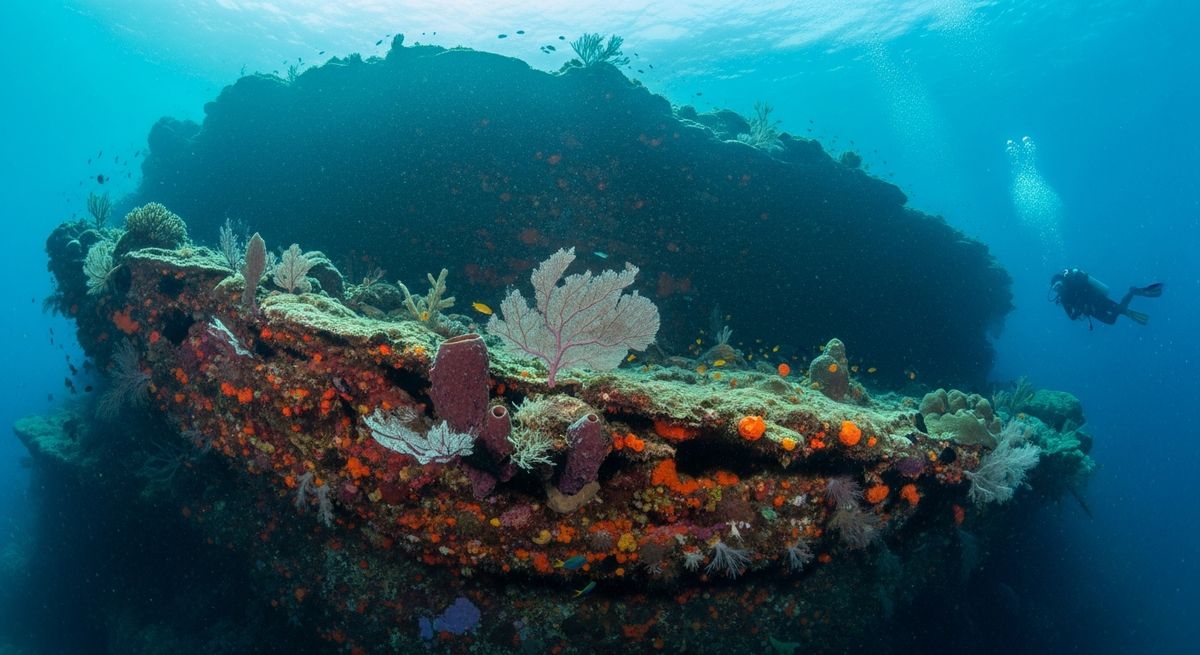
With 72+ marine species recorded in the area - including blue sharks, dolphins, hammerhead sharks, humpback whales and seahorses - RED MERCS offers some of Goat Island & Hauraki Gulf's richest wall diving. Water ranges 15-21°C, warmest January, February, March.
Red Mercs is one of our absolute favourite sites around Goat Island, a proper New Zealand classic. The real magic here is the sheer density of fish. We've often dropped in to find ourselves completely enveloped by schools of demoiselles and swarms of snapper, so thick they almost block out the sun. It's a proper visual feast, the kind of dive where you just hang still and let the current bring the show to you. The site is essentially a series of rocky pins and ledges that drop down to about 18 metres, covered in kelp and soft corals. It's a bit exposed, so picking your day is key – we always check the swell reports carefully. When the conditions line up, though, the visibility can stretch to 15 metres, and the place just explodes with life. Keep an eye out for those big California yellowtail cruising through, and the vibrant flash of crimson cleaner fish zipping around the rocks. It’s a site that really rewards a slow, observant diver, perfect for those who love feeling part of a bustling underwater world rather than just passing through it.
Nearest Dive Centres to RED MERCS
Dive shops near RED MERCS
Salt Aotearoa
Cathedral Cove Dive Ltd
Dive Zone Whitianga
Reviews for RED MERCS
Conditions
Ocean conditions, forecast and tides for RED MERCS
RED MERCS Ocean Conditions
Monthly averages for RED MERCS, sourced from Open-Meteo marine data + Copernicus Marine (EU) - nearest station: Open-Meteo marine grid (-36.93, 175.86) (22km away)
October Averages
Sea Temperature
16°C
60°F · Range: 14.5–16.9°C
Current Speed
1.41 cm/s
Direction: SE (135°)
Chlorophyll-a
0.497 mg/m³
Moderate productivity
Salinity
34.91 PSU
Based on 4 years of monitoring data · Data sources: Open-Meteo marine data + Copernicus Marine (EU)
Plan & book
Ways to dive Goat Island & Hauraki Gulf, from day trips to liveaboards.
Day trips & courses
via GetYourGuideGuided dives, courses and snorkel trips with instant booking.
Find dive trips in Goat Island & Hauraki GulfPlaces to stay
via Booking.comHotels and dive resorts near Goat Island & Hauraki Gulf.
Search stays in Goat Island & Hauraki GulfDive insurance
Most travel insurance excludes or limits scuba. Check what you need before you go.
Dive insurance explainedPartner links: we may earn a commission if you book, at no extra cost to you. How we make money
Where to Stay near RED MERCS
Prices from Booking.com. We may earn a commission at no extra cost to you.