Bartle Bay
Protected Area
Poor Knights Islands
Why dive here
With 79+ marine species recorded in the area - including blue sharks, dolphins, hammerhead sharks, humpback whales and orcas - Bartle Bay offers some of Poor Knights Islands's richest drift diving. Water ranges 15-22°C, warmest January, February, March.
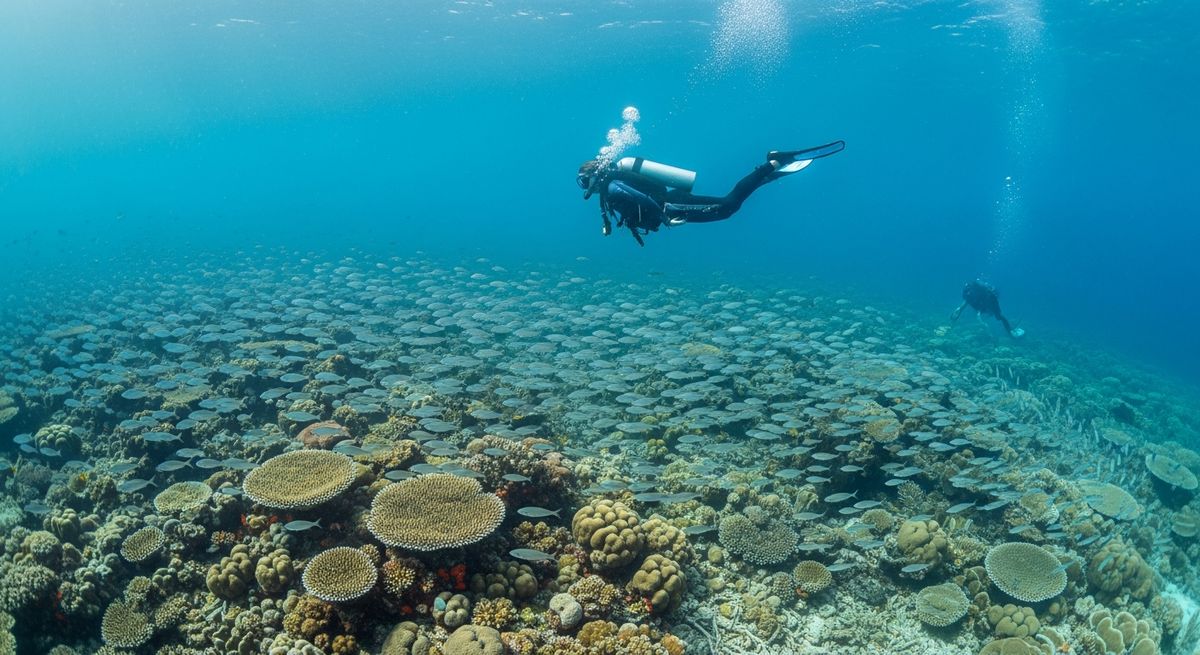
Bartle Bay isn't always the easiest dive at the Poor Knights, and that's precisely why we love it. Tucked into the channel between the two main islands, it catches a lot of surge, which means you need to pick your day. But when conditions are right, the reward is a truly wild experience. Imagine slipping into that current-swept kelp forest, the light dappled and green, as schools of demoiselles and blue mao mao swirl so thickly they almost obscure the big snapper and kingfish hunting through them. We've seen brown dogfish tucked into crevices here, and on one memorable dive, a massive short-tail stingray glided right past us, seemingly unfazed by the commotion. It’s a site for those who enjoy a bit of dynamism, who appreciate the raw power of the ocean and the sheer volume of fish it delivers. If you're looking for something a bit more active than a calm reef cruise, and you’re comfortable with some water movement, Bartle Bay is our pick for a proper Poor Knights rush.
Safety Notes
Drift dive - carry a surface marker buoy (SMB) and stay with your group. Brief the current direction before entry.
Nearest Dive Centres to Bartle Bay
Dive shops near Bartle Bay
Dive! Tutukaka
Moana Futures Ltd
Northland Dive
DIVE NOW
Reviews for Bartle Bay
Conditions
Ocean conditions, forecast and tides for Bartle Bay
Bartle Bay Ocean Conditions
Monthly averages for Bartle Bay, sourced from Open-Meteo marine data + Copernicus Marine (EU) - nearest station: Open-Meteo marine grid (-35.84, 174.61) (14km away)
October Averages
Sea Temperature
16°C
60°F · Range: 14.8–17.1°C
Current Speed
11.4 cm/s
Direction: SE (142.1°)
Chlorophyll-a
0.388 mg/m³
Moderate productivity
Salinity
35.44 PSU
Based on 4 years of monitoring data · Data sources: Open-Meteo marine data + Copernicus Marine (EU)
Plan & book
Ways to dive Poor Knights Islands, from day trips to liveaboards.
Day trips & courses
via GetYourGuideGuided dives, courses and snorkel trips with instant booking.
Find dive trips in Poor Knights IslandsPlaces to stay
via Booking.comHotels and dive resorts near Poor Knights Islands.
Search stays in Poor Knights IslandsDive insurance
Most travel insurance excludes or limits scuba. Check what you need before you go.
Dive insurance explainedPartner links: we may earn a commission if you book, at no extra cost to you. How we make money
Where to Stay near Bartle Bay
Prices from Booking.com. We may earn a commission at no extra cost to you.