Hideaway Bay
Protected Area
Poor Knights Islands
Why dive here
With 79+ marine species recorded in the area - including blue sharks, dolphins, hammerhead sharks, humpback whales and orcas - Hideaway Bay offers some of Poor Knights Islands's richest reef diving. Water ranges 15-22°C, warmest January, February, March.
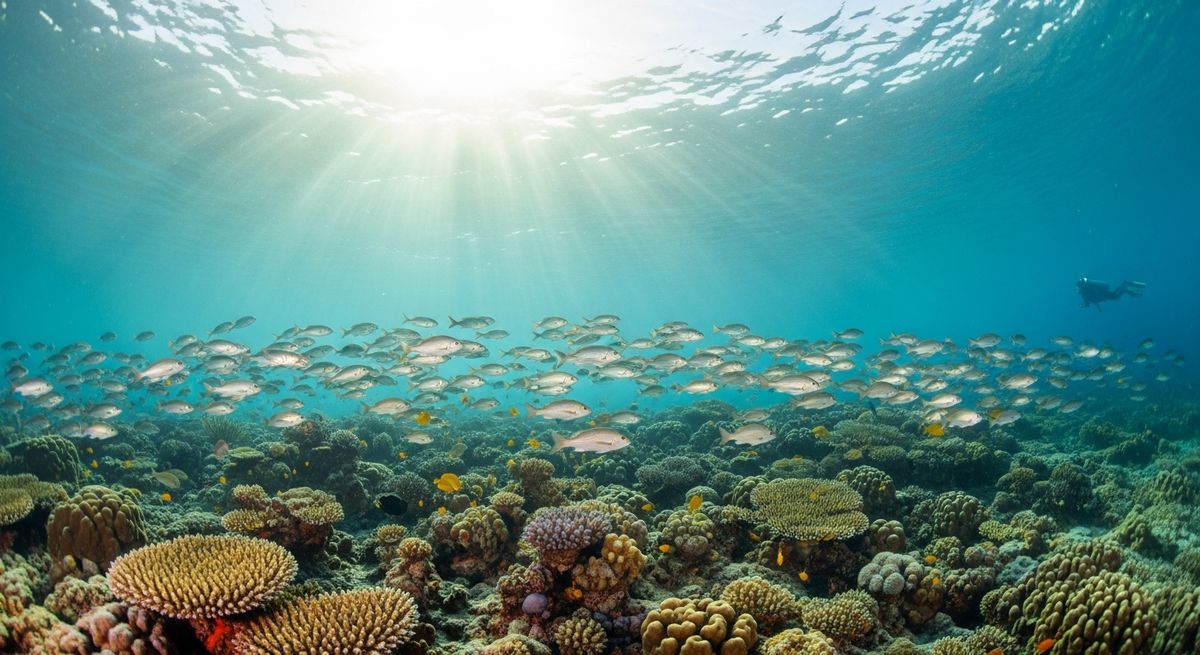
Hideaway Bay, or Dutchmans Cove to some, always feels a bit like finding a secret garden. We love it for its quiet charm and the way it always delivers something unexpected. On the left, the reef slopes in a series of knobbly ledges, shallow at first then gradually dropping away towards the point. You can spend an easy hour here just poking around the nooks and crannies. Over on the right, it’s a different vibe, a sheer wall that plunges to about 18 metres, with a sandy gully at its base. This is where we’ve often spotted eagle rays gliding past, or the occasional kingfish cruising by in the blue. Keep an eye out for Luculentus wrasse flitting amongst the algae, and those striking blue-eyed triplefins perched on the rocks. Winter dives here often mean a bonus encounter; the local seals use the neighbouring bay as a hangout, and they're notoriously curious, often buzzing divers with playful turns. It’s a site that suits a relaxed pace, where you can properly absorb the details rather than rushing between big pelagics.
Nearest Dive Centres to Hideaway Bay
Dive shops near Hideaway Bay
Dive! Tutukaka
Northland Dive
Moana Futures Ltd
DIVE NOW
Reviews for Hideaway Bay
Conditions
Ocean conditions, forecast and tides for Hideaway Bay
Hideaway Bay Ocean Conditions
Monthly averages for Hideaway Bay, sourced from Open-Meteo marine data + Copernicus Marine (EU) - nearest station: Open-Meteo marine grid (-35.84, 174.61) (14km away)
October Averages
Sea Temperature
16°C
60°F · Range: 14.8–17.1°C
Current Speed
11.4 cm/s
Direction: SE (142.1°)
Chlorophyll-a
0.388 mg/m³
Moderate productivity
Salinity
35.44 PSU
Based on 4 years of monitoring data · Data sources: Open-Meteo marine data + Copernicus Marine (EU)
Plan & book
Ways to dive Poor Knights Islands, from day trips to liveaboards.
Day trips & courses
via GetYourGuideGuided dives, courses and snorkel trips with instant booking.
Find dive trips in Poor Knights IslandsPlaces to stay
via Booking.comHotels and dive resorts near Poor Knights Islands.
Search stays in Poor Knights IslandsDive insurance
Most travel insurance excludes or limits scuba. Check what you need before you go.
Dive insurance explainedPartner links: we may earn a commission if you book, at no extra cost to you. How we make money
Where to Stay near Hideaway Bay
Prices from Booking.com. We may earn a commission at no extra cost to you.