Landing Bay Poor Knights
Protected Area
Poor Knights Islands
Why dive here
With 79+ marine species recorded in the area - including blue sharks, dolphins, hammerhead sharks, humpback whales and orcas - Landing Bay Poor Knights offers some of Poor Knights Islands's richest wall diving. Water ranges 15-22°C, warmest January, February, March.
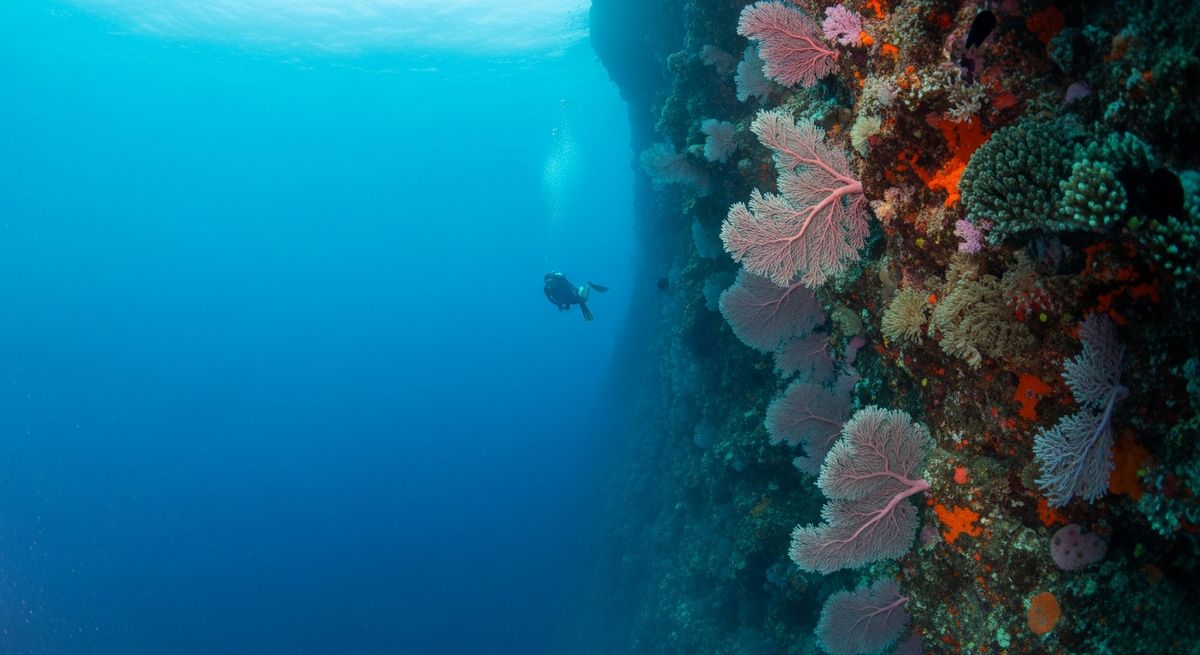
Landing Bay at the Poor Knights, for us, is all about the afternoon light. We’ve done it in the morning, and it’s fine, but wait for that sun to spill over the cliffs. It transforms the place. The slope drops pretty steeply, sure, but the magic here, we think, is really between 5 and 15 metres. That’s where you’ll see the schools of blue maomao and pink maomao, thick enough to make you feel like you're swimming through a living curtain. We’ve seen kingfish here, too, slicing through the shoals, and occasionally a bronze whaler just gliding by, giving you that proper Poor Knights shiver. Keep an eye out for the smaller stuff though; crested blennies are always amusing to watch, and the vibrant colours of eastern king wrasse really pop in that afternoon glow. Visibility is usually a comfortable 20-25m, so you get a good sense of the scale of the place. It's a dive that rewards slowing down and soaking it all in, perfect for those who appreciate the interplay of light and marine life.
Nearest Dive Centres to Landing Bay Poor Knights
Dive shops near Landing Bay Poor Knights
Dive! Tutukaka
Northland Dive
Moana Futures Ltd
DIVE NOW
Reviews for Landing Bay Poor Knights
Conditions
Ocean conditions, forecast and tides for Landing Bay Poor Knights
Landing Bay Poor Knights Ocean Conditions
Monthly averages for Landing Bay Poor Knights, sourced from Open-Meteo marine data + Copernicus Marine (EU) - nearest station: Open-Meteo marine grid (-35.84, 174.61) (14km away)
October Averages
Sea Temperature
16°C
60°F · Range: 14.8–17.1°C
Current Speed
11.4 cm/s
Direction: SE (142.1°)
Chlorophyll-a
0.388 mg/m³
Moderate productivity
Salinity
35.44 PSU
Based on 4 years of monitoring data · Data sources: Open-Meteo marine data + Copernicus Marine (EU)
Plan & book
Ways to dive Poor Knights Islands, from day trips to liveaboards.
Day trips & courses
via GetYourGuideGuided dives, courses and snorkel trips with instant booking.
Find dive trips in Poor Knights IslandsPlaces to stay
via Booking.comHotels and dive resorts near Poor Knights Islands.
Search stays in Poor Knights IslandsDive insurance
Most travel insurance excludes or limits scuba. Check what you need before you go.
Dive insurance explainedPartner links: we may earn a commission if you book, at no extra cost to you. How we make money
Where to Stay near Landing Bay Poor Knights
Prices from Booking.com. We may earn a commission at no extra cost to you.