Little Cave Bay
Protected Area
Mokohinau Islands
Why dive here
With 79+ marine species recorded in the area - including blue sharks, dolphins, hammerhead sharks, humpback whales and orcas - Little Cave Bay offers some of Poor Knights Islands's richest reef diving. Water ranges 15-22°C, warmest January, February, March.
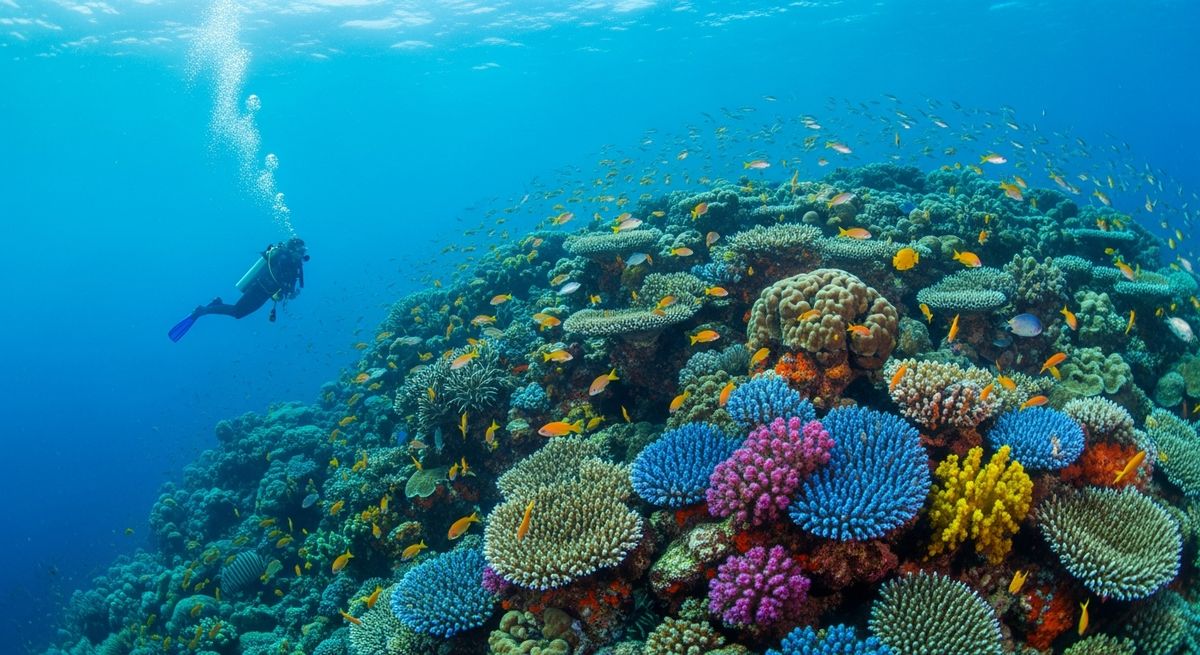
Little Cave Bay often gets overlooked for the bigger, flashier caves around the Poor Knights, and that’s a shame. We think it’s a brilliant spot for a relaxed second dive or when the wind is kicking up a fuss elsewhere. The name comes from a small crevice in the corner – don't expect a grand cathedral, but it’s a nice little poke-around, good for finding some shy triplefins. The real magic here is the light. On a sunny day, those golden shafts slicing through the kelp forest are just something else, especially when you’re floating above the sandy patches. You’ll find schools of spotties and demoiselles swirling in the shallows, and we’ve often seen snapper cruising along the reef edge. Keep an eye out for stingrays in the sand. It’s a gentle slope down to about 19 meters, easy to navigate, and generally calm, making it a great place to refine buoyancy or just drift and soak it all in. If you want high drama, go elsewhere, but for pure, serene diving, Little Cave Bay is our quiet favourite.
Nearest Dive Centres to Little Cave Bay
Dive shops near Little Cave Bay
View all dive centres in Poor Knights IslandsReviews for Little Cave Bay
Conditions
Ocean conditions, forecast and tides for Little Cave Bay
Little Cave Bay Ocean Conditions
Monthly averages for Little Cave Bay, sourced from Open-Meteo marine data + Copernicus Marine (EU) - nearest station: Open-Meteo marine grid (-35.84, 174.61) (14km away)
October Averages
Sea Temperature
16°C
60°F · Range: 14.8–17.1°C
Current Speed
11.4 cm/s
Direction: SE (142.1°)
Chlorophyll-a
0.388 mg/m³
Moderate productivity
Salinity
35.44 PSU
Based on 4 years of monitoring data · Data sources: Open-Meteo marine data + Copernicus Marine (EU)
Plan & book
Ways to dive Poor Knights Islands, from day trips to liveaboards.
Day trips & courses
via GetYourGuideGuided dives, courses and snorkel trips with instant booking.
Find dive trips in Poor Knights IslandsPlaces to stay
via Booking.comHotels and dive resorts near Poor Knights Islands.
Search stays in Poor Knights IslandsDive insurance
Most travel insurance excludes or limits scuba. Check what you need before you go.
Dive insurance explainedPartner links: we may earn a commission if you book, at no extra cost to you. How we make money
Where to Stay near Little Cave Bay
Prices from Booking.com. We may earn a commission at no extra cost to you.