Oculina Point
Protected Area
Poor Knights Islands
Why dive here
With 79+ marine species recorded in the area - including blue sharks, dolphins, hammerhead sharks, humpback whales and orcas - Oculina Point offers some of Poor Knights Islands's richest wreck diving. Water ranges 15-22°C, warmest January, February, March.
Oculina Point, or what we affectionately call Leopard Anemone Point, is classic Poor Knights. It’s got that raw, wild New Zealand feel to it, even with the vibrant colours. You drop into a bay that starts around 10 meters, sloping down over a bouldery, kelp-strewn bottom. The kelp here is thick, swaying gently, creating these cool, shadowed areas where all sorts of things like Snapper and Parrotfish like to hang out. Our favourite part, though, has to be those Leopard Anemones. They’re everywhere, splashed across the rocks like abstract art. You’ll find yourself just watching them pulse. We've often seen stingrays gliding through the shallows here, and the butterfly perch flitting between the kelp fronds are always a cheerful sight. The visibility averages 12m, which is decent enough to appreciate the scale of the place. It’s a site that really suits divers who appreciate the unique cooler water ecosystems, rather than just chasing tropical fish. Keep an eye out for the Demoiselle darting about, they’re particularly bold here.
Safety Notes
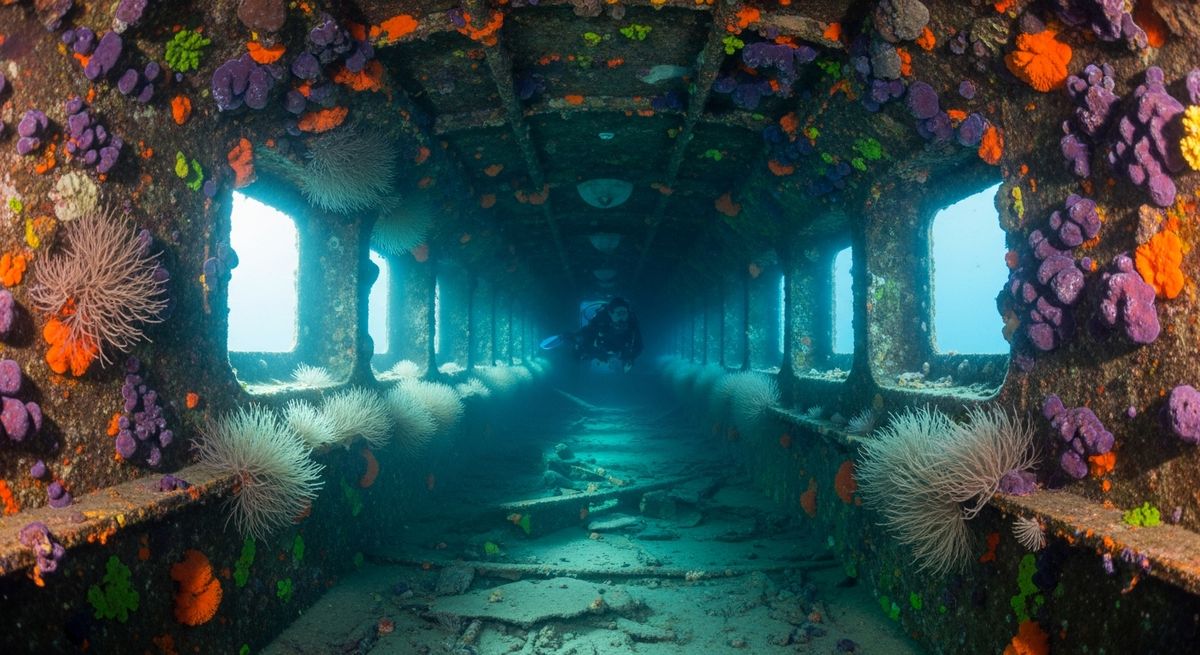
Wreck site - avoid penetration without wreck diving certification. Watch for sharp metal and entanglement hazards.
Nearest Dive Centres to Oculina Point
Dive shops near Oculina Point
Dive! Tutukaka
Moana Futures Ltd
Northland Dive
DIVE NOW
Reviews for Oculina Point
Conditions
Ocean conditions, forecast and tides for Oculina Point
Oculina Point Ocean Conditions
Monthly averages for Oculina Point, sourced from Open-Meteo marine data + Copernicus Marine (EU) - nearest station: Open-Meteo marine grid (-35.84, 174.61) (14km away)
October Averages
Sea Temperature
16°C
60°F · Range: 14.8–17.1°C
Current Speed
11.4 cm/s
Direction: SE (142.1°)
Chlorophyll-a
0.388 mg/m³
Moderate productivity
Salinity
35.44 PSU
Based on 4 years of monitoring data · Data sources: Open-Meteo marine data + Copernicus Marine (EU)
Plan & book
Ways to dive Poor Knights Islands, from day trips to liveaboards.
Day trips & courses
via GetYourGuideGuided dives, courses and snorkel trips with instant booking.
Find dive trips in Poor Knights IslandsPlaces to stay
via Booking.comHotels and dive resorts near Poor Knights Islands.
Search stays in Poor Knights IslandsDive insurance
Most travel insurance excludes or limits scuba. Check what you need before you go.
Dive insurance explainedPartner links: we may earn a commission if you book, at no extra cost to you. How we make money
Where to Stay near Oculina Point
Prices from Booking.com. We may earn a commission at no extra cost to you.