Poor Knights Island NZ
Protected Area
Poor Knights Islands
Why dive here
With 79+ marine species recorded in the area - including blue sharks, dolphins, hammerhead sharks, humpback whales and orcas - Poor Knights Island NZ offers some of Poor Knights Islands's richest wreck diving. Water ranges 15-22°C, warmest January, February, March.
Poor Knights Island itself might not be the flashiest site in the wider reserve, but we still really enjoy a dive here. It’s a solid entry point, particularly if you’re getting your sea legs or if the weather isn’t playing ball for the more exposed spots. The max depth of 19m keeps things comfortable, and we often find good visibility, around 15m, which lets you really take in the kelp forests swaying in the gentle surge. You'll spend most of your time poking around the golden fronds of kelp, looking for the smaller stuff. We’ve spotted plenty of common triplefins zipping between the stalks, and the drummers are always out in force. Keep an eye out for a cowfish, their odd shape always brings a smile. It's a calmer dive, a good one for photographers focusing on macro, or just to soak in that distinctive New Zealand underwater feel. We often suggest it as a second or third dive, a nice contrast to the drama of some of the deeper caverns elsewhere.
Safety Notes
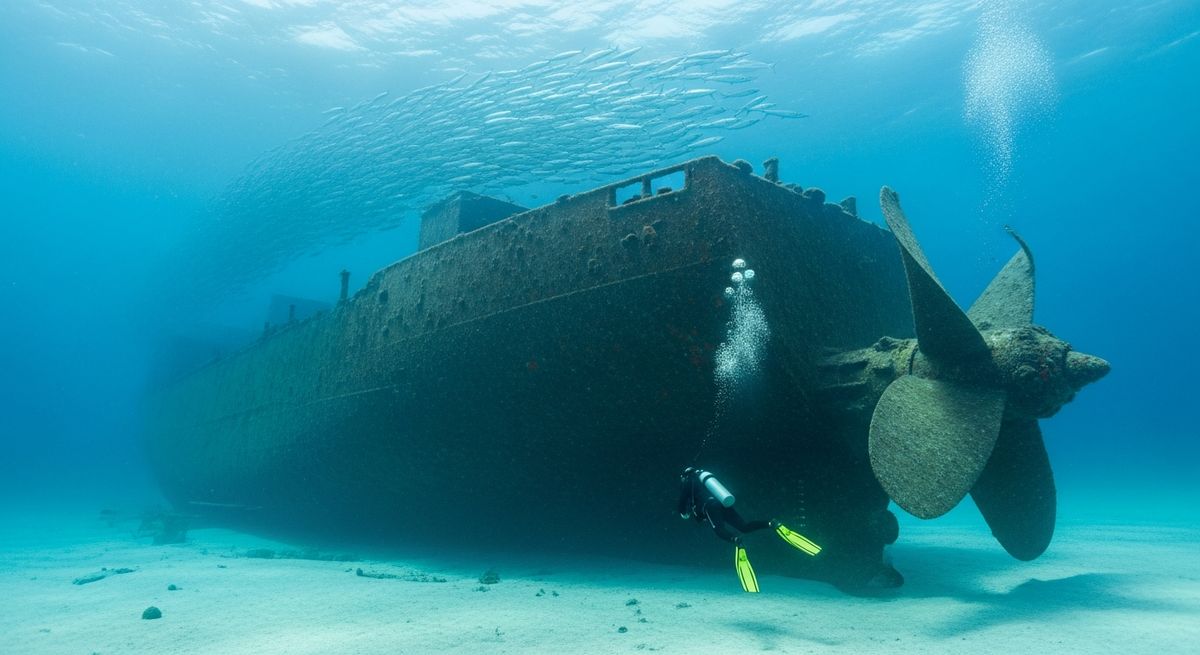
Wreck site - avoid penetration without wreck diving certification. Watch for sharp metal and entanglement hazards.
Nearest Dive Centres to Poor Knights Island NZ
Dive shops near Poor Knights Island NZ
Dive! Tutukaka
Northland Dive
Moana Futures Ltd
DIVE NOW
Reviews for Poor Knights Island NZ
Conditions
Ocean conditions, forecast and tides for Poor Knights Island NZ
Poor Knights Island NZ Ocean Conditions
Monthly averages for Poor Knights Island NZ, sourced from Open-Meteo marine data + Copernicus Marine (EU) - nearest station: Open-Meteo marine grid (-35.84, 174.61) (14km away)
October Averages
Sea Temperature
16°C
60°F · Range: 14.8–17.1°C
Current Speed
11.4 cm/s
Direction: SE (142.1°)
Chlorophyll-a
0.388 mg/m³
Moderate productivity
Salinity
35.44 PSU
Based on 4 years of monitoring data · Data sources: Open-Meteo marine data + Copernicus Marine (EU)
Plan & book
Ways to dive Poor Knights Islands, from day trips to liveaboards.
Day trips & courses
via GetYourGuideGuided dives, courses and snorkel trips with instant booking.
Find dive trips in Poor Knights IslandsPlaces to stay
via Booking.comHotels and dive resorts near Poor Knights Islands.
Search stays in Poor Knights IslandsDive insurance
Most travel insurance excludes or limits scuba. Check what you need before you go.
Dive insurance explainedPartner links: we may earn a commission if you book, at no extra cost to you. How we make money
Where to Stay near Poor Knights Island NZ
Prices from Booking.com. We may earn a commission at no extra cost to you.