Simpson Rock
Protected Area
Mokohinau Islands
Why dive here
With 79+ marine species recorded in the area - including blue sharks, dolphins, hammerhead sharks, humpback whales and orcas - Simpson Rock offers some of Poor Knights Islands's richest reef diving. Water ranges 15-22°C, warmest January, February, March.
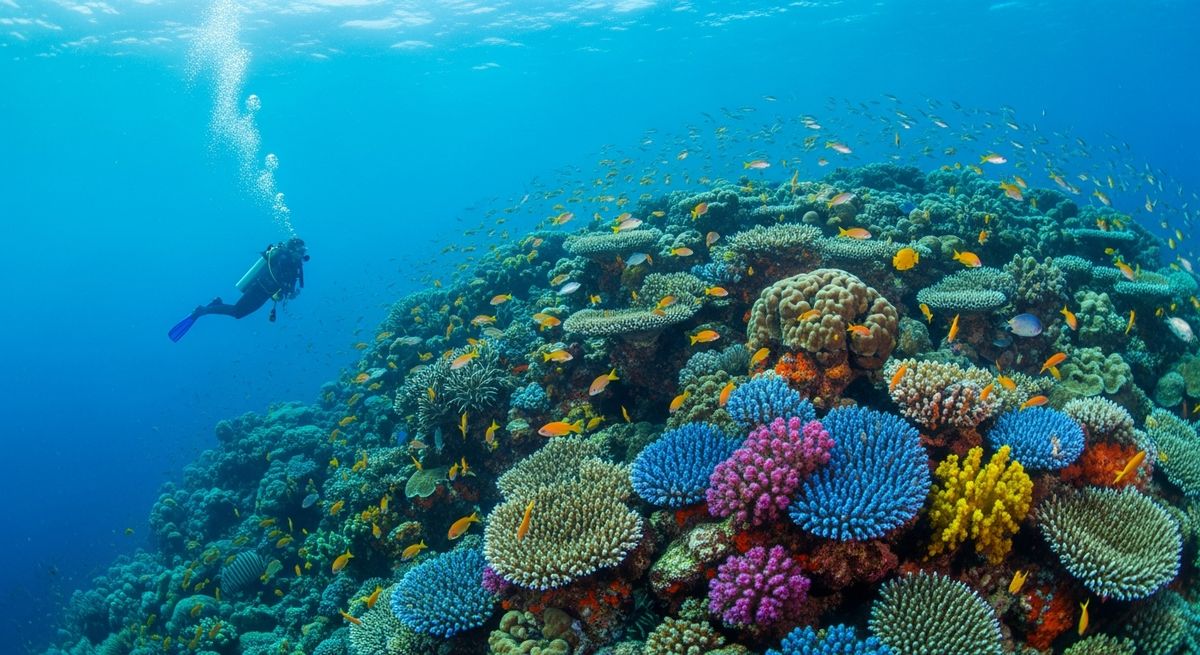
Simpson Rock is one of our favourites at the Poor Knights, a real punchy dive when conditions align. It’s a proper pinnacle, dropping steeply from a tiny patch of rock above the surface down to a platform at about 20 metres. We love to hug the wall, searching for the smaller stuff like Luculentus Wrasse and those tiny Crested Blennies tucked into crevices. Out in the blue, though, is where the drama happens. Schools of New Zealand demoiselle are often so thick they can obscure the light, and when the current is running, you feel every bit of that exposure. It’s the kind of spot where you’re constantly scanning for something bigger, especially in warmer water when Allison's Tuna or even a Blue Shark might cruise by. We’ve seen Red Rock Lobsters here the size of small dogs, too. This site suits divers comfortable with a bit of current and keen to experience the wilder side of the Poor Knights. You'll spend your time circling the rock, either glued to the wall for macro finds or suspended in the blue, watching the constant flow of fish. It’s an exciting dive, best done when the sea isn't too boisterous.
Nearest Dive Centres to Simpson Rock
Dive shops near Simpson Rock
View all dive centres in Poor Knights IslandsReviews for Simpson Rock
Conditions
Ocean conditions, forecast and tides for Simpson Rock
Simpson Rock Ocean Conditions
Monthly averages for Simpson Rock, sourced from Open-Meteo marine data + Copernicus Marine (EU) - nearest station: Open-Meteo marine grid (-35.84, 174.61) (14km away)
October Averages
Sea Temperature
16°C
60°F · Range: 14.8–17.1°C
Current Speed
11.4 cm/s
Direction: SE (142.1°)
Chlorophyll-a
0.388 mg/m³
Moderate productivity
Salinity
35.44 PSU
Based on 4 years of monitoring data · Data sources: Open-Meteo marine data + Copernicus Marine (EU)
Plan & book
Ways to dive Poor Knights Islands, from day trips to liveaboards.
Day trips & courses
via GetYourGuideGuided dives, courses and snorkel trips with instant booking.
Find dive trips in Poor Knights IslandsPlaces to stay
via Booking.comHotels and dive resorts near Poor Knights Islands.
Search stays in Poor Knights IslandsDive insurance
Most travel insurance excludes or limits scuba. Check what you need before you go.
Dive insurance explainedPartner links: we may earn a commission if you book, at no extra cost to you. How we make money
Where to Stay near Simpson Rock
Prices from Booking.com. We may earn a commission at no extra cost to you.