Sugarloaf Rock Poor Knights
Protected Area
Poor Knights Islands
Why dive here
With 79+ marine species recorded in the area - including blue sharks, dolphins, hammerhead sharks, humpback whales and orcas - Sugarloaf Rock Poor Knights offers some of Poor Knights Islands's richest wreck diving. Water ranges 15-22°C, warmest January, February, March.
Sugarloaf Rock, for us, is all about the vertical. This site truly drops away, a proper pinnacle that starts at the surface and plunges to depths few recreational divers ever touch. We’ve always been partial to the shallow ledge at 18 metres, a great spot to pause and watch the action unfold. The top of the rock, if you catch it at low tide, is perfect for a safety stop, feeling the sun on your face after a good dive. It's the schools of fish here that really grab you. We've seen fusiliers and demoiselles so thick they shimmer, attracting the bigger stuff – kingfish, snapper, even trevally slicing through the bait balls. Keep an eye on the blue; we’ve often caught glimpses of bronze whalers or even a curious blue shark cruising past. The walls themselves are worth a close look too. We've spotted some great nudibranchs and crayfish tucked into crevices. This site suits divers who appreciate a dramatic seascape and aren't afraid of a bit of current, as it can pick up here. Visibility averages around 10 metres, so it’s not always gin-clear, but the sheer volume of fish more than makes up for it.
Safety Notes
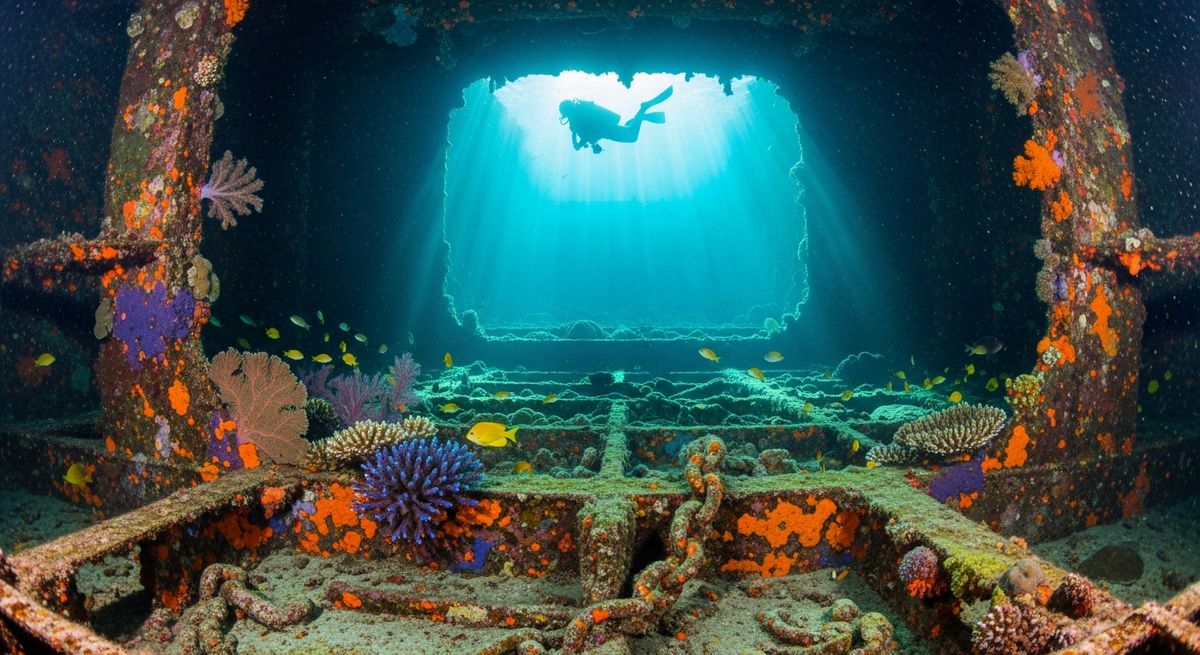
Wreck site - avoid penetration without wreck diving certification. Watch for sharp metal and entanglement hazards.
Nearest Dive Centres to Sugarloaf Rock Poor Knights
Dive shops near Sugarloaf Rock Poor Knights
Dive! Tutukaka
Moana Futures Ltd
DIVE NOW
Northland Dive
Reviews for Sugarloaf Rock Poor Knights
Conditions
Ocean conditions, forecast and tides for Sugarloaf Rock Poor Knights
Sugarloaf Rock Poor Knights Ocean Conditions
Monthly averages for Sugarloaf Rock Poor Knights, sourced from Open-Meteo marine data + Copernicus Marine (EU) - nearest station: Open-Meteo marine grid (-35.84, 174.61) (14km away)
October Averages
Sea Temperature
16°C
60°F · Range: 14.8–17.1°C
Current Speed
11.4 cm/s
Direction: SE (142.1°)
Chlorophyll-a
0.388 mg/m³
Moderate productivity
Salinity
35.44 PSU
Based on 4 years of monitoring data · Data sources: Open-Meteo marine data + Copernicus Marine (EU)
Plan & book
Ways to dive Poor Knights Islands, from day trips to liveaboards.
Day trips & courses
via GetYourGuideGuided dives, courses and snorkel trips with instant booking.
Find dive trips in Poor Knights IslandsPlaces to stay
via Booking.comHotels and dive resorts near Poor Knights Islands.
Search stays in Poor Knights IslandsDive insurance
Most travel insurance excludes or limits scuba. Check what you need before you go.
Dive insurance explainedPartner links: we may earn a commission if you book, at no extra cost to you. How we make money
Where to Stay near Sugarloaf Rock Poor Knights
Prices from Booking.com. We may earn a commission at no extra cost to you.