Te Titoki Point
Protected Area
Cape Rodney-Okakari Point
Why dive here
With 79+ marine species recorded in the area - including blue sharks, dolphins, hammerhead sharks, humpback whales and orcas - Te Titoki Point offers some of Poor Knights Islands's richest reef diving. Water ranges 15-22°C, warmest January, February, March.
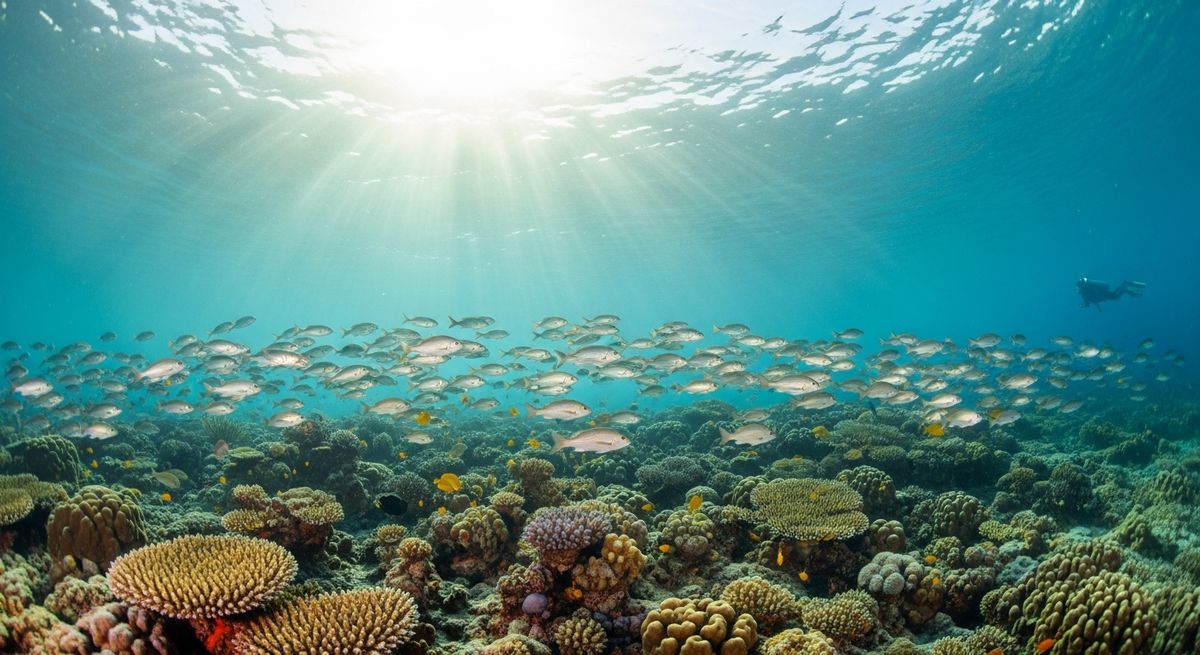
Honestly, Te Titoki Point isn't going to win any beauty contests for coral coverage. We’re talking a big expanse of sand, a gently sloping beach entry, and then a fairly swift drop into the deeper stuff. But don’t write it off just yet. We’ve had some surprisingly good days here, especially when you focus on the details. Visibility here averages around 9 metres, which isn't the Poor Knights' usual gin-clear standard, but it’s often decent enough for what's on offer. The real draw for us is the chance to spot the things you just don't see on the dramatic walls elsewhere. We've spent patient dives here watching a Smooth Skate glide over the sand, its wings almost blending in. Rig often cruise through, and the butterfly perch are a pretty splash of colour against the muted backdrop. For photographers, it’s a different kind of challenge, but a rewarding one. Think macro: Cowfish poking around, or a Wrinkled Swimming Crab scuttling past. It’s also one of those spots where you might catch a Bronze Whaler just cruising by in the blue, though they're more common around the pinnacles. If you're tired of reef fish and want to search for something truly unique, or just enjoy the peace of a quieter dive, Te Titoki has its moments. Just manage your expectations and slow your roll.
Nearest Dive Centres to Te Titoki Point
Dive shops near Te Titoki Point
GOAT ISLAND DIVE and SNORKEL
NEW ZEALAND DIVING
Reviews for Te Titoki Point
Conditions
Ocean conditions, forecast and tides for Te Titoki Point
Te Titoki Point Ocean Conditions
Monthly averages for Te Titoki Point, sourced from Open-Meteo marine data + Copernicus Marine (EU) - nearest station: Open-Meteo marine grid (-35.84, 174.61) (14km away)
October Averages
Sea Temperature
16°C
60°F · Range: 14.8–17.1°C
Current Speed
11.4 cm/s
Direction: SE (142.1°)
Chlorophyll-a
0.388 mg/m³
Moderate productivity
Salinity
35.44 PSU
Based on 4 years of monitoring data · Data sources: Open-Meteo marine data + Copernicus Marine (EU)
Plan & book
Ways to dive Poor Knights Islands, from day trips to liveaboards.
Day trips & courses
via GetYourGuideGuided dives, courses and snorkel trips with instant booking.
Find dive trips in Poor Knights IslandsPlaces to stay
via Booking.comHotels and dive resorts near Poor Knights Islands.
Search stays in Poor Knights IslandsDive insurance
Most travel insurance excludes or limits scuba. Check what you need before you go.
Dive insurance explainedPartner links: we may earn a commission if you book, at no extra cost to you. How we make money
Where to Stay near Te Titoki Point
Prices from Booking.com. We may earn a commission at no extra cost to you.