The Plateau
Protected Area
Cape Rodney-Okakari Point
Why dive here
With 79+ marine species recorded in the area - including blue sharks, dolphins, hammerhead sharks, humpback whales and orcas - The Plateau offers some of Poor Knights Islands's richest wreck diving. Water ranges 15-22°C, warmest January, February, March.
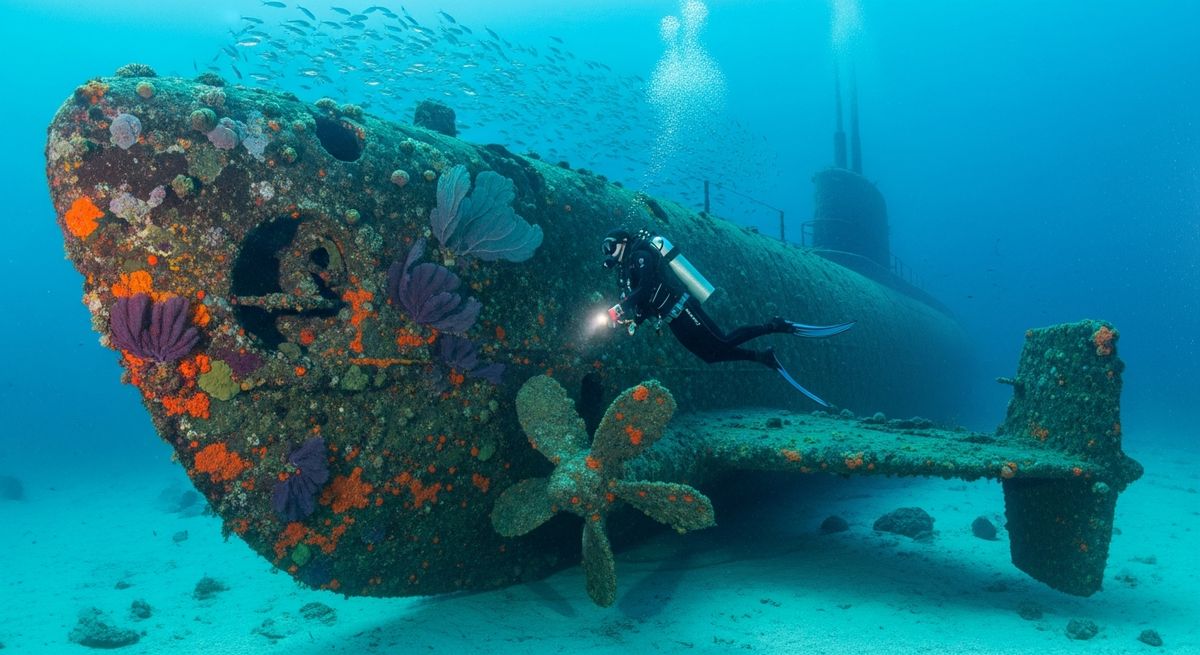
The Vis Island Wall isn't just a wall, it’s an entire ecosystem built around a history lesson. We've always found ourselves drawn to sites that tell a story, and this one whispers tales from WWII, with a good-sized wreck resting against the drop-off. You descend onto the deck, maybe 25-30 metres, and the first thing that hits you is the sheer scale, the way it leans into the blue. What makes it special for us is how the wreck has become part of the reef. Scarlet coral blazes bright red in the torchlight, and we’ve seen hake tucked into every crevice, alongside shy blotched picarel. Keep an eye out for the odd cowfish grazing on the metal hull, and once, we even spotted a brown skate gliding over what used to be the cargo hold. This is a dive that suits those who appreciate a wreck with a living, breathing component, not just rust. Go early in the morning, before any wind picks up, for the best light on the coral.
Safety Notes
Wreck site - avoid penetration without wreck diving certification. Watch for sharp metal and entanglement hazards.
Nearest Dive Centres to The Plateau
Dive shops near The Plateau
GOAT ISLAND DIVE and SNORKEL
NEW ZEALAND DIVING
Reviews for The Plateau
Conditions
Ocean conditions, forecast and tides for The Plateau
The Plateau Ocean Conditions
Monthly averages for The Plateau, sourced from Open-Meteo marine data + Copernicus Marine (EU) - nearest station: Open-Meteo marine grid (-35.84, 174.61) (14km away)
October Averages
Sea Temperature
16°C
60°F · Range: 14.8–17.1°C
Current Speed
11.4 cm/s
Direction: SE (142.1°)
Chlorophyll-a
0.388 mg/m³
Moderate productivity
Salinity
35.44 PSU
Based on 4 years of monitoring data · Data sources: Open-Meteo marine data + Copernicus Marine (EU)
Plan & book
Ways to dive Poor Knights Islands, from day trips to liveaboards.
Day trips & courses
via GetYourGuideGuided dives, courses and snorkel trips with instant booking.
Find dive trips in Poor Knights IslandsPlaces to stay
via Booking.comHotels and dive resorts near Poor Knights Islands.
Search stays in Poor Knights IslandsDive insurance
Most travel insurance excludes or limits scuba. Check what you need before you go.
Dive insurance explainedPartner links: we may earn a commission if you book, at no extra cost to you. How we make money
Where to Stay near The Plateau
Prices from Booking.com. We may earn a commission at no extra cost to you.