Ti Point Wharf
Protected Area
Cape Rodney-Okakari Point
Why dive here
With 79+ marine species recorded in the area - including blue sharks, dolphins, hammerhead sharks, humpback whales and orcas - Ti Point Wharf offers some of Poor Knights Islands's richest wreck diving. Water ranges 15-22°C, warmest January, February, March.
Ti Point Wharf is one of those spots we keep coming back to, especially when the weather is playing up, or we just want a relaxed poke about. It’s barely a dive in terms of depth, capping out around 7 metres, but don’t let that fool you. The concrete ramp makes entry incredibly easy, a real blessing when you’re lugging gear. We've spent hours here just hovering, watching the local residents. The stargazers are always a highlight, buried in the sand, just their eyes peeking out. You’ll often find juvenile snapper and parore darting around the wharf piles. But our favourite? Those sea horses. They take some patience to spot, tucked away in the kelp, but finding one is like winning a tiny lottery. Visibility averages around 5 metres, so it’s not for wide-angle photography, but perfect for macro enthusiasts and new divers getting comfortable. It’s a gentle introduction to shore diving, and a reminder that some of the best encounters happen right under your nose.
Safety Notes
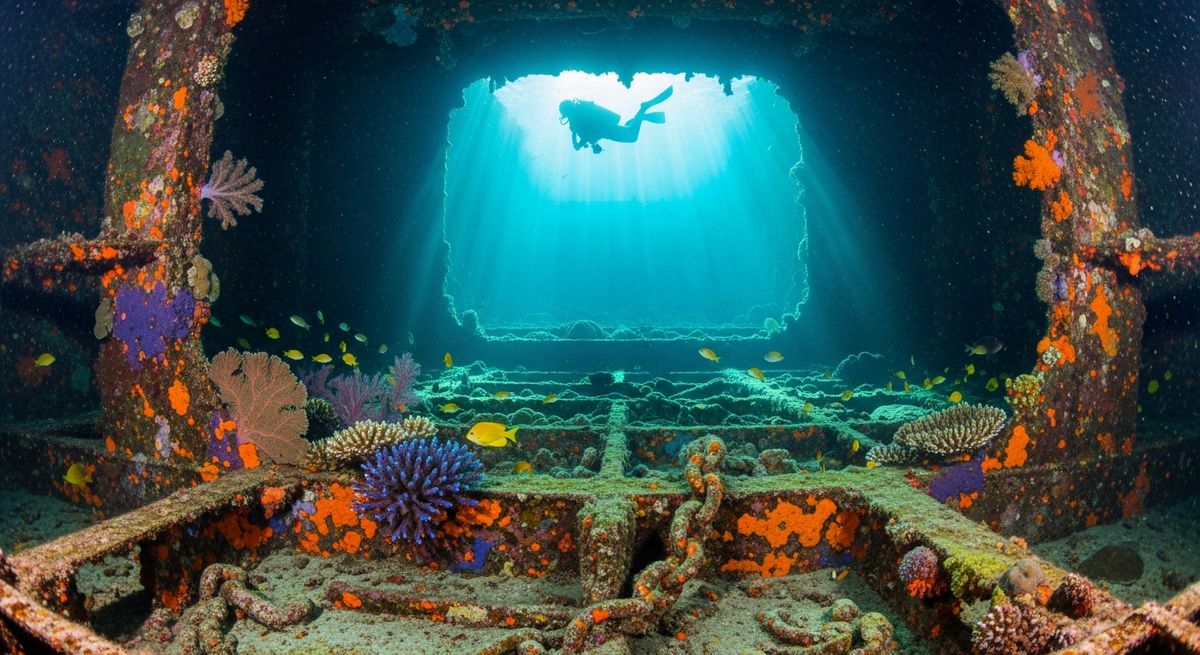
Wreck site - avoid penetration without wreck diving certification. Watch for sharp metal and entanglement hazards.
Ti Point Wharf Wreck History
Year Sunk
1946
Vessel Type
warship
Cause
scuttled
Bikini Atoll is not a single wreck, but an entire ghost fleet of warships resting on the floor of a remote Pacific lagoon. This naval graveyard is the result of Operation Crossroads, a series of nuclear weapon tests conducted by the United States in 1946. To study the effects of atomic bombs on naval vessels, the US assembled a target fleet of more than 90 surplus American, German, and Japanese warships. After the local inhabitants were forcibly relocated, two atomic bombs were detonated, sending many of these legendary ships to the bottom.
For experienced technical divers, Bikini Atoll is the ultimate wreck diving destination. The fleet includes some of the most famous warships in history, preserved in the deep, clear waters of the lagoon. Divers can explore the colossal USS Saratoga, an aircraft carrier so large it's impossible to see in a single dive, with Hellcat fighters still in its hangars. Nearby lies the HIJMS Nagato, the flagship of Admiral Yamamoto from which he commanded the attack on Pearl Harbor. Other wrecks include cruisers, destroyers, and submarines, all bearing the scars of the atomic blasts.
Diving here is a serious undertaking, requiring technical certifications and careful planning due to the depth, remote location, and residual radiation (which is safe for limited dive times). The reward is a surreal journey back in time, exploring a powerful moment in world history. The wrecks are monumental, eerie, and largely intact, offering a diving experience that is truly without equal anywhere on Earth.
Nearest Dive Centres to Ti Point Wharf
Dive shops near Ti Point Wharf
GOAT ISLAND DIVE and SNORKEL
NEW ZEALAND DIVING
Auckland Scuba - Silverdale
Reviews for Ti Point Wharf
Conditions
Ocean conditions, forecast and tides for Ti Point Wharf
Ti Point Wharf Ocean Conditions
Monthly averages for Ti Point Wharf, sourced from Open-Meteo marine data + Copernicus Marine (EU) - nearest station: Open-Meteo marine grid (-35.84, 174.61) (14km away)
October Averages
Sea Temperature
16°C
60°F · Range: 14.8–17.1°C
Current Speed
11.4 cm/s
Direction: SE (142.1°)
Chlorophyll-a
0.388 mg/m³
Moderate productivity
Salinity
35.44 PSU
Based on 4 years of monitoring data · Data sources: Open-Meteo marine data + Copernicus Marine (EU)
Plan & book
Ways to dive Poor Knights Islands, from day trips to liveaboards.
Day trips & courses
via GetYourGuideGuided dives, courses and snorkel trips with instant booking.
Find dive trips in Poor Knights IslandsPlaces to stay
via Booking.comHotels and dive resorts near Poor Knights Islands.
Search stays in Poor Knights IslandsDive insurance
Most travel insurance excludes or limits scuba. Check what you need before you go.
Dive insurance explainedPartner links: we may earn a commission if you book, at no extra cost to you. How we make money
Where to Stay near Ti Point Wharf
Prices from Booking.com. We may earn a commission at no extra cost to you.