Airplanes (Wreck)
Protected Area
Zuidkust
Why dive here
With 82+ marine species recorded in the area - including orcas, sea turtles, whale sharks, frogfish and lionfish - Airplanes (Wreck) offers some of Aruba Leeward Coast's richest wreck diving. Water ranges 27-30°C, warmest September, October, November.
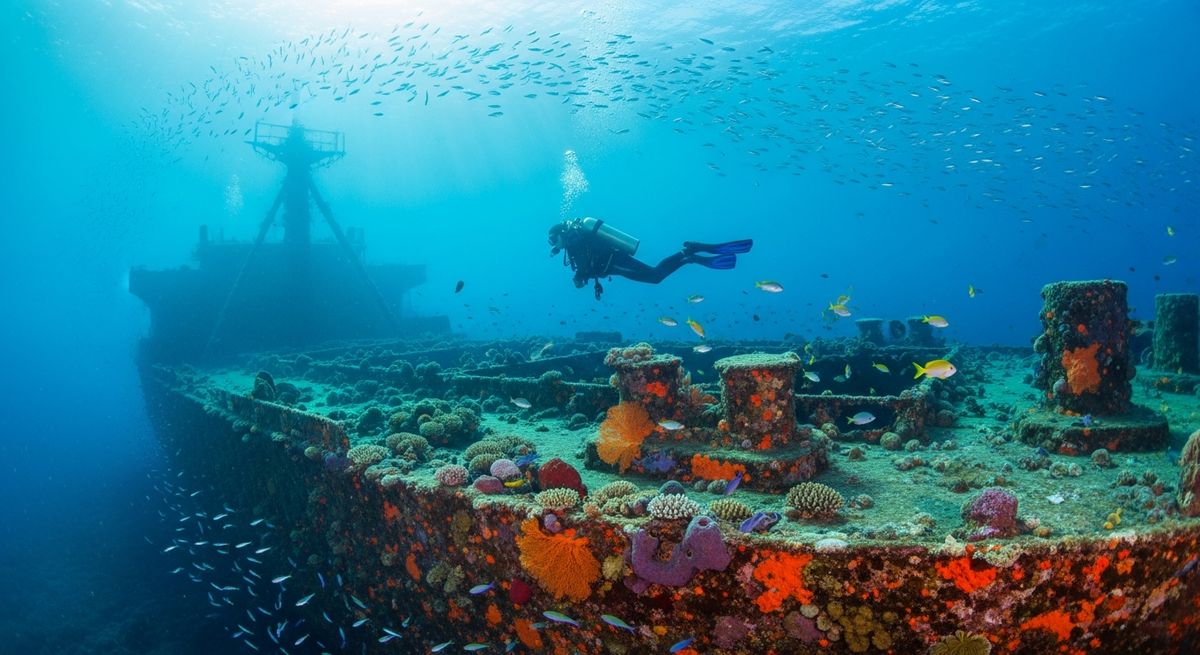
Airplanes Wreck on Aruba’s Leeward Coast gives us a genuine thrill. It’s not just one plane, but two Convair 240s, both big birds, settled on the seabed. We really enjoy descending onto these artificial reefs; the way they’ve broken apart over time means there are cool nooks and crannies to poke into, and the light often catches the metal just right, giving the whole scene a ghostly glow. The deeper of the two planes sits at 22 metres, a solid dive for experienced wreck enthusiasts. Around the wings and fuselage, you’ll usually find clouds of snapper and grunt, often so dense they obscure parts of the wreck. We’ve had some fantastic encounters here – a curious nurse shark often pokes its head out from under a wing, and we’ve spotted eagle rays cruising by in the blue a few times. Visibility usually hovers around 18 metres, which is decent enough to appreciate the scale of these sunken giants. For us, this site is a standout for its unique character and the way marine life has truly embraced these old aircraft.
Safety Notes
Wreck site - avoid penetration without wreck diving certification. Watch for sharp metal and entanglement hazards.
Airplanes (Wreck) Wreck History
Year Sunk
1999
Vessel Type
aircraft
Cause
scuttled
Aruba offers a truly unique dive on not one, but two intentionally sunk airplanes, creating a fascinating artificial reef. The site's main attractions are a Convair 240 and a larger YS-11. These former passenger planes were deliberately sent to the seabed to provide a new habitat for marine life and an unforgettable experience for divers. Their proximity to each other allows divers to explore both wrecks in a single dive, making it one of the most popular sites on the island.
The first aircraft, the Convair 240, was sunk in 1999. The second, a YS-11 that once flew for Air Aruba, joined it on the sandy bottom in 2004. The YS-11 had a colorful past, having been confiscated in a drug bust. It was later damaged by a hurricane, sealing its fate as a future dive wreck. The Convair was broken into several pieces by storms, creating interesting swim-throughs, while the YS-11 remains largely intact.
Today, divers can explore the ghostly fuselages and cockpits of these submerged aircraft. The Convair's separated fuselage offers easy penetration, while the intact YS-11 allows a swim down its central aisle. Both wrecks have been thoroughly colonized by a vibrant array of corals and sponges. They have become a bustling hub for marine life, including schools of fish, moray eels, and crustaceans, offering endless opportunities for underwater photographers and curious explorers.
Nearest Dive Centres to Airplanes (Wreck)
Dive shops near Airplanes (Wreck)
Fly and Dive
Nautilus Dive Center Aruba
Aqua Windies
Aruba Watersafety Institute
JADS Dive Center
Reviews for Airplanes (Wreck)
Conditions
Ocean conditions, forecast and tides for Airplanes (Wreck)
Airplanes (Wreck) Ocean Conditions
Monthly averages for Airplanes (Wreck), sourced from Open-Meteo marine data - nearest station: Open-Meteo marine grid (12.42, -70.08) (19km away)
October Averages
Sea Temperature
30°C
86°F · Range: 28.3–31.4°C
Air Temperature
29°C
84°F
Wind Speed
7.31 m/s
14.2 knots
Atmospheric Pressure
1010.2 hPa
Based on 4 years of monitoring data · Data sources: Open-Meteo marine data
Plan & book
Ways to dive Aruba Leeward Coast, from day trips to liveaboards.
Day trips & courses
via GetYourGuideGuided dives, courses and snorkel trips with instant booking.
Find dive trips in Aruba Leeward CoastPlaces to stay
via Booking.comHotels and dive resorts near Aruba Leeward Coast.
Search stays in Aruba Leeward CoastDive insurance
Most travel insurance excludes or limits scuba. Check what you need before you go.
Dive insurance explainedPartner links: we may earn a commission if you book, at no extra cost to you. How we make money
Where to Stay near Airplanes (Wreck)
Prices from Booking.com. We may earn a commission at no extra cost to you.