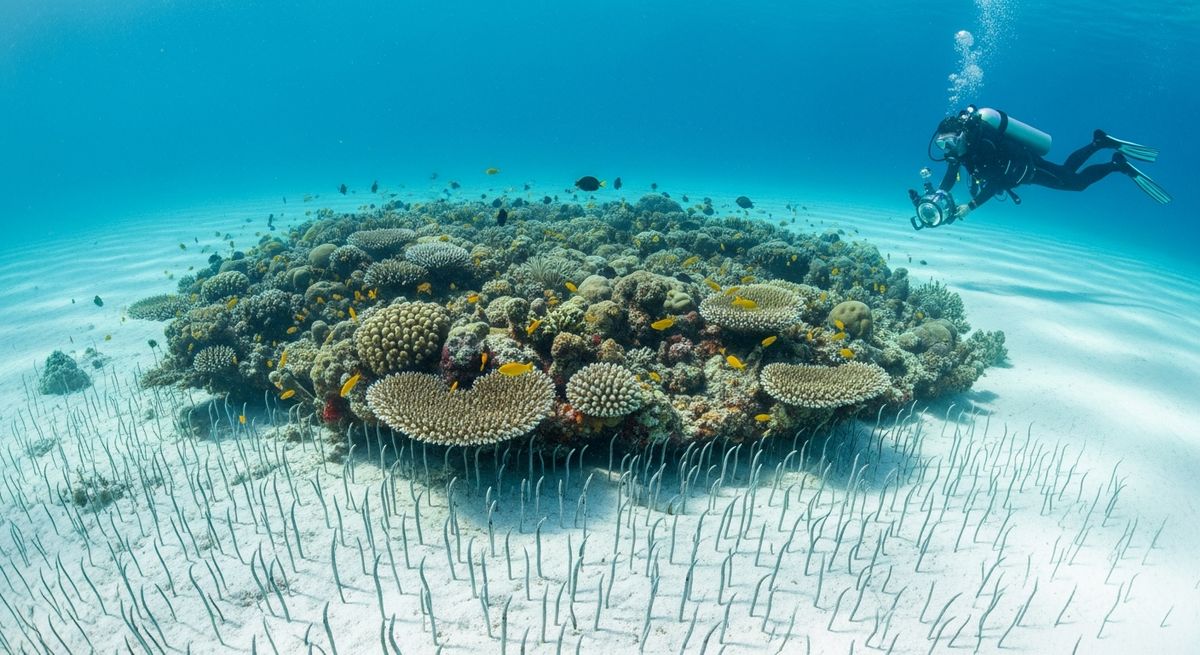
Hole in the Wall
Protected Area
Zuidkust
Why dive here
With 82+ marine species recorded in the area - including orcas, sea turtles, whale sharks, frogfish and lionfish - Hole in the Wall offers some of Aruba Leeward Coast's richest reef diving. Water ranges 27-30°C, warmest September, October, November.
Hole in the Wall is a pretty chilled dive, ideal for a morning drift if the conditions are right. We usually drop in from the jetty, which is straightforward, then let the current take us east towards Mangel Halto. It’s not a dramatic drop off, more a gently sloping wall that levels out around 19 meters. The corals here are decent, lots of brain and finger corals, and we’ve seen plenty of parrotfish munching away. Look closely in the overhangs for nurse sharks sleeping it off, and we often spot green turtles just cruising past. Visibility averages 20m, sometimes better, sometimes a bit more stirred up if there’s been a lot of boat traffic. It’s a comfortable dive, not too deep, so great for extending your bottom time. If you’re looking for a relaxing cruise with a good chance of seeing some larger Caribbean residents without fighting a strong current, this is a solid choice. Keep an eye out for eagle rays gliding past in the blue.
Nearest Dive Centres to Hole in the Wall
Dive shops near Hole in the Wall
Aruba Watersafety Institute
Nautilus Dive Center Aruba
Fly and Dive
JADS Dive Center
Aqua Windies
Reviews for Hole in the Wall
Conditions
Ocean conditions, forecast and tides for Hole in the Wall
Hole in the Wall Ocean Conditions
Monthly averages for Hole in the Wall, sourced from Open-Meteo marine data - nearest station: Open-Meteo marine grid (12.42, -70.08) (19km away)
October Averages
Sea Temperature
30°C
86°F · Range: 28.3–31.4°C
Air Temperature
29°C
84°F
Wind Speed
7.31 m/s
14.2 knots
Atmospheric Pressure
1010.2 hPa
Based on 4 years of monitoring data · Data sources: Open-Meteo marine data
Plan & book
Ways to dive Aruba Leeward Coast, from day trips to liveaboards.
Day trips & courses
via GetYourGuideGuided dives, courses and snorkel trips with instant booking.
Find dive trips in Aruba Leeward CoastPlaces to stay
via Booking.comHotels and dive resorts near Aruba Leeward Coast.
Search stays in Aruba Leeward CoastDive insurance
Most travel insurance excludes or limits scuba. Check what you need before you go.
Dive insurance explainedPartner links: we may earn a commission if you book, at no extra cost to you. How we make money
Where to Stay near Hole in the Wall
Prices from Booking.com. We may earn a commission at no extra cost to you.