CARINTILLES
Protected Area
Carslisle Bay
Why dive here
With 379+ marine species recorded in the area - including barracuda, dolphins, humpback whales, octopuses and orcas - CARINTILLES offers some of South Coast's richest wreck diving. Water ranges 27-30°C, warmest August, September, October.
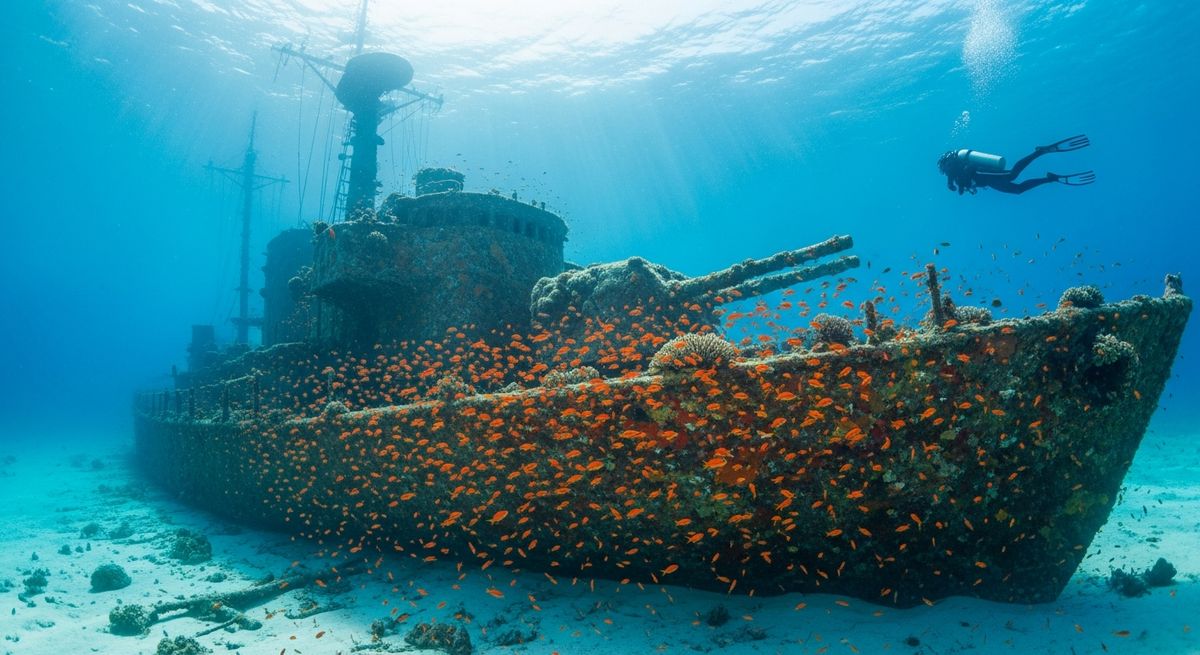
The Carintilles, or what’s left of her, is a personal favourite on the South Coast. Sunk during Hurricane David in '79, she’s a shallow wreck, barely 3 metres deep, making her perfect for a long, relaxed dive or even a snorkel if you’re staying nearby. You won’t be dropping down into dark holds here; instead, you’ll find her hull splayed across the rocky breakwater, creating a network of nooks and crannies that are just begging to be explored. We love watching the sunlight play through the shattered hull, illuminating schools of tiny baitfish that shimmer like scattered jewels. Look closely among the twisted metal and you'll spot sergeant majors guarding their purple egg patches, territorial little things, always ready for a chase. Parrotfish often graze the algae from the wreck, their crunching audible even over your own breathing. While she’s no intact freighter, her broken character is her charm. You can spend an hour here, just drifting, discovering something new with every pass. Ideal for newer divers, photographers looking for dramatic light, or anyone who enjoys a leisurely poke around a piece of history. Dive it slowly, let your eyes adjust, and the wreck truly comes alive.
Typical CARINTILLES Dive Profile
Illustrative profile based on site depth and type. Actual dive profiles vary - always follow your dive computer and training.
Safety Notes
Wreck site - avoid penetration without wreck diving certification. Watch for sharp metal and entanglement hazards.
CARINTILLES Wreck History
Year Sunk
1979
Vessel Type
cargo ship
Cause
storm
The Carintilles is a victim of one of the most powerful Atlantic storms on record, Hurricane David. In August 1979, the 44-meter motor vessel was under tow by the tug 'Pelican' when the hurricane's immense power struck Barbados. The tow line snapped, leaving the Carintilles at the mercy of the raging seas. It was helplessly driven aground onto the rocky breakwater on the south side of Bridgetown, where it was battered and broken by the waves.
Lying in just three meters of water, the remnants of the Carintilles offer an incredibly accessible wreck dive. It's an ideal site for snorkelers, freedivers, and scuba divers taking their very first breaths underwater. The wreckage is scattered across the shallow bottom, now encrusted with coral and teeming with juvenile fish and other reef creatures. This site provides a stark and fascinating look at the destructive power of nature and the resilient beauty of the marine life that follows in its wake.
Nearest Dive Centres to CARINTILLES
Dive shops near CARINTILLES
View all dive centres in South CoastReviews for CARINTILLES
Conditions
Ocean conditions, forecast and tides for CARINTILLES
CARINTILLES Ocean Conditions
Monthly averages for CARINTILLES, sourced from Open-Meteo marine data - nearest station: Open-Meteo marine grid (13.09, -59.6) (3km away)
October Averages
Sea Temperature
30°C
86°F · Range: 29–31.3°C
Air Temperature
28°C
82°F
Wind Speed
5.79 m/s
11.3 knots
Atmospheric Pressure
1012.1 hPa
Based on 4 years of monitoring data · Data sources: Open-Meteo marine data
Plan & book
Ways to dive South Coast, from day trips to liveaboards.
Day trips & courses
via GetYourGuideGuided dives, courses and snorkel trips with instant booking.
Find dive trips in South CoastPlaces to stay
via Booking.comHotels and dive resorts near South Coast.
Search stays in South CoastDive insurance
Most travel insurance excludes or limits scuba. Check what you need before you go.
Dive insurance explainedPartner links: we may earn a commission if you book, at no extra cost to you. How we make money
Where to Stay near CARINTILLES
Prices from Booking.com. We may earn a commission at no extra cost to you.