Diving in South Coast
Why dive here
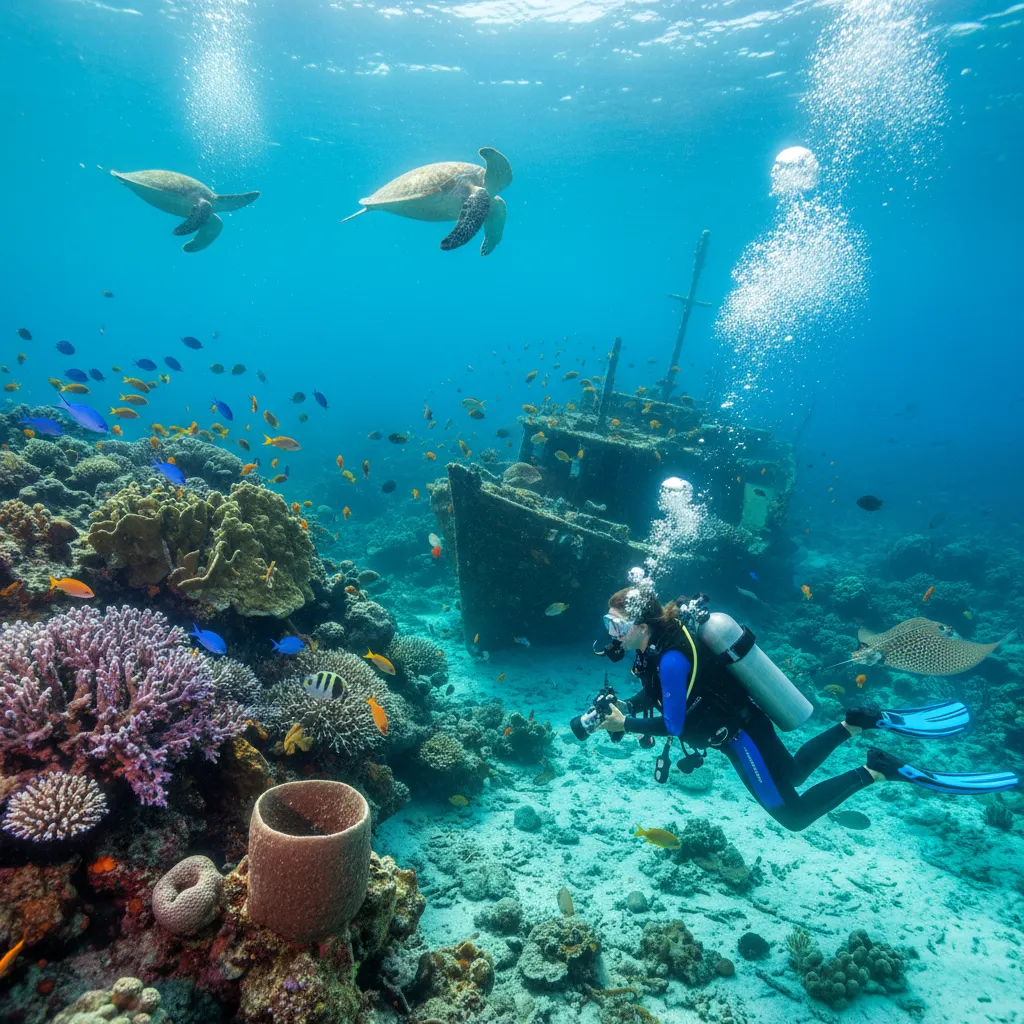
South Coast offers some of Barbados's richest diving, with 379+ marine species recorded in the area - including barracuda, dolphins, humpback whales, octopuses and orcas. Water ranges 27-30°C, warmest August, September, October.
The South Coast of Barbados is where we usually send divers looking for straightforward, rewarding Caribbean diving without too much fuss. It's a sweet spot for beginners, but there's enough here to keep intermediate divers happy too. We’ve recorded over 700 species here. Expect a good mix of healthy reef and accessible wrecks, often with a gentle push from the current that makes for some lovely drift dives. Our favourite wreck here is the Berwyn, a tugboat sitting upright in about 8 meters of water. It’s a cracker for new divers, totally intact and home to a resident population of pufferfish and a few curious grunts that will swim right up to your mask. You can spend a good chunk of a dive just circling it. For something a little deeper, the reefs off Oistins are worth checking out. We often see blennies darting into crevices and have even spotted the odd fierce pike smelt zipping by on a drift. The visibility is consistently good, especially in the calmer summer months, though you can get some exciting drift on the deeper sites when the current picks up. If you're staying in St. Lawrence Gap, this area is super convenient, just a short boat ride out.
South Coast Dive Site Map
Dive sites and dive centres in South Coast
South Coast Dive Sites
10 dive sites in South Coast
Bow Bells Reef
Bow Bells Reef on Barbados’ south coast is one of those spots we always make time for. It’s not about dramatic drop-offs or massive pelagics here; it's about the small stuff, the vibrant, busy community living in the nooks and crannies. We love drifting along, eyes peeled for the cleaner gobies darting in and out of the larger fish’s mouths. Spot Snappers hang out in loose groups, and you’ll often see a couple of feisty Angelfish chasing each other around the coral heads. The shallower parts of Bow Bells are perfect for really slowing down and appreciating the smaller details. Look closely, and you might just spot a cryptic Shortnose Batfish or an Arrow Stargazer buried in the sand, just their eyes peeking out. The Dwarf Wrasse are everywhere, a constant flicker of colour. We’d suggest going in the morning; the light is usually best then, painting the coral in a softer glow. The currents here are generally gentle, making it a relaxed dive suitable for all experience levels, especially if you enjoy macro life and detailed observation.
CARINTILLES
The Carintilles, or what’s left of her, is a personal favourite on the South Coast. Sunk during Hurricane David in '79, she’s a shallow wreck, barely 3 metres deep, making her perfect for a long, relaxed dive or even a snorkel if you’re staying nearby. You won’t be dropping down into dark holds here; instead, you’ll find her hull splayed across the rocky breakwater, creating a network of nooks and crannies that are just begging to be explored. We love watching the sunlight play through the shattered hull, illuminating schools of tiny baitfish that shimmer like scattered jewels. Look closely among the twisted metal and you'll spot sergeant majors guarding their purple egg patches, territorial little things, always ready for a chase. Parrotfish often graze the algae from the wreck, their crunching audible even over your own breathing. While she’s no intact freighter, her broken character is her charm. You can spend an hour here, just drifting, discovering something new with every pass. Ideal for newer divers, photographers looking for dramatic light, or anyone who enjoys a leisurely poke around a piece of history. Dive it slowly, let your eyes adjust, and the wreck truly comes alive.
Carlisle Bay
Carlisle Bay isn't just one dive site; it's a whole playground. We love it because you’ve got six wrecks, all in a beginner-friendly depth range of 3 to 20 metres. It’s perfect for new divers, but even experienced folks will find plenty to amuse themselves for a couple of dives. Our favourite wreck has to be the **Berwyn**, a freighter that sank in 1919. It’s surprisingly intact, with huge cargo holds you can peek into. The light filtering down through the open decks gives it a moody, atmospheric feel. What really makes Carlisle Bay shine, though, is how marine life has absolutely taken over these ships. You’ll weave around massive schools of grunts and snapper, so thick they almost obscure the wreck itself. Keep an eye out for curious green sea turtles gliding by, and we’ve often spotted seahorses clinging to the growth on the **Bajan Queen** or **Eillon**. The shallow depth means fantastic bottom times, and the sheltered bay generally keeps currents to a minimum. It’s a great spot to practice your buoyancy or just spend a relaxed afternoon exploring history and marine life.
Cobblers Reef
Cobblers Reef is one of our South Coast favourites in Barbados, a place we return to often when we want a reliable, easy dive with plenty to see. It’s not the deepest site out there, but that’s part of its charm – the shallow, sun-drenched corals mean you get incredible light penetration, painting the reef in bright, natural colours. We’ve spent countless bottom times just drifting over the gentle slopes, spotting American pugnose pipefish tucked into the nooks and crannies. What really sets Cobblers apart for us is the sheer density of everyday reef life, a proper fish soup. You’ll kick past schools of blue parrotfish and sergeant-majors, so unbothered by divers you can almost count their scales. Keep an eye out for the saddle stargazers buried in the sand – their eyes just peeking out can give you a bit of a start! For macro fans, the textile blennies and blackfin blennies are always putting on a show, and we’ve even found gaudy frog shells clinging to the coral heads. It’s a perfect spot for newer divers looking to build confidence, or seasoned pros who just want a relaxed dive without the fuss, especially enjoyable in the calmer morning hours before any afternoon chop picks up.
Freights Bay
Freights Bay on Barbados’ south coast? We love this spot, especially for a relaxed shore dive when the swells are mellow. You’re not looking for dramatic depths here, but rather a slow, deliberate exploration of the sandy bottom and the small rocky outcrops. It’s a macro playground, plain and simple. We’ve spent whole dives just watching the sandy patches, finding lizardfish perfectly camouflaged, waiting to ambush. Keep an eye out for the small-scaled spinycheek sleepers, they’re masters of disguise, and you’ll often see tiny blennies peeking out of crevices. Our favourite time to dive Freights is early morning, before the surfing lessons really kick off. The light penetration through the shallow water is beautiful then, illuminating the subtle colours of the sand and rocks. You’ll often find schools of false herring or redear herring shimmering just off the bottom. It’s also fantastic for spotting juvenile puffers and the occasional bridled burrfish bumping along. This site really suits divers who enjoy slowing down, looking closely, and appreciating the smaller inhabitants of the reef. It’s not about big pelagics; it’s about the intricate details.
FRIARS CRAIG
Friars Craig on Barbados' south coast is a definite standout, and frankly, one of our favourite wreck dives in the Caribbean. We're talking about a purposefully scuttled motor vessel, 51.8 meters long, that settled upright at 14 meters. What we love about this wreck isn't just its intact structure, but how it feels like a living, breathing reef. You can easily spend your whole bottom time exploring the holds, swimming through the wheelhouse, and poking around the engine room. It’s got a real character, almost like you’re diving a ghost ship from a movie. Our pick for the best bit is definitely the bow, where the open deck creates a fantastic swim-through, often swarming with schools of grunts and snapper. Keep an eye out for resident barracuda lurking in the deeper shadows of the holds, and we've spotted some impressively large green morays peeking out from under metal plates. The coral growth is surprisingly robust, particularly on the upper decks, with sponges and gorgonians adding splashes of colour to the metal. This site is fantastic for photographers and anyone who enjoys a wreck they can truly get inside.
Friars Craig Wreck
The Friars Craig, settled upright in the sand at Carlisle Bay, is one of our favourite wreck dives on the south coast. This 60m freighter, scuttled back in the 80s, still feels like a proper ship, not just a pile of metal. At 18 metres max, it’s a good one for some easy penetration – we love swimming through the cargo hold, looking up to see the light filtering down through the deck openings. You'll often find schools of Grey Snapper hanging out around the superstructure, and the Emerald Sleepers are always a treat, darting in and out of the nooks. Keep an eye out for Sponge Cardinalfish tucked into the crevices; they’re masters of camouflage. The corals here, like the Mustard Hill and Grooved Brain, are really establishing themselves on the wreck, turning it into a living reef. It's a great dive for intermediate divers who want to explore a substantial wreck without deep-diving stress, and brilliant for photographers looking for that moody, atmospheric shot inside the holds.
JOHN R PENROSE
The John R Penrose isn’t your typical deep Caribbean wreck. She’s shallow, really shallow, often just a metre or two under the surface, making her feel less like a dive and more like a snorkel with serious bragging rights. We love her for that accessibility, and frankly, for the history. Sunk way back in 1923, she's practically part of the reef now, a skeletal outline of her former self, blending seamlessly with the surrounding patch coral. We’ve spent hours here just floating above her, watching the sunlight dapple through the water, illuminating schools of tiny baitfish that shimmer like scattered glitter. Keep an eye out for juvenile French angelfish darting amongst the broken timbers, and we’ve often spotted small nurse sharks tucked under the larger sections. Our favourite part? The way the wreck creates these little sheltered pockets, perfect for macro photography, especially in the early mornings before the breeze picks up too much. It’s a gentle introduction to wreck diving, ideal for newer divers or those who prefer a long, relaxed exploration without the pressure of depth.
mv Brianna H - IMO6511908
The *Brianna H*, a merchant vessel now settled at 24 metres, is a proper ship to explore on Barbados' South Coast. We love how intact she is, especially for a wreck that's been down since 2014. You can still make out the superstructure, and the cargo holds offer some great swim-throughs – just watch your buoyancy in there. It’s always cool to fin through the bridge, imagining her working life. This wreck has become a busy apartment block for reef life. Schools of grunts and snappers hang out in the shadows, and we often spot lionfish tucked into crevices. Keep an eye out for moray eels poking their heads from behind plates of metal. The deck itself is a canvas of soft corals and sponges, a real explosion of colour against the rusted steel. We'd suggest going on a calm morning; the visibility can be excellent, making the whole ship glow. It’s a site that suits divers who appreciate a relatively complete wreck and the way nature reclaims these sunken giants.
MV Trident
The MV Trident is one of our favourite Barbadian wrecks, mainly because of how quickly it’s become a fully-fledged artificial reef. It’s not an ancient wreck, intentionally sunk in 2016, but in less than a decade, it’s completely transformed. Sitting upright at 18m, it’s an easy dive that’s good for most skill levels. We love poking around the hold and engine room, which are still quite open, letting in plenty of light. What makes the Trident special is the sheer density of schooling fish. You’ll find creole wrasse and chromis absolutely everywhere, swirling around the mast and superstructure. Look a little closer, and you’ll spot moray eels tucked into crevices and plenty of lionfish – a reminder to always report sightings to your dive operator. Our top tip? Dive it in the late afternoon. The light filtering through the open sections of the wreck at that time of day is just beautiful, casting long shadows and really highlighting the vibrant blues of the water against the dark metal. It’s a proper, immersive wreck experience without any tricky currents.
South Coast Dive Centres
2 dive shops and operators in South Coast
Ocean Wildlife in South Coast
379 species recorded in South Coast
South Coast Daylight & Sunrise/Sunset
Sunrise and sunset times for South Coast, calculated from coordinates
Today - Sunday 11 October
Sunrise
05:49
Sunset
17:43
Daylight
11h 54m
Golden Hour
17:15
First light (dawn) at 05:27 · Last light (dusk) at 18:05
Monthly Averages
| Month | Sunrise | Sunset | Daylight |
|---|---|---|---|
| Jan | 06:25 | 17:51 | 11h 26m |
| Feb | 06:22 | 18:05 | 11h 42m |
| Mar | 06:07 | 18:09 | 12h 2m |
| Apr | 05:47 | 18:11 | 12h 25m |
| May | 05:34 | 18:17 | 12h 43m |
| JunLongest | 05:33 | 18:26 | 12h 53m |
| Jul | 05:40 | 18:30 | 12h 50m |
| Aug | 05:47 | 18:21 | 12h 34m |
| Sep | 05:48 | 18:01 | 12h 13m |
| OctNow | 05:49 | 17:41 | 11h 52m |
| Nov | 05:58 | 17:30 | 11h 32m |
| DecShortest | 06:13 | 17:35 | 11h 22m |
Times are approximate local times based on longitude. Actual times may vary slightly depending on the exact timezone observed in South Coast.
Where to Stay near South Coast
Prices from Booking.com. We may earn a commission at no extra cost to you.
Marine Protected Areas near South Coast
3 protected areas near South Coast - please respect local regulations when diving
Folkstone
Carslisle Bay
Graeme Hall Swamp
Getting to South Coast
Bridgetown
Vieux Fort
Kingstown
Plan & book
Ways to dive South Coast, from day trips to liveaboards.
Day trips & courses
via GetYourGuideGuided dives, courses and snorkel trips with instant booking.
Find dive trips in South CoastPlaces to stay
via Booking.comHotels and dive resorts near South Coast.
Search stays in South CoastDive insurance
Most travel insurance excludes or limits scuba. Check what you need before you go.
Dive insurance explainedPartner links: we may earn a commission if you book, at no extra cost to you. How we make money