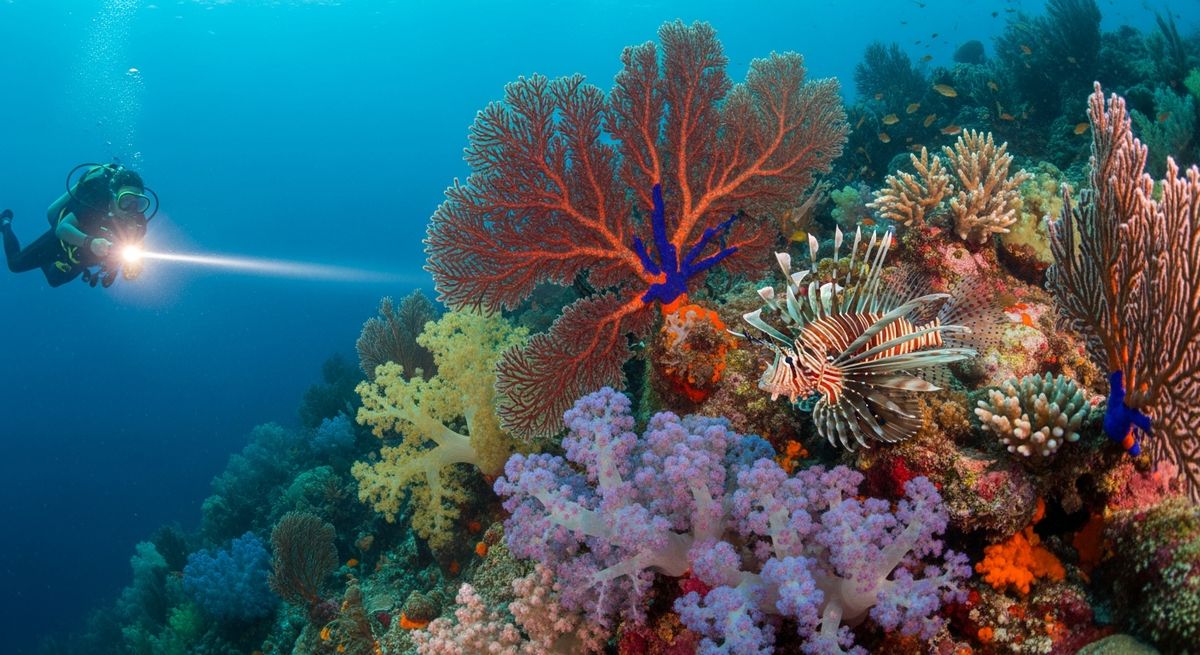
Black Coral I and II - Jardines de la Reina

Black Coral I and II are the shark spots in Jardines de la Reina, and they rarely disappoint. We often see silvertips and Caribbean reef sharks here, sometimes in significant numbers. The top of the reef sits around 25m, then slopes deeper, a nice backdrop for the show. These sharks are curious rather than aggressive, though we always suggest keeping hands tucked in, just to avoid any confusion. If you’re looking for a close-up shark encounter in the Caribbean, these sites deliver a reliably engaging dive.

Location
Jardines de la Reina, Cuba, Caribbean
Coordinates
20.805000, -78.900000
Type
reef

Marine Protected Area: Jardines de la Reina

Best Time to Dive in Jardines de la Reina

The warmest water temperatures in Jardines de la Reina occur in September, averaging 30.4°C. The coolest conditions are in February at 27.1°C.

Monthly Water Temperatures

  • January: 27.5°C
  • February: 27.1°C
  • March: 27.1°C
  • April: 27.8°C
  • May: 28.8°C
  • June: 29.2°C
  • July: 29.8°C
  • August: 30.2°C
  • September: 30.4°C
  • October: 29.9°C
  • November: 29.2°C
  • December: 28.3°C

Nearby Dive Sites in Jardines de la Reina

Nearest Dive Centres to Black Coral I and II

Marine Life in Jardines de la Reina

Home to 492 recorded species including 404 reef fish, 34 hard corals, 10 whales & dolphins, 10 sharks & rays, 8 other, 6 sea snails & nudibranchs.

Notable Species

Recommended Packing List for Black Coral I and II

Based on average water temperature of 28.8°C, currents 16 cm/s.

  • Shorty or Rashguard - warm 29°C water needs minimal exposure protection
  • Mask - essential for every dive
  • Fins
  • BCD - buoyancy compensator
  • Regulator - your most safety-critical piece of gear
  • Dive Computer - tracks depth, time, and NDL
  • Surface Marker Buoy (SMB) - essential for boat pickups
  • Dive Torch - useful for crevices and colour at depth
  • Underwater Camera - capture your diving memories

Frequently Asked Questions

What are the typical diving depths at the sites visited by Black Coral I and II, especially where black coral can be found?
At Black Coral I and II in Jardines de la Reina, divers can expect to encounter the top of the reef at approximately 80 ft (25m). The reef then slopes further down, reaching depths of 100 ft or more. While the site is named Black Coral, the provided data specifies the general reef depths rather than the exact location of black coral formations within these depths.
What specific marine life and coral formations, beyond just black coral, can divers expect to encounter at the dive sites on Black Coral I and II itineraries?
Divers visiting Black Coral I and II are primarily drawn to the abundant shark encounters. You can expect to see numerous silky sharks and Caribbean reef sharks, which are the most common species here. The dive site is characterized as a reef, suggesting various coral formations typical of a healthy reef ecosystem, though specific types beyond "black coral" are not detailed in the provided information.
How challenging are the dive sites typically visited by Black Coral I and II, considering currents and overall conditions for different diver experience levels?
The dive sites at Black Coral I and II are rated as having an intermediate difficulty level. This suggests that while the dives are manageable for experienced divers, they may present some challenges that require a certain level of skill and comfort in the water. The provided data does not specify details about currents or overall conditions beyond this difficulty rating.
What is the best time of year to dive with Black Coral I and II for optimal marine life encounters and favorable diving conditions?
The provided data for Black Coral I and II does not specify the best time of year for optimal marine life encounters or favorable diving conditions. For general information on diving seasons in the Caribbean, please refer to our When to Dive guide.
What scuba diving certifications are required or recommended for divers joining Black Coral I and II liveaboard trips?
Given the intermediate difficulty rating for the dive sites at Black Coral I and II, it is generally recommended that divers hold at least an Advanced Open Water certification or equivalent. This ensures divers have the necessary experience and training to comfortably manage the depths and potential conditions of such dives. Specific certification requirements for liveaboard trips are often detailed by the operator.
What are the typical current strengths and water conditions (e.g., visibility, temperature) divers can expect at the dive sites on Black Coral I and II itineraries?
The provided data for Black Coral I and II does not include specific details regarding typical current strengths, water visibility, or temperature. Divers should consult their liveaboard operator or local dive guides for the most up-to-date information on these conditions.