Cornelius Bay
Protected Area
Spanish Water Inner Bay Park
Why dive here
With 310+ marine species recorded in the area - including barracuda, octopuses, orcas, sea turtles and sperm whales - Cornelius Bay offers some of Curaçao Southeast's richest reef diving. Water ranges 27-30°C, warmest September, October, November.
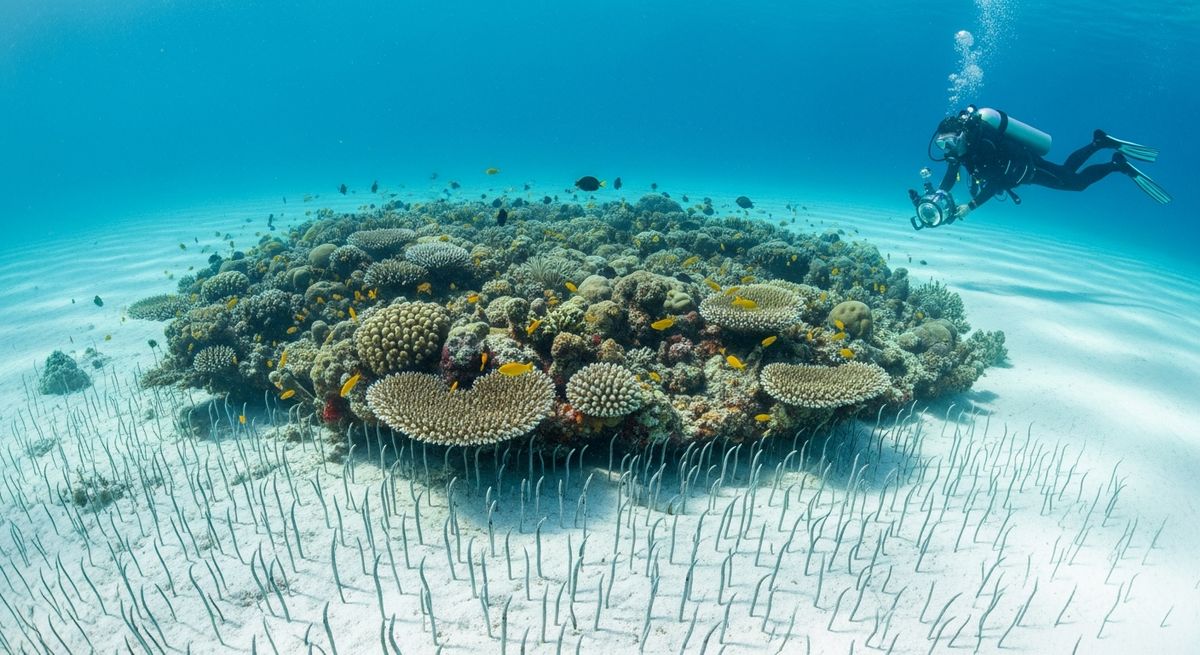
Cornelius Bay is one of those sites we always recommend to divers who appreciate a little effort for a decent reward. It’s tucked just left of the Sea Aquarium, and honestly, the entry can be a bit of a scramble down some rocks, so wear sturdy boots. But once you fin out, you’re greeted by some seriously impressive elkhorn coral formations in the shallows – really broad, healthy plates. Our favourite part has to be the drop-off where the reef descends to about 19 metres. The visibility here is typically 25 metres, and it feels like swimming through liquid glass. We’ve spent hours just watching the yellowhead jawfish darting in and out of their burrows and spotting emerald sleepers resting on the sand. Look closely for boarfish; they’re surprisingly common here, and the spot-tail golden bass is another regular visitor. For photographers, the finger coral provides a stunning backdrop, and the sponges add a nice splash of colour. It’s a quiet dive, usually uncrowded, and perfect for a relaxed afternoon exploring the reef at your own pace.
Nearest Dive Centres to Cornelius Bay
Dive shops near Cornelius Bay
Ocean Encounters
BLVD Divers
The Dive Bus
Dive Center Scuba Do
Papagayo Beach
Jan Thiel Diving
Reviews for Cornelius Bay
Conditions
Ocean conditions, forecast and tides for Cornelius Bay
Cornelius Bay Ocean Conditions
Monthly averages for Cornelius Bay, sourced from Open-Meteo marine data + Copernicus Marine (EU) - nearest station: Open-Meteo marine grid (12.15, -68.97) (2km away)
October Averages
Sea Temperature
30°C
86°F · Range: 29.4–31.4°C
Current Speed
3.61 cm/s
Direction: NW (326.3°)
Chlorophyll-a
0.068 mg/m³
Very clear (oligotrophic)
Salinity
34.91 PSU
Based on 4 years of monitoring data · Data sources: Open-Meteo marine data + Copernicus Marine (EU)
Plan & book
Ways to dive Curaçao Southeast, from day trips to liveaboards.
Day trips & courses
via GetYourGuideGuided dives, courses and snorkel trips with instant booking.
Find dive trips in Curaçao SoutheastPlaces to stay
via Booking.comHotels and dive resorts near Curaçao Southeast.
Search stays in Curaçao SoutheastDive insurance
Most travel insurance excludes or limits scuba. Check what you need before you go.
Dive insurance explainedPartner links: we may earn a commission if you book, at no extra cost to you. How we make money
Where to Stay near Cornelius Bay
Prices from Booking.com. We may earn a commission at no extra cost to you.