Piscadera Bay
Protected Area
Spanish Water Inner Bay Park
Why dive here
With 310+ marine species recorded in the area - including barracuda, octopuses, orcas, sea turtles and sperm whales - Piscadera Bay offers some of Curaçao Southeast's richest reef diving. Water ranges 27-30°C, warmest September, October, November.
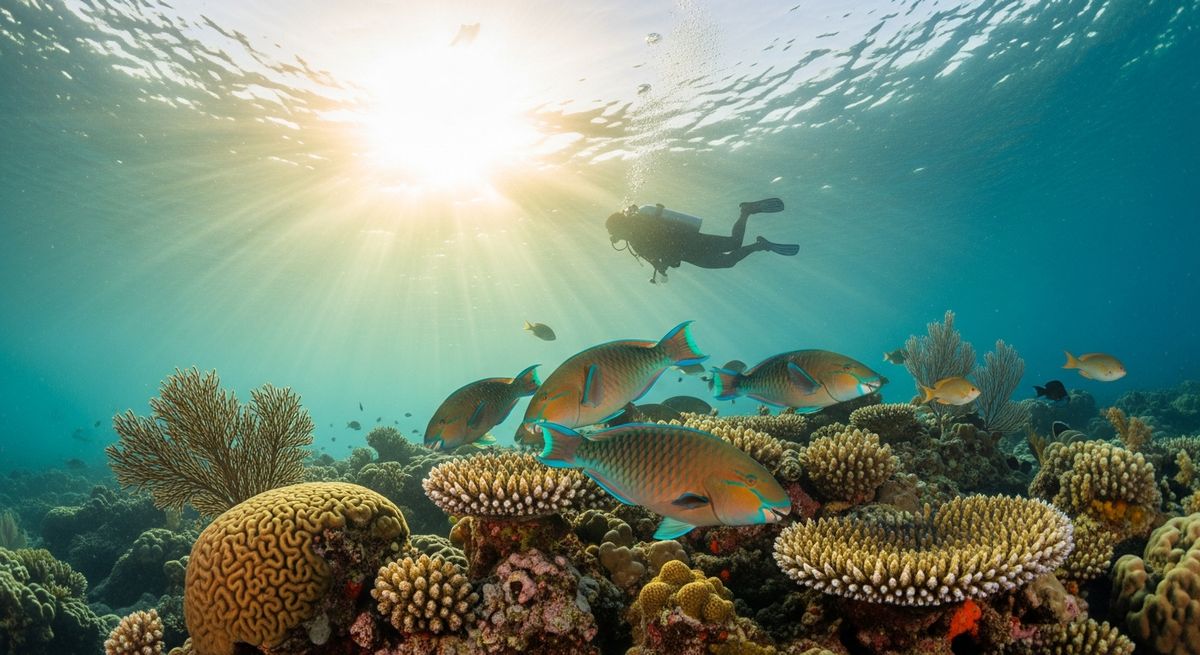
Piscadera Bay is one of those sites we always recommend for an easy, no-fuss dive, especially if you’re staying nearby. Entry right off the beach at Pirate Bay is a real treat, just wade in and go. The first stretch is mostly sand, which we love for its macro opportunities – keep an eye out for those tiny gobies and blennies tucked into the substrate. You’ll fin over to a jetty, where the pillars are just covered in growth, providing shelter for juvenile snapper and parrotfish. Then the slope gives way to a vibrant wall that drops off further than our 16m maximum here, but even at shallower depths, it's impressive. We've spotted Pacific spotted scorpionfish camouflaged on the corals and even a few boarfish darting around the ledges. The lettuce coral formations are particularly striking, creating fantastic hiding spots for smaller fish. Visibility here can vary, but even on an average day, we find plenty to look at. It’s a superb spot for underwater photographers thanks to the gentle conditions and the sheer number of species you can find without much effort. Dive it slow, and you'll be surprised what pops out from the cracks.
Nearest Dive Centres to Piscadera Bay
Dive shops near Piscadera Bay
THE DIVESHOP
The Little Green Boat
Blue Bay Dive and Watersports
ELITE DIVING CURACAO
Groove Diving
Central Dive Curacao
Reviews for Piscadera Bay
Conditions
Ocean conditions, forecast and tides for Piscadera Bay
Piscadera Bay Ocean Conditions
Monthly averages for Piscadera Bay, sourced from Open-Meteo marine data + Copernicus Marine (EU) - nearest station: Open-Meteo marine grid (12.15, -68.97) (2km away)
October Averages
Sea Temperature
30°C
86°F · Range: 29.4–31.4°C
Current Speed
3.61 cm/s
Direction: NW (326.3°)
Chlorophyll-a
0.068 mg/m³
Very clear (oligotrophic)
Salinity
34.91 PSU
Based on 4 years of monitoring data · Data sources: Open-Meteo marine data + Copernicus Marine (EU)
Plan & book
Ways to dive Curaçao Southeast, from day trips to liveaboards.
Day trips & courses
via GetYourGuideGuided dives, courses and snorkel trips with instant booking.
Find dive trips in Curaçao SoutheastPlaces to stay
via Booking.comHotels and dive resorts near Curaçao Southeast.
Search stays in Curaçao SoutheastDive insurance
Most travel insurance excludes or limits scuba. Check what you need before you go.
Dive insurance explainedPartner links: we may earn a commission if you book, at no extra cost to you. How we make money
Where to Stay near Piscadera Bay
Prices from Booking.com. We may earn a commission at no extra cost to you.