South Point of Klein Curacao - Curaçao Southeast

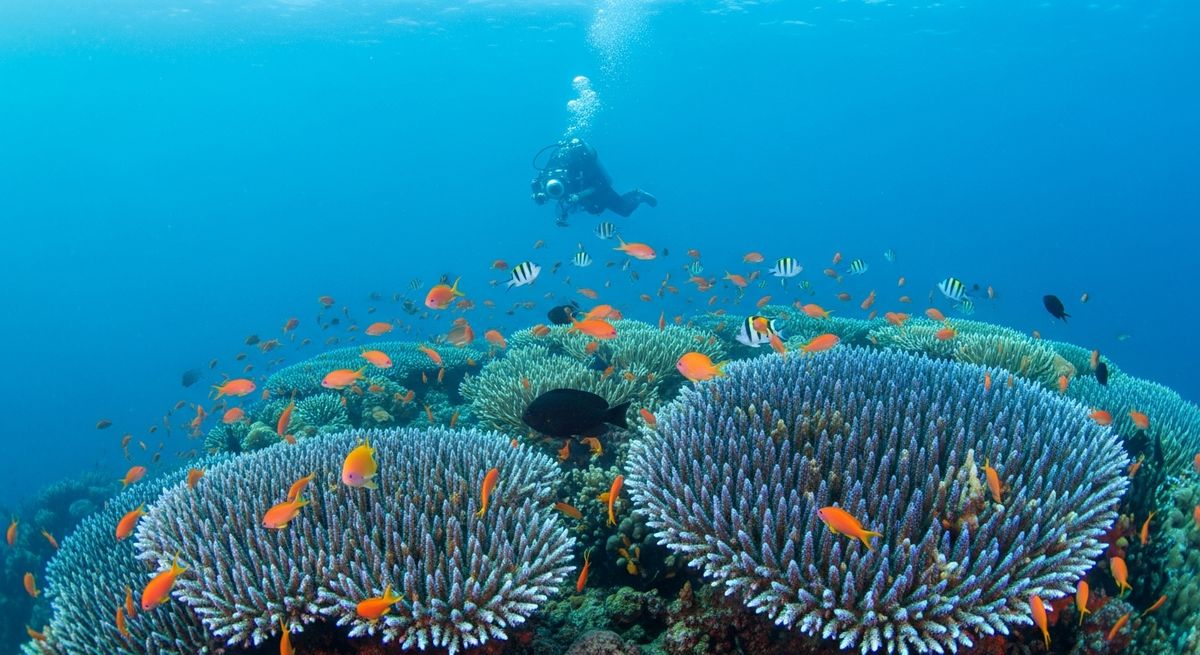
Turtle Bommie, a standout on Saxon Reef, feels like a private aquarium. Dropping down, you're immediately struck by the sheer volume of fusiliers, so thick they almost obscure the bommie itself. We love how this relatively shallow pinnacle, topping out around 13 metres, packs such a punch. The mix of hard and soft corals is impressive – you'll fin past substantial staghorn and table corals, then drift over areas of vibrant soft corals swaying gently in the mild current. Our favourite time to dive here is late afternoon, just as the light starts to soften. The white sand surrounding the bommie really pops then, making the colours of the corals and the flashes of black blotched grunts even more vivid. You'll often spot Pharaoh cuttlefish patrolling the edges of the bommie, their colours rippling. While the name suggests turtles, and yes, we’ve seen them tucked into ledges during night dives, it's the sheer density of reef fish and the healthy coral structure that really makes Turtle Bommie special. This site is perfect for photographers, or anyone who enjoys a relaxed dive with plenty to see without needing to go deep. It's an easy dive, suitable for all experience levels, and a fantastic spot for a second or third dive of the day.

Location
Curaçao Southeast, Curaçao, Caribbean
Coordinates
11.978700, -68.645700
Type
reef

Marine Protected Area: Klein Kòrsou

Best Time to Dive in Curaçao Southeast

The warmest water temperatures in Curaçao Southeast occur in October, averaging 29.7°C. The coolest conditions are in February at 26.6°C.

Monthly Water Temperatures

  • January: 27.0°C
  • February: 26.6°C
  • March: 26.8°C
  • April: 27.0°C
  • May: 27.6°C
  • June: 28.0°C
  • July: 28.2°C
  • August: 29.0°C
  • September: 29.5°C
  • October: 29.7°C
  • November: 29.0°C
  • December: 28.1°C

Nearby Dive Sites in Curaçao Southeast

Nearest Dive Centres to South Point of Klein Curacao

Marine Life in Curaçao Southeast

Home to 322 recorded species including 259 reef fish, 24 hard corals, 7 other, 6 crabs & lobsters, 5 seagrass & algae, 5 sea snails & nudibranchs.

Notable Species

Recommended Packing List for South Point of Klein Curacao

Based on average water temperature of 28.0°C, currents 22 cm/s.

  • Shorty or Rashguard - warm 28°C water needs minimal exposure protection
  • Mask - essential for every dive
  • Fins
  • BCD - buoyancy compensator
  • Regulator - your most safety-critical piece of gear
  • Dive Computer - tracks depth, time, and NDL
  • Surface Marker Buoy (SMB) - essential for boat pickups
  • Dive Torch - useful for crevices and colour at depth
  • Underwater Camera - capture your diving memories

Frequently Asked Questions

What is the typical depth range for diving at the South Point of Klein Curacao?
The maximum depth for diving at the South Point of Klein Curacao is 20 meters. While the average depth is not explicitly stated, divers should plan their dive within this specified limit.
What kind of marine life and coral formations can divers expect to see at the South Point of Klein Curacao?
Divers at the South Point of Klein Curacao can expect to encounter a vibrant marine life, including large green moray eels, and both green and hawksbill sea turtles. In the currents, it's common to spot barracuda and jacks. The dive site is characterized as a reef, offering a diverse underwater landscape.
How challenging is diving at the South Point of Klein Curacao, and is it suitable for all experience levels?
Diving at the South Point of Klein Curacao is considered a challenging drift dive, even for the most experienced divers. It is not suitable for all experience levels, as extreme caution regarding current speed and direction is essential. Divers should ensure they have topside support due to these demanding conditions.
When is the best time of year to dive the South Point of Klein Curacao for optimal conditions and marine life sightings?
The provided data does not specify the best time of year to dive the South Point of Klein Curacao for optimal conditions or marine life sightings. For general information on seasonal diving, you might consult DivePlnr's When to Dive guide.
What dive certifications are recommended or required for diving at the South Point of Klein Curacao?
While specific certifications are not explicitly stated, given that the South Point of Klein Curacao is described as a challenging drift dive even for experienced divers, advanced certifications focusing on drift diving and current management would be highly recommended. Divers should possess the skills and experience necessary to safely handle strong currents and challenging conditions.
What are the typical current conditions like at the South Point of Klein Curacao, and how do they affect the dive?
The South Point of Klein Curacao is known for challenging current conditions, making it a demanding drift dive. Divers must be acutely aware of current speed and direction, especially when approaching the corner of the island. These currents necessitate caution and require topside support for a safe dive experience.