CARONI
Protected Area
Boca de Nigua
Why dive here
With 173+ marine species recorded in the area - including barracuda, humpback whales, orcas, sea turtles and sperm whales - CARONI offers some of Bayahibe & La Romana's richest wreck diving. Water ranges 27-30°C, warmest August, September, October.
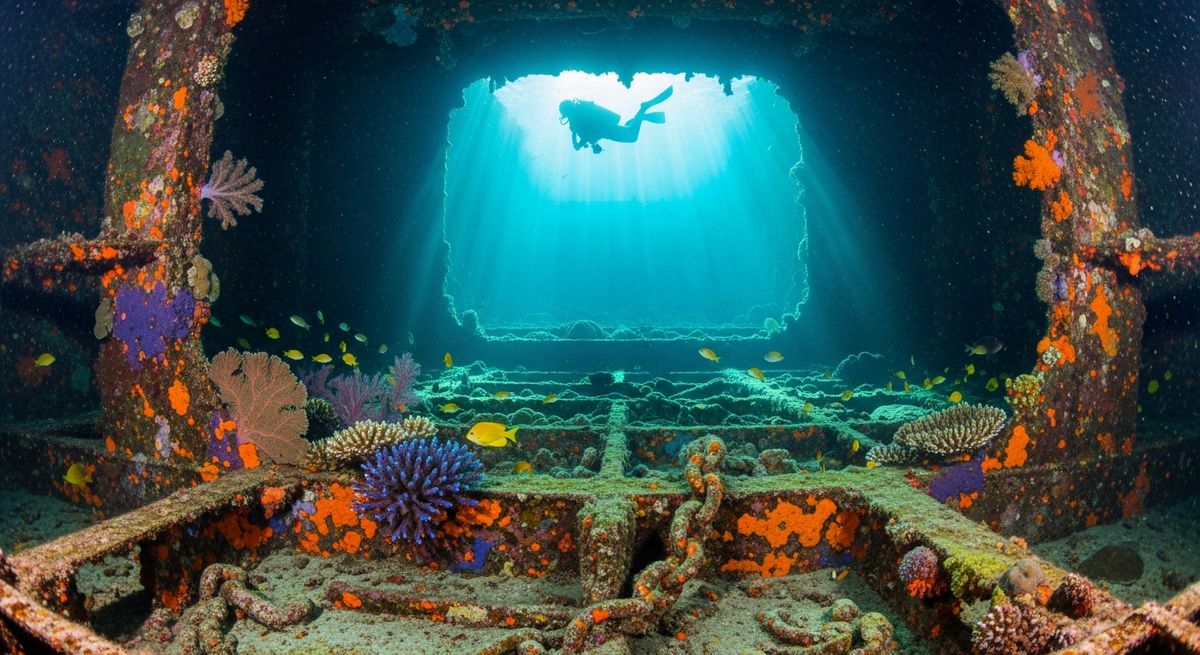
The Caroni, sitting in just 8 meters of water, is a wreck we always recommend for a leisurely dive. This isn't a deep, dark penetration site, which is exactly why we love it. It’s a huge cargo ship, around 100 meters long, and it's been down since 1988, which gives it that lovely, settled look. You drop straight onto the superstructure and the sheer scale hits you immediately. We often spend our first few minutes just finning along the deck, peering into the open holds. Light streams down, illuminating schools of snapper that dart in and out of the rusted metal. The real joy here is exploring the cargo holds; they’re wide open, making for easy swim-throughs, and you can really get a sense of the ship’s original purpose. Keep an eye out for the resident moray eels tucked into crevices, and we’ve seen some surprisingly large barracuda patrolling the mast. This site is perfect for newer wreck divers or those who just want to take their time and soak it all in. The shallow depth means fantastic bottom time, and the sunlight really brings out the colours of the sponges and soft corals that have started to reclaim the metal. It’s a relaxed, rewarding dive every time.
Typical CARONI Dive Profile
Illustrative profile based on site depth and type. Actual dive profiles vary - always follow your dive computer and training.
Safety Notes
Wreck site - avoid penetration without wreck diving certification. Watch for sharp metal and entanglement hazards.
CARONI Wreck History
Year Sunk
1988
Vessel Type
cargo ship
Cause
unknown
The MV Caroni rests in the warm, clear waters off the Dominican Republic, but its story began halfway across the world. Built in 1969 by K.K. Usuki Tekkosho in Saiki, Japan, this motor vessel lived a long and varied life under several names. It began its career as the Eidai Maru No. 2, later sailing as the Good Hope (1980), the Michalis (1982), and Las Minas (1986) before finally being christened the Caroni. Its final voyage was from Matanzas, Venezuela, before it sank in August 1988.
Today, the Caroni is a fantastic wreck dive for divers of all levels. Lying at a shallow depth of just 8 meters, it is easily accessible and enjoys excellent visibility, making it a perfect introduction to wreck diving. Over the decades, the vessel's structure has transformed into a vibrant artificial reef, colonized by a rich tapestry of Caribbean marine life. Divers can expect to see schools of colorful fish darting through its openings, with corals and sponges adorning its steel plates. Its shallow depth allows for long, relaxed bottom times, providing ample opportunity for underwater photographers to capture the beauty of this underwater habitat.
Nearest Dive Centres to CARONI
Dive shops near CARONI
View all dive centres in Bayahibe & La RomanaReviews for CARONI
Conditions
Ocean conditions, forecast and tides for CARONI
CARONI Ocean Conditions
Monthly averages for CARONI, sourced from Open-Meteo marine data - nearest station: Open-Meteo marine grid (18.43, -69.32) (24km away)
October Averages
Sea Temperature
30°C
87°F · Range: 28.9–31°C
Air Temperature
27°C
81°F
Wind Speed
3.91 m/s
7.6 knots
Atmospheric Pressure
1012.7 hPa
Based on 4 years of monitoring data · Data sources: Open-Meteo marine data
Plan & book
Ways to dive Bayahibe & La Romana, from day trips to liveaboards.
Day trips & courses
via GetYourGuideGuided dives, courses and snorkel trips with instant booking.
Find dive trips in Bayahibe & La RomanaPlaces to stay
via Booking.comHotels and dive resorts near Bayahibe & La Romana.
Search stays in Bayahibe & La RomanaDive insurance
Most travel insurance excludes or limits scuba. Check what you need before you go.
Dive insurance explainedPartner links: we may earn a commission if you book, at no extra cost to you. How we make money
Where to Stay near CARONI
Prices from Booking.com. We may earn a commission at no extra cost to you.