Diving in Bayahibe & La Romana
Why dive here
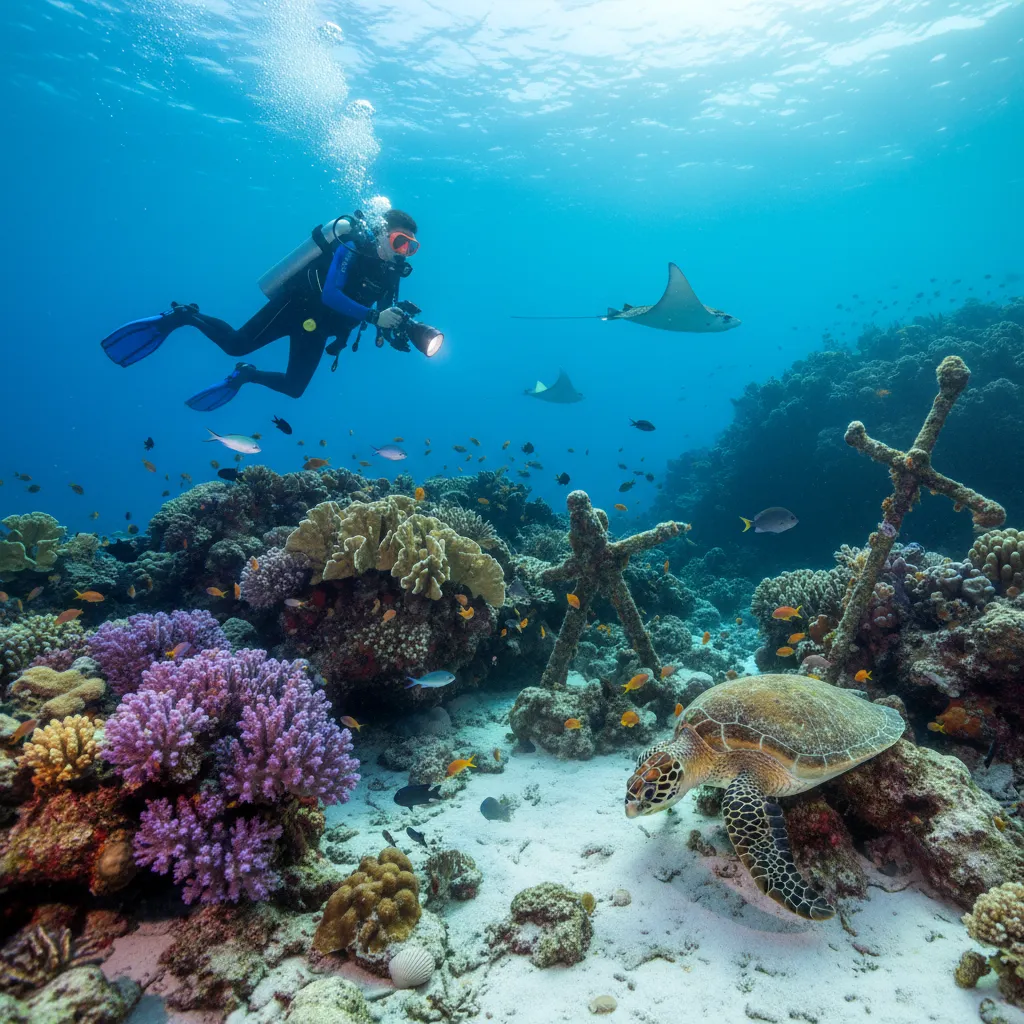
Bayahibe & La Romana offers some of Dominican Republic's richest diving, with 173+ marine species recorded in the area - including barracuda, humpback whales, orcas, sea turtles and sperm whales. Water ranges 27-30°C, warmest August, September, October.
Bayahibe and La Romana offer a solid Caribbean dive trip, especially if you’re looking for a mix of wreck diving and easy reef exploration. We love the variety here - you’ve got the convenience of shore diving on local reefs combined with boat trips out to some genuinely interesting wrecks and Saona Island's gentle sloping sites. Visibility is usually pretty good, making for relaxed drifts over sponge-encrusted walls where we often spot trumpetfish doing their best impression of a stick. Our favourite spots are definitely the wrecks; they’ve developed a real character, with schools of Mojarra swarming the structures and the occasional green turtle cruising by. If you’re lucky, you might even catch a glimpse of the rare Glory-of-the-Atlantic Cone on sandy patches near the reefs. Conditions are typically calm, making it a great place to build confidence or just enjoy some unhurried bottom time. Just keep an eye on the currents around Saona, they can pick up, but generally, it's a very forgiving area. The cenote diving adds a unique twist, offering a completely different environment, cooler water, and a surreal light show if you hit it mid-day.
Bayahibe & La Romana Dive Site Map
Dive sites and dive centres in Bayahibe & La Romana
Bayahibe & La Romana Dive Sites
62 dive sites in Bayahibe & La Romana
3. Riff
3. Riff lives up to its name, a proper underwater mountain. We found ourselves consistently below 20m here, often drifting along the northern wall, which drops to a comfortable 30m. The current often picks up a bit, making it a good spot for advanced divers who appreciate a drift dive and aren't afraid of some depth. Keep an eye out for nurse sharks tucked under ledges and plenty of lobsters peering from crevices. Visibility averages around 12m, not always astounding, but the structure itself makes for an engaging dive, especially with schools of French grunts and surgeonfish sweeping by.
3. Riff
3. Riff lives up to its name, a proper underwater mountain. We found ourselves consistently below 20m here, often drifting along the northern wall, which drops to a comfortable 30m. The current often picks up a bit, making it a good spot for advanced divers who appreciate a drift dive and aren't afraid of some depth. Keep an eye out for nurse sharks tucked under ledges and plenty of lobsters peering from crevices. Visibility averages around 12m, not always astounding, but the structure itself makes for an engaging dive, especially with schools of French grunts and surgeonfish sweeping by.
Almendra
Almendra gives you a good feel for Bayahibe's underwater topography, starting with a gentle slope before dropping into a wall dive. We've often found it a solid choice for an afternoon dive, particularly if you’re looking to practice buoyancy or just enjoy a relaxed swim. Keep an eye out for yellowhead jawfish peeking from their burrows and plenty of French grunts schooling along the reef. It’s a site that works well for newer divers, with a maximum depth of 23 meters and typically calm conditions.
Almendra
Almendra gives you a good feel for Bayahibe's underwater topography, starting with a gentle slope before dropping into a wall dive. We've often found it a solid choice for an afternoon dive, particularly if you’re looking to practice buoyancy or just enjoy a relaxed swim. Keep an eye out for yellowhead jawfish peeking from their burrows and plenty of French grunts schooling along the reef. It’s a site that works well for newer divers, with a maximum depth of 23 meters and typically calm conditions.
Aquarium
Aquarium is a relaxed dive just off Bayahibe, popular for its shallow depths and calm conditions. We often spot Blue-spotted Cornetfish lurking amongst the seafans, and Yellowhead Jawfish peeking out from their burrows. It’s a gentle introduction for newer divers, offering plenty of time to explore without strong currents.
Aquarium Boca Chica
Aquarium Boca Chica is an easy dive, just a quick boat ride from Boca Chica itself. It’s a shallow spot, topping out at around 10 meters, so a good choice for newer divers or anyone looking for a relaxed time underwater. We've often seen sheephead and graysby poking around the coral blocks, which are interspersed with sandy patches. Keep an eye on those sandy areas; we’ve spotted small rays there more than once, alongside the usual French grunts and doctorfish. Visibility averages 13 meters, which is decent for photography, especially with all the yellowhead jawfish and orangespotted filefish you’ll encounter. It can get a bit of swell, but nothing too dramatic.
Aquarium Boca Chica
Aquarium Boca Chica is an easy dive, just a quick boat ride from Boca Chica itself. It’s a shallow spot, topping out at around 10 meters, so a good choice for newer divers or anyone looking for a relaxed time underwater. We've often seen sheephead and graysby poking around the coral blocks, which are interspersed with sandy patches. Keep an eye on those sandy areas; we’ve spotted small rays there more than once, alongside the usual French grunts and doctorfish. Visibility averages 13 meters, which is decent for photography, especially with all the yellowhead jawfish and orangespotted filefish you’ll encounter. It can get a bit of swell, but nothing too dramatic.
Atlantic Princess (Wreck)
The Atlantic Princess isn’t some deep, dark mystery. She’s a cheerful, relatively shallow wreck, intentionally sunk in 2009, making her a perfect afternoon dive if you're staying in Bayahibe. We love that she’s already well-colonised, a testament to how quickly the ocean reclaims things. Dropping down, the first thing you notice is how intact she is – 30 feet wide and 99 feet long, sitting upright. You can fin right through the main deck, exploring the passenger areas, which are now home to schools of snapper and grunts. Keep an eye out for the giant gobies; they’re surprisingly bold here. We often find nurse sharks napping under ledges or tucked into corners. Visibility averages a solid 16 metres, so you get great views of the entire ship as you approach. It’s a gentle dive, maxing out at 13 metres, ideal for newer wreck divers or anyone looking for an easy, colourful exploration. Our favourite part is lingering on the bow, watching angelfish flit between the new coral growth.
Atlantic Princess (Wreck)
The Atlantic Princess isn’t some deep, dark mystery. She’s a cheerful, relatively shallow wreck, intentionally sunk in 2009, making her a perfect afternoon dive if you're staying in Bayahibe. We love that she’s already well-colonised, a testament to how quickly the ocean reclaims things. Dropping down, the first thing you notice is how intact she is – 30 feet wide and 99 feet long, sitting upright. You can fin right through the main deck, exploring the passenger areas, which are now home to schools of snapper and grunts. Keep an eye out for the giant gobies; they’re surprisingly bold here. We often find nurse sharks napping under ledges or tucked into corners. Visibility averages a solid 16 metres, so you get great views of the entire ship as you approach. It’s a gentle dive, maxing out at 13 metres, ideal for newer wreck divers or anyone looking for an easy, colourful exploration. Our favourite part is lingering on the bow, watching angelfish flit between the new coral growth.
Atlantic Princess Wreck (Bayahibe)
We've spent a fair bit of time on the Atlantic Princess, and we have to say, it’s a remarkably friendly wreck. Sunk intentionally in 2009, she sits upright in just 13 metres of water, making her ideal for newer divers or those who just want to chill out and explore without worrying about deco. The ship herself is a former passenger liner, 30 metres long, completely cleaned out and opened up. You can swim through the main deck, past the old cabins, and even poke your head into the bridge area. What we really love about the Atlantic Princess is the way marine life has completely taken over. Surgeonfish graze everywhere, moray eels peek from every crevice, and we’ve spotted giant gobies tucked into the nooks and crannies of the hull. The light filtering through the upper deck makes for some fantastic photo opportunities, especially when schools of grunts drift through. Visibility here often hits 17 metres, sometimes more, so you get a great view of the whole structure even from the surface. We'd suggest going early in the morning to beat any crowds and catch the light at its best. It's a genuinely relaxing dive, perfect for just enjoying the peace and the fish.
Atlantic Princess Wreck (Bayahibe)
We've spent a fair bit of time on the Atlantic Princess, and we have to say, it’s a remarkably friendly wreck. Sunk intentionally in 2009, she sits upright in just 13 metres of water, making her ideal for newer divers or those who just want to chill out and explore without worrying about deco. The ship herself is a former passenger liner, 30 metres long, completely cleaned out and opened up. You can swim through the main deck, past the old cabins, and even poke your head into the bridge area. What we really love about the Atlantic Princess is the way marine life has completely taken over. Surgeonfish graze everywhere, moray eels peek from every crevice, and we’ve spotted giant gobies tucked into the nooks and crannies of the hull. The light filtering through the upper deck makes for some fantastic photo opportunities, especially when schools of grunts drift through. Visibility here often hits 17 metres, sometimes more, so you get a great view of the whole structure even from the surface. We'd suggest going early in the morning to beat any crowds and catch the light at its best. It's a genuinely relaxing dive, perfect for just enjoying the peace and the fish.
Bajo Largo
Bajo Largo offers a solid dive just off Bayahibe. We've found it’s a good spot for a relaxed drift, often with a gentle current pushing you along a sloping reef. Keep an eye out for cero mackerel darting past and we’ve regularly spotted banded blennies peeking from the coral heads. It’s not going to blow your mind, but it’s a perfectly pleasant way to spend an hour underwater, particularly if you’re looking for a low-key dive after a more adventurous morning.
Show all 62 dive sites in Bayahibe & La Romana
- Bajos del Caballo
- Bajos del Catalina
- Bayahibe
- Bayahibe
- Boya Blanca
- Boya Blanca
- Cabo Cabron - The Wall
- Cabo Cabron - The Wall
- Cabu
- Cabu
- Canyon 1, Boca Chica
- Canyones, Boca Chica
- CARONI
- Catalina Aquarium
- Catalina Island - Dominican Republic
- Catalina The Wall
- Catalina Wall
- Catuan (Wreck)
- Coco Reef
- Creole Reef
- Cuevitas - Dominican Republic
- Dolphin (Wreck)
- El Ferry (Wreck)
- Gabi
- Gorgonia Boca Chica
- Guaraguao I
- Jackson Sunken Island
- KALIOPE (PART OF)
- La Farola
- Las Galeras Divers
- Las Terrenas
- MEMPHIS (POSSIBLY)
- Nitrox Garden
- NOPAL EXPLORER
- Padre Nuestro
- Parede - Dominican Republic
- Picadilly
- Pica Rocca
- Piedra Bonita
- Playita
- Roccadilly
- RUTHY
- SAN CARLOS
- SAONA
- St. George (Wreck)
- St. George Wreck
- Stingray Point, Boca Chica
- The Wall
- Tortuga
- Viva Shallow
Bayahibe & La Romana Dive Centres
8 dive shops and operators in Bayahibe & La Romana
Ocean Wildlife in Bayahibe & La Romana
173 species recorded in Bayahibe & La Romana
Bayahibe & La Romana Daylight & Sunrise/Sunset
Sunrise and sunset times for Bayahibe & La Romana, calculated from coordinates
Today - Sunday 11 October
Sunrise
05:30
Sunset
17:20
Daylight
11h 49m
Golden Hour
16:50
First light (dawn) at 05:09 · Last light (dusk) at 17:41
Monthly Averages
| Month | Sunrise | Sunset | Daylight |
|---|---|---|---|
| Jan | 06:13 | 17:21 | 11h 7m |
| Feb | 06:07 | 17:38 | 11h 32m |
| Mar | 05:47 | 17:48 | 12h 0m |
| Apr | 05:22 | 17:55 | 12h 33m |
| May | 05:05 | 18:04 | 13h 0m |
| JunLongest | 05:01 | 18:16 | 13h 14m |
| Jul | 05:09 | 18:18 | 13h 9m |
| Aug | 05:20 | 18:06 | 12h 47m |
| Sep | 05:26 | 17:42 | 12h 16m |
| OctNow | 05:32 | 17:17 | 11h 45m |
| Nov | 05:44 | 17:01 | 11h 17m |
| DecShortest | 06:02 | 17:04 | 11h 1m |
Times are approximate local times based on longitude. Actual times may vary slightly depending on the exact timezone observed in Bayahibe & La Romana.
Where to Stay near Bayahibe & La Romana
Prices from Booking.com. We may earn a commission at no extra cost to you.
Marine Protected Areas near Bayahibe & La Romana
18 protected areas near Bayahibe & La Romana - please respect local regulations when diving
Bancos de La Plata y La Navidad
Arrecifes del Sureste
Cotubanamá (Del Este)
Francisco Alberto Caamaño Deñó
Gran Estero
Manglar de la Jina
Humedales del Bajo Yaque del Sur
Laguna Gri-Grí
Costa Azul
La Caleta
La Caleta
Isla Catalina
Showing 12 largest of 18
Getting to Bayahibe & La Romana
Santo Domingo
La Romana
Punta Cana
Plan & book
Ways to dive Bayahibe & La Romana, from day trips to liveaboards.
Day trips & courses
via GetYourGuideGuided dives, courses and snorkel trips with instant booking.
Find dive trips in Bayahibe & La RomanaPlaces to stay
via Booking.comHotels and dive resorts near Bayahibe & La Romana.
Search stays in Bayahibe & La RomanaDive insurance
Most travel insurance excludes or limits scuba. Check what you need before you go.
Dive insurance explainedPartner links: we may earn a commission if you book, at no extra cost to you. How we make money