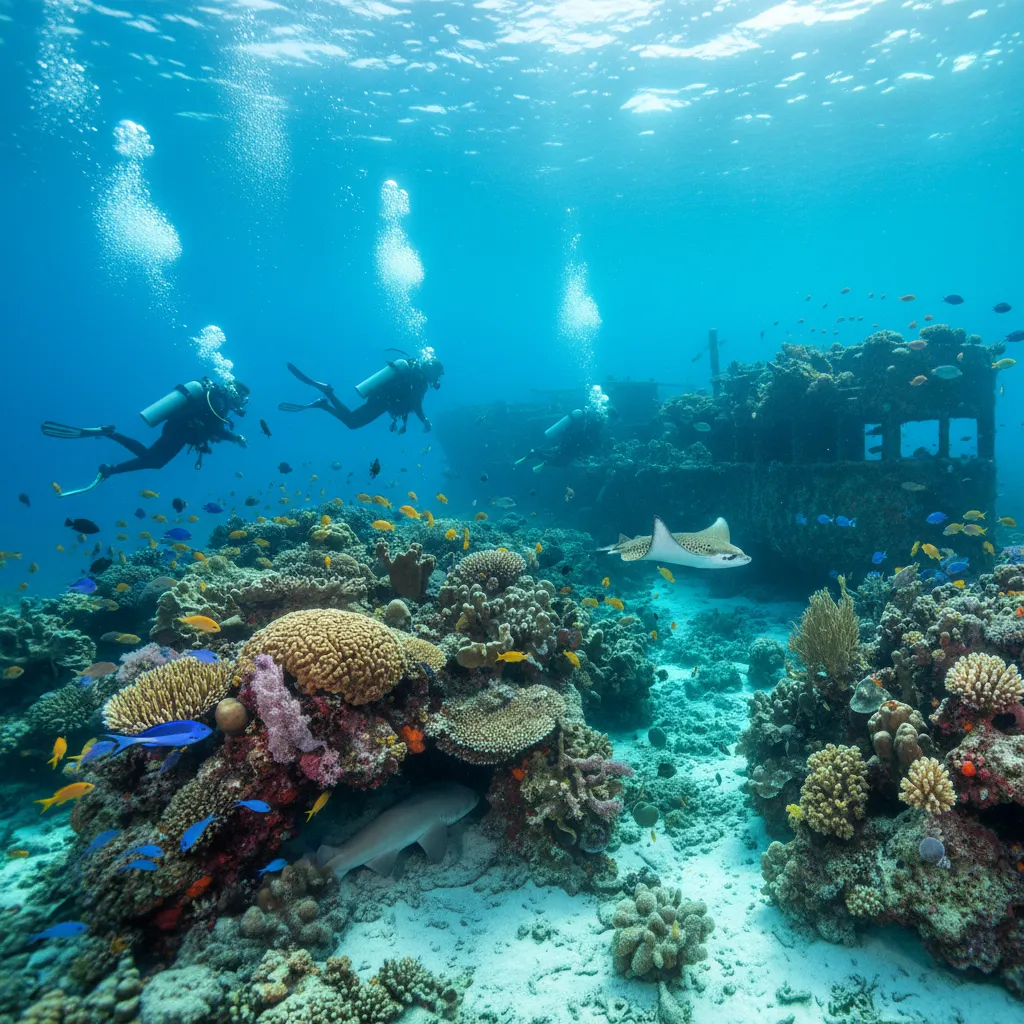
Diving in Punta Cana
Why dive here
Punta Cana offers some of Dominican Republic's richest diving, with 250+ marine species recorded in the area - including barracuda, humpback whales, nurse sharks, orcas and sea turtles. Water ranges 27-30°C, warmest September, October, November.
Look, let’s be straight about Punta Cana. It’s not the Red Sea, and it’s not Komodo. What it *is*, though, is damn convenient if you’re already in the Dominican Republic for other reasons, and we appreciate that. The diving here is comfortable, mostly shallow, and caters well to newer divers or those who just want to knock out a couple of easy dives between rum punches. Our favourite spots are the various reef systems, where you’ll often find schools of butterbun and chalk bass hanging out. Keep an eye out for the bigeye stargazers peeking from the sand - they’re always a fun find, if a little creepy. We’d suggest hitting the sites early in the morning to beat the crowds, especially around the more popular wrecks, though visibility can be a bit variable depending on recent weather. We've seen it range from a decent 15 metres to a murky 5, so manage your expectations. You won't be writing home about pristine corals, but there's a pleasant collection of fish to enjoy.
Punta Cana Dive Site Map
Dive sites and dive centres in Punta Cana
Punta Cana Dive Sites
38 dive sites in Punta Cana
Acuario
Acuario in Punta Cana is a calm, shallow spot. We often see southern stingrays resting on the sandy bottom and schools of grunt sheltering among the scattered coral heads. It’s a good choice for newer divers or those looking for a relaxed second dive. Visibility averages around 15 metres on a good day.
Astron
The Astron in Punta Cana is a large cargo ship, sunk deliberately. It sits upright, mostly intact, though the years have started to break down the superstructure. We typically see schools of barracuda circling the wreck, and a few resident moray eels peeking out from the holds. It’s a good wreck for advanced open water divers, with depths reaching around 30 meters.
ASTRON
The Astron wreck is an absolute beast, and a site we genuinely love in Punta Cana. She’s a massive tanker, almost 221 metres long, grounded just off the coast since 1978. Because she’s so shallow, peaking at a mere two metres, this is more of a snorkelling or free-diving expedition than a scuba dive, but don't let that fool you into thinking it's less exciting. You swim over colossal sections of rusted hull, seeing the ship's skeleton slowly being reclaimed by the sea. Sunlight dapples through the water, illuminating schools of tiny fish darting in and out of the metal. We’ve spent hours here, just exploring the broken decks and huge cargo holds. It's an incredible feeling, being right on top of such a huge vessel, watching the waves break over its exposed parts. The sheer scale is what gets you, even at such a shallow depth. It’s a proper adventure for anyone who loves wrecks and isn't afraid to duck under for a closer look.
Astron Wreck
The Astron Wreck in Punta Cana is a proper old freighter, broken into two main sections and lying on its side. It’s sitting at a perfect depth for intermediate divers, around 10 to 18 metres, which means you get decent bottom time to really snoop around. We love that the sheer size of it gives you options; you can just cruise over the top, taking in the scale, or if you’re wreck trained, there are some great swim-throughs into the cargo holds. Our favourite part is seeing how nature has just taken over. What was once steel and machinery is now a home for schools of snapper that swirl around the structure, and we’ve spotted green turtles resting in the quieter sections. The visibility here is usually pretty good, making the light rays filtering through the broken hull quite dramatic. We’d suggest going early in the morning before too many boats arrive; the wreck feels much more imposing when it's just you and a few others gliding through its shadowy corridors. It’s a genuinely satisfying wreck dive, offering more than just a quick look.
Atlantic Princess (Wreck)
If you’re diving in Punta Cana, the Atlantic Princess is a wreck we always recommend for new divers, or anyone who just wants a mellow, interesting dive. This old cargo ship, run aground and later sunk intentionally, rests upright on a sandy bottom, broken into two main sections. It’s shallow, only about 13 metres, which means plenty of bottom time and lots of light filtering down. We love finning slowly around the stern, where the propeller is still intact, encrusted with sponges and small corals. Look closely and you’ll spot a moray eel peeking from a pipe, or a shy lionfish tucked into a shadowed corner. The interior is largely open and easy to navigate for those with appropriate training, but honestly, the best stuff is often on the exterior; schools of French grunts hang out in the cargo hold, flashing silver, and we’ve seen some surprisingly large barracuda just off the bow. It’s a comfortable, captivating dive, ideal for getting comfortable with wreck penetration, or just enjoying a calm swim through history.
Atlantic Princess Wreck (Bayahibe)
The Atlantic Princess is a quirky wreck, sitting upright in about 13 metres of water just off Bayahibe. We love how accessible it is, perfect for newer divers looking to get their first taste of proper wreck penetration. The ship broke in half during Hurricane Sandy, and now you can swim right through the cargo hold, feeling the cool shadow as you pass from bow to stern. Keep an eye out for the resident moray eels peeking from the nooks and crannies, and the occasional schooling snapper hanging out in the darker sections. On the deck, we often spot lionfish lazily finning, their venomous spines fanning out, so watch your buoyancy. It's a great spot for an easy second dive, especially if you want to practice your buoyancy control in a confined space without a lot of current to worry about.
Bavaro
Diving Bavaro is a gentle introduction to the Dominican Republic's reef system, sitting at a comfortable 13m maximum depth. We like it for easy, relaxed dives where you can really slow down and observe the resident nurse sharks tucked under ledges, or spend time watching the schools of snapper and parrotfish graze the coral. Visibility averages around 16m, making it a good spot for newer divers or those looking for a chilled-out afternoon dip. Keep an eye out for turtles cruising past, especially in the afternoon.
Bavaro
Diving Bavaro is a gentle introduction to the Dominican Republic's reef system, sitting at a comfortable 13m maximum depth. We like it for easy, relaxed dives where you can really slow down and observe the resident nurse sharks tucked under ledges, or spend time watching the schools of snapper and parrotfish graze the coral. Visibility averages around 16m, making it a good spot for newer divers or those looking for a chilled-out afternoon dip. Keep an eye out for turtles cruising past, especially in the afternoon.
Bayahibe
Bayahibe, just off Punta Cana, is a mellow spot for newer divers. The maximum depth of 14m makes for relaxed bottom times. You’ll find typical Caribbean reef fish here, along with a few friendly turtles often cruising past. We’d suggest it for those looking for an easy introduction to the local diving.
Channel
The Channel in Punta Cana offers a drift dive through a sandy channel. We often find nurse sharks resting on the bottom here, and reef fish cruise through the mild currents. It’s a pretty straightforward dive, good for newer divers getting comfortable with a bit of movement.
CHANTAL
Chantal isn't your typical Caribbean deep wreck, and that's precisely why we love it. This isn't a dive to tick off depth records; it’s a dive for pure, unadulterated exploration in an incredibly shallow setting. The old motor vessel ran aground back in 1978, trying to make it from Cap Haitien to Aruba. Now, it’s broken into several large sections, spread across the sandy bottom, barely meters deep. We’re talking maximum 5 meters here, which makes Chantal perfect for extended bottom times and really soaking in the details. You can spend an hour weaving through the ribs of the hull, poking your head into what used to be the engine room, or peering into the shadowed holds. Schools of juvenile snapper dart in and out of the rusted plating, and we've consistently found moray eels peeking from crevices. Our favourite part? The way the sunlight dances through the water, illuminating the vibrant sponges and soft corals that have taken hold on every surface. It feels like swimming through a sunken sculpture garden. Best to hit it mid-morning when the sun is high for the clearest light and warmest water. It’s a fantastic spot for photographers or anyone who just wants to take their time with a wreck without the pressure of depth limits.
Chorizo
Chorizo is a solid, straightforward dive just a short boat ride from the Bahia Principe Hotel. We’re talking a maximum depth of 13 meters, so it’s a relaxed drift over a sandy bottom peppered with healthy corals, especially those lovely sea fans. Visibility usually hits around 16 meters, giving you a decent look at barracuda cruising by and lobsters tucked into the nooks. It's a comfortable spot, easy for newer divers to find their fins, but still pleasant enough for those of us who just want a chill hour in the water without too much fuss.
Show all 38 dive sites in Punta Cana
- Coco Reef
- Coral Garden
- Cuevitas
- El Peñon - Dominican Republic
- GRANTOR & A LICE M WINSLOW
- Guaraguao I
- La Parguera
- Manolo Cave
- Monica Wreck
- Paradise
- Paradise - Dominican Republic
- Park Reef
- Park Reef
- Parque Nacional 1
- Patato
- Punta Cana
- Punta Cana Reef
- Rondana
- Shalom Tropical
- SNS EXPRESS
- St George
- St. George (Wreck)
- Taberna
- Tortuga
- Tropical Shallow
- Viva Shallow
Punta Cana Dive Centres
9 dive shops and operators in Punta Cana
BLUE DREAMS DIVING
Coral Point Diving
DOLIN DIVE CENTER
Dominican Divers
Dressel Divers
Pro Dive International Catalonia Bayahibe
Reef Oasis Viva Dominican
Seaklub
Show all 9 dive centres in Punta Cana
Ocean Wildlife in Punta Cana
250 species recorded in Punta Cana
Punta Cana Daylight & Sunrise/Sunset
Sunrise and sunset times for Punta Cana, calculated from coordinates
Today - Sunday 11 October
Sunrise
05:27
Sunset
17:16
Daylight
11h 49m
Golden Hour
16:47
First light (dawn) at 05:05 · Last light (dusk) at 17:38
Monthly Averages
| Month | Sunrise | Sunset | Daylight |
|---|---|---|---|
| Jan | 06:10 | 17:18 | 11h 7m |
| Feb | 06:04 | 17:35 | 11h 32m |
| Mar | 05:44 | 17:44 | 12h 0m |
| Apr | 05:19 | 17:51 | 12h 33m |
| May | 05:02 | 18:01 | 13h 0m |
| JunLongest | 04:58 | 18:12 | 13h 14m |
| Jul | 05:06 | 18:15 | 13h 9m |
| Aug | 05:16 | 18:03 | 12h 47m |
| Sep | 05:23 | 17:39 | 12h 16m |
| OctNow | 05:28 | 17:13 | 11h 45m |
| Nov | 05:41 | 16:58 | 11h 17m |
| DecShortest | 05:59 | 17:00 | 11h 1m |
Times are approximate local times based on longitude. Actual times may vary slightly depending on the exact timezone observed in Punta Cana.
Where to Stay near Punta Cana
Prices from Booking.com. We may earn a commission at no extra cost to you.
Marine Protected Areas near Punta Cana
14 protected areas near Punta Cana - please respect local regulations when diving
Bancos de La Plata y La Navidad
Arrecifes del Sureste
Cotubanamá (Del Este)
Gran Estero
Manglar de la Jina
Costa Azul
La Caleta
La Caleta
Isla Catalina
Guaraguao - Punta Catuano
Boca de Nigua
La Gran Laguna o Perucho
Showing 12 largest of 14
Getting to Punta Cana
Punta Cana
La Romana
Santo Domingo
Plan & book
Ways to dive Punta Cana, from day trips to liveaboards.
Day trips & courses
via GetYourGuideGuided dives, courses and snorkel trips with instant booking.
Find dive trips in Punta CanaPlaces to stay
via Booking.comHotels and dive resorts near Punta Cana.
Search stays in Punta CanaDive insurance
Most travel insurance excludes or limits scuba. Check what you need before you go.
Dive insurance explainedPartner links: we may earn a commission if you book, at no extra cost to you. How we make money