ASTRON
Protected Area
Costa Azul
Why dive here
With 250+ marine species recorded in the area - including barracuda, humpback whales, nurse sharks, orcas and sea turtles - ASTRON offers some of Punta Cana's richest wreck diving. Water ranges 27-30°C, warmest September, October, November.
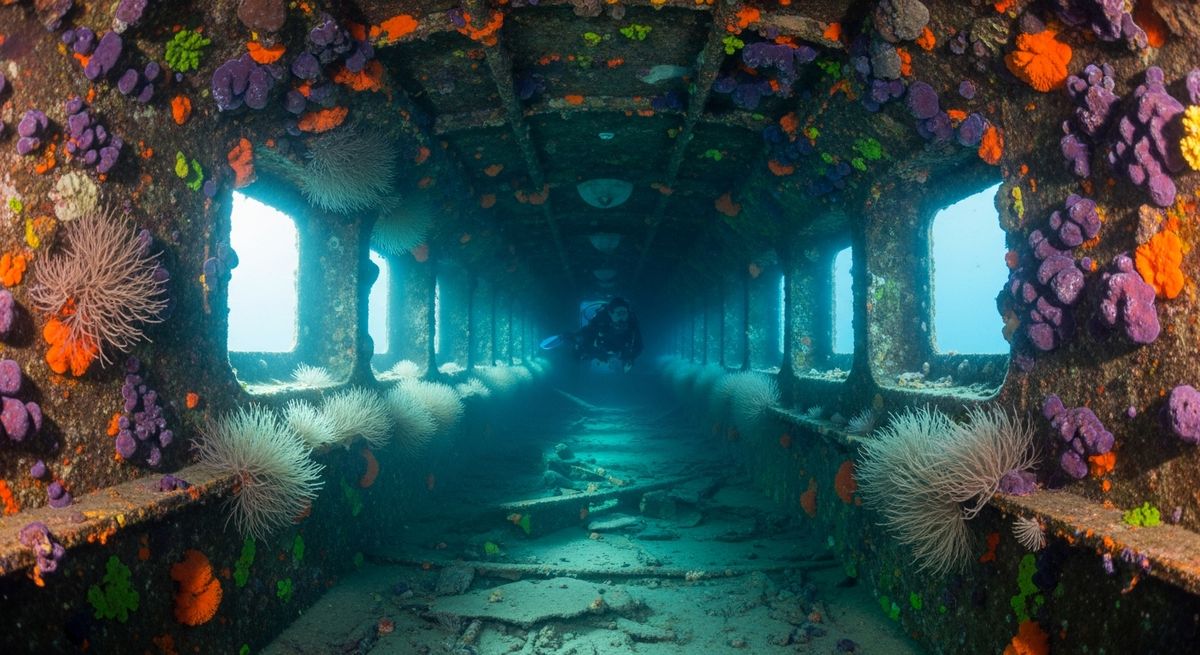
The Astron wreck is an absolute beast, and a site we genuinely love in Punta Cana. She’s a massive tanker, almost 221 metres long, grounded just off the coast since 1978. Because she’s so shallow, peaking at a mere two metres, this is more of a snorkelling or free-diving expedition than a scuba dive, but don't let that fool you into thinking it's less exciting. You swim over colossal sections of rusted hull, seeing the ship's skeleton slowly being reclaimed by the sea. Sunlight dapples through the water, illuminating schools of tiny fish darting in and out of the metal. We’ve spent hours here, just exploring the broken decks and huge cargo holds. It's an incredible feeling, being right on top of such a huge vessel, watching the waves break over its exposed parts. The sheer scale is what gets you, even at such a shallow depth. It’s a proper adventure for anyone who loves wrecks and isn't afraid to duck under for a closer look.
Typical ASTRON Dive Profile
Illustrative profile based on site depth and type. Actual dive profiles vary - always follow your dive computer and training.
Safety Notes
Wreck site - avoid penetration without wreck diving certification. Watch for sharp metal and entanglement hazards.
ASTRON Wreck History
Year Sunk
1978
Vessel Type
cargo ship
Cause
grounding
Tonnage
27,990 GRT
Built in France in 1957, the vessel originally named Esmeralda and later Bonnie would become one of the most famous landmarks in the Dominican Republic. At the time of its loss, the 127-meter motor ship was named Astron and was operating under Russian ownership, a remnant of its Cold War-era service.
On April 7, 1978, the Astron was reportedly en route to Cuba with a cargo of 60 tons of corn when it ran aground in shallow waters off the coast of Punta Cana. While some accounts attribute the incident to a powerful storm, official weather records for that date are clear, leaving the true cause of the grounding a subject of local legend and speculation. The ship broke in two, spilling a large quantity of bunker fuel into the sea.
Today, the Astron is an iconic wreck, with its bow section still jutting prominently from the turquoise water. The stern section lies submerged in about 16 meters of water, making it an accessible and exciting dive. Divers can explore the massive propeller, swim through parts of the superstructure, and observe the abundant marine life that has turned this hulking piece of steel into a thriving artificial reef.
Nearest Dive Centres to ASTRON
Dive shops near ASTRON
Seaklub
Dressel Divers
Dominican Divers
DOLIN DIVE CENTER
Sea Pro - S.A.
Reviews for ASTRON
Conditions
Ocean conditions, forecast and tides for ASTRON
ASTRON Ocean Conditions
Monthly averages for ASTRON, sourced from Open-Meteo marine data - nearest station: Open-Meteo marine grid (18.71, -68.44) (20km away)
October Averages
Sea Temperature
30°C
86°F · Range: 28.3–30.6°C
Air Temperature
27°C
81°F
Wind Speed
4.29 m/s
8.3 knots
Atmospheric Pressure
1012.8 hPa
Based on 4 years of monitoring data · Data sources: Open-Meteo marine data
Plan & book
Ways to dive Punta Cana, from day trips to liveaboards.
Day trips & courses
via GetYourGuideGuided dives, courses and snorkel trips with instant booking.
Find dive trips in Punta CanaPlaces to stay
via Booking.comHotels and dive resorts near Punta Cana.
Search stays in Punta CanaDive insurance
Most travel insurance excludes or limits scuba. Check what you need before you go.
Dive insurance explainedPartner links: we may earn a commission if you book, at no extra cost to you. How we make money
Where to Stay near ASTRON
Prices from Booking.com. We may earn a commission at no extra cost to you.